Minor Keys and Major Themes | Venice Biennale 2026 - a Tour
Until just a few months ago, I had never heard of the art extravaganza that is the Venice Biennale. Biennale = bi-annual and Venice, being the enchanting car-free water city of Venice, Italy.
“La Biennale di Venezia has been for 130 years one of the most prestigious cultural institutions in the world. Established in 1895, La Biennale had an attendance of over 800,000 visitors at the Art Exhibition in 2022. The history of the La Biennale di Venezia dates back from 1895, when the first International Art Exhibition was organized. In the 1930s new festivals were born: Music, Cinema, and Theatre (the Venice Film Festival in 1932 was the first film festival in history). In 1980 the first International Architecture Exhibition took place, and in 1999 Dance made its debut at La Biennale.” (Read more about the history here.)
What I’ve since learned is that this event, which takes place in even years, is a collection of art exhibits from all over the world. Countries have “pavilions” where they install art from their selected artist that year. Then there is a separate set of art that is more open—not the country pavilion art.
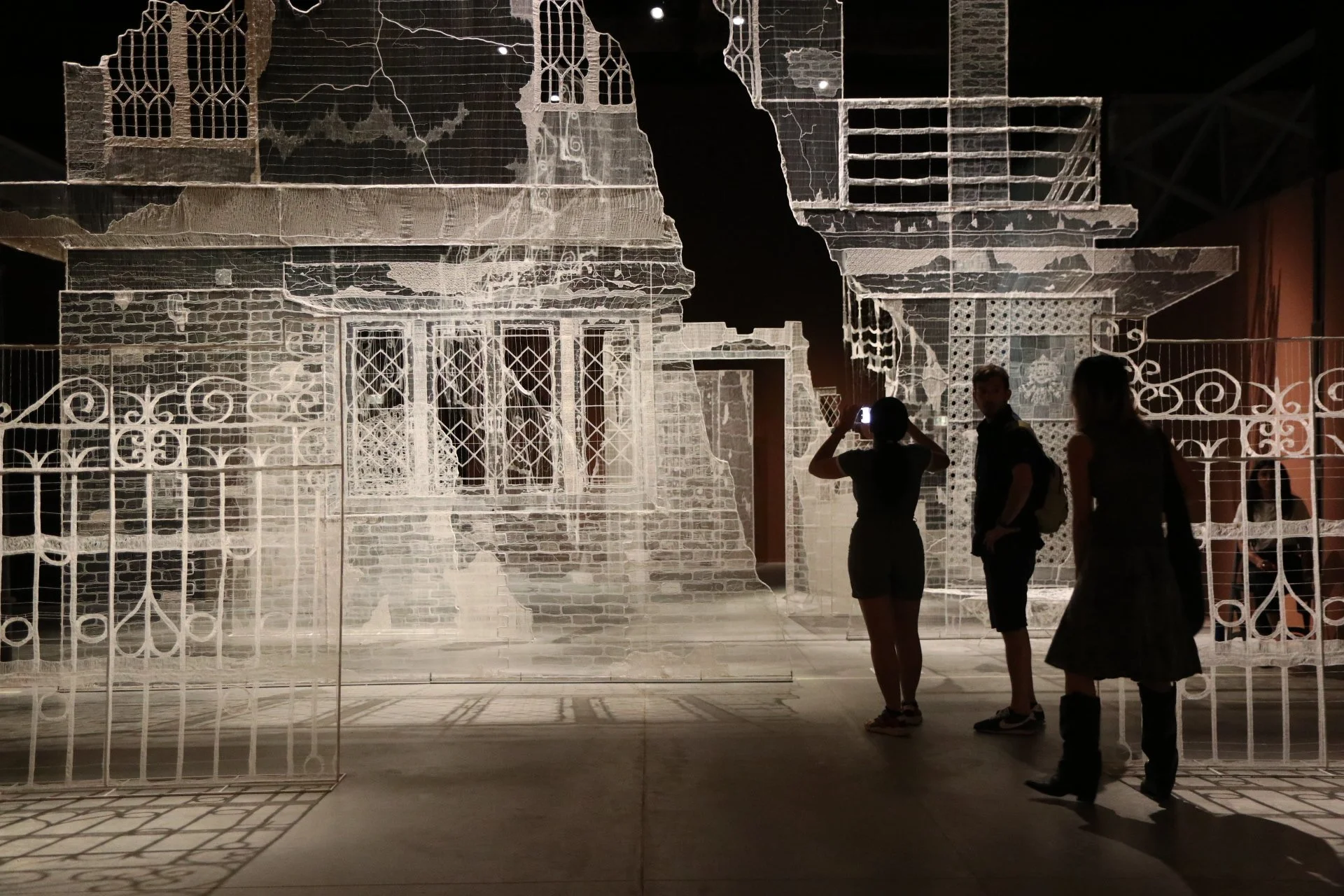
Venice Biennale, India Pavilion, 2026
Political Drama and Intrigue
Normally, when the world is not in such political turmoil, there’s a panel of judges that awards a top award to the best country and best artist. However, this year (are you even surprised at this point by yet another highly charged turn of events??), there was a snafu, and all the judges resigned in protest. Why? Well, apparently, this year’s event organizer is a member of the right-wing party in Italy and wanted to include countries accused of current war crimes: Russia and Israel. The judges were like: absolutely not. The right-wing dude was like: I’ll do what I want. So, Russia and Israel got pavilions, and the artists have been left without an expert judge panel.
The biennale tried to put together a way for attendees to instead vote for the winners, but now the artists themselves are protesting this voting system in solidarity with the judges, and one might assume, also in solidarity with the victims: Ukraine and Palestine.
Was that the only drama and only political face-off to occur? Of course not! Another scandal was related to the United States of America pavilion—apparently, Trump demanded that our country not submit any art with a political message. How did that go over, you might as? Well, no artists wanted to do it! After quite a search, an art director who had resigned from a curator role in St. Louis, Missouri, for accusations of being racist, stepped up to find an artist who would make and submit milquetoast sculptures. Photos below!
Now the Fun Part: The Art!
Despite the political shit show represented here that isn’t just news headlines—it represents real human suffering, the show is meant to be appreciated and sometimes enjoyed! The best exhibits were the ones that provoked discomfort.
My friend Emelia was visiting Venice with a friend of hers, so my boyfriend and I met up with them to tour the show.
The event is separated into a few different parts:
The garden with free-standing pavilion buildings for respective countries
The Arsenale building, with both the open show of many artists, and rooms with more country-specific exhibits
Around the city of Venice, art galleries and venues have special shows, not officially part of the Biennale, often by more famous artists—these are not included in the Biennale ticket
We were in Venice for two days. The first day, we SAW SO MUCH ART. We saw art nonstop from open to close: 11 AM to 7 PM. I thought my legs were going to fall off! We saw the garden first, then headed ot the Arsenale after lunch. On Day 2, we ventured outside the Biennale grounds and saw two of the bonus exhibits.
We attended on Sunday, May 31st, and Monday, June 1st, which was a holiday in Italy. Normally, be mindful that museums are closed on Mondays when visiting Venice. In this case, they were open for the holiday.
What We Learned
Some takeaways:
If we were to do it again, we would set aside 2-3 full days for the Biennale itself, and another for the extras. The art is that good, and there is so much of it!
Some of the extra shows require advanced booking—we didn’t realize until it was too late
We ran out of time to see everything, and unfortunately, didn’t think to prioritize the exhibits that had been labeled as some of the best. Whimsical vibes to be sure, just wandering around and popping into pavilions as we came across them, but we ended up missing out on most of the must-see pieces of art, which was a huge bummer.
If you’re going this year, take some time to understand the different types of tickets. We didn’t realize that we could have used the single ticket over two days—one for the garden and one for the Arsenale. A 3-day ticket is available and would be better. Tickets are €30 (single use for each section) and €40 (3-day).
In Minor Keys
In Minor Keys was the theme this year. I asked Claude AI for a summary:
"In Minor Keys" was conceived by Koyo Kouoh, the first African woman to curate the Venice Biennale, who tragically passed away in May 2025 before the show opened. Her team carried her vision forward.
The theme draws on its musical metaphor — minor keys are associated with strangeness and melancholy — but the curatorial team also cited jazz's unpredictability as an inspiration. (Artsy)
Crucially, Kouoh's intention wasn't to create commentary on world events, nor to escape from crisis. Instead it proposes a radical reconnection with art's natural role: the emotional, the visual, the sensory, the affective, the subjective. (Universes)
The exhibition seeks to restore "harmonies that oppose the cacophony of the present" and to honor "the songs of those who create beauty despite tragedy." (Domus)
At its core is a belief in artists as vital interpreters of the social and psychic condition — and the show is explicitly designed as an antidote to alienation, "beaming across the void." (Universes)
Photo Tour
The Garden Pavilions
Spanish Pavilion
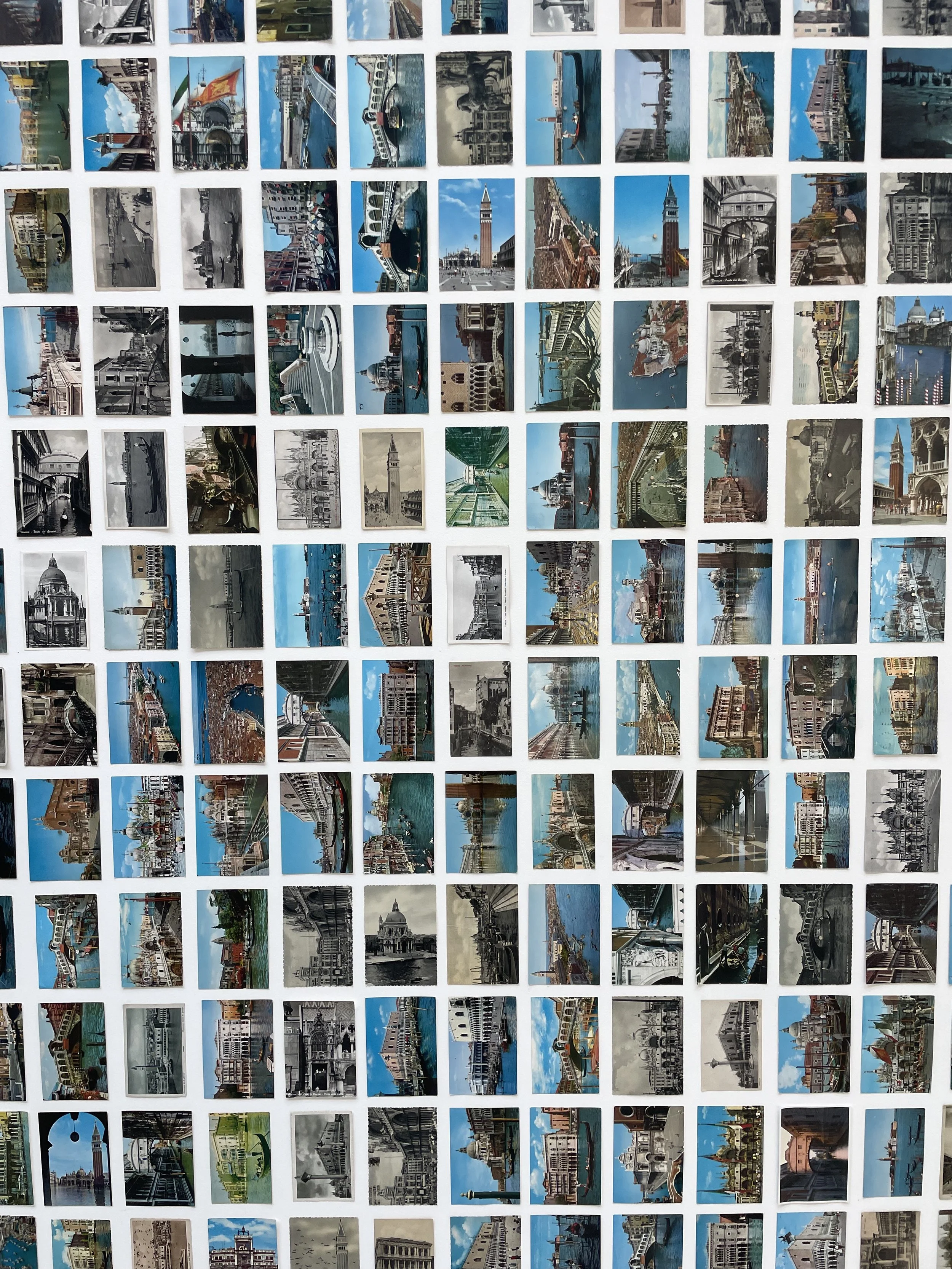
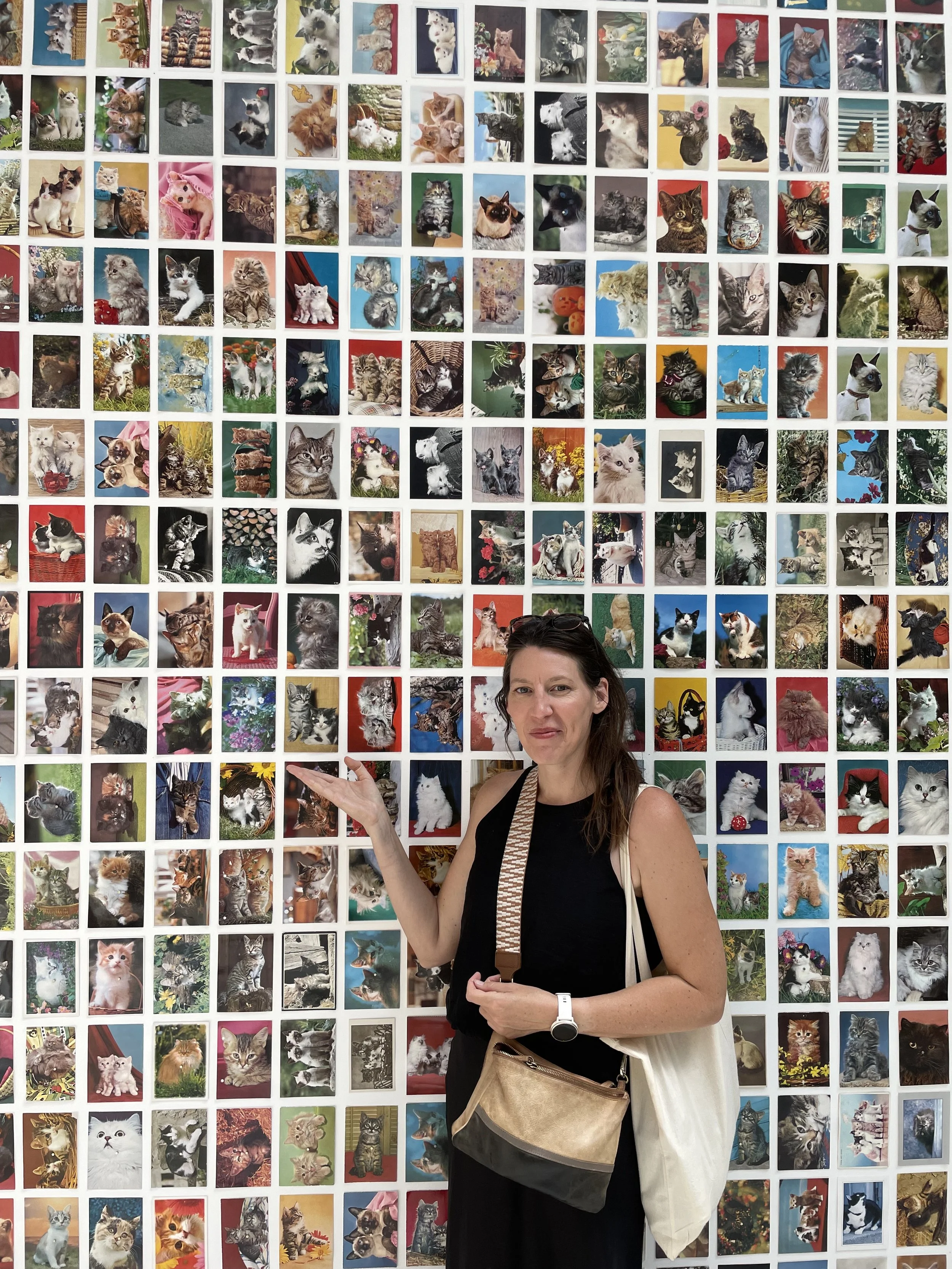
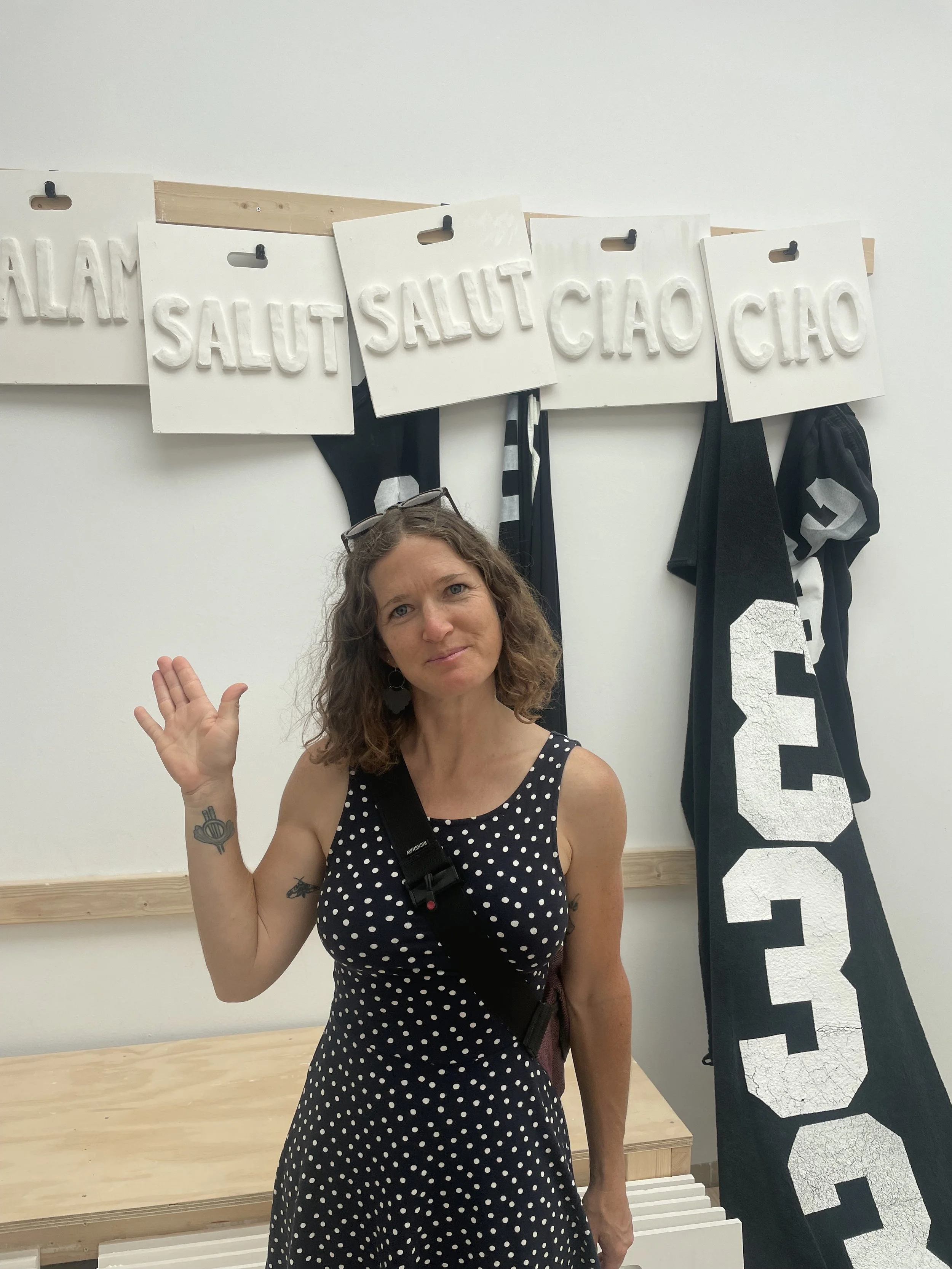
Our very first stop was Spain’s pavilion, featuring hundreds (thousands?) of postcards, meticulously attached to the walls with tiny round magnets. We felt a little dizzy as our eyes tried to zoom in and out at the same time.
I’m posing in front a cat postcard wall.
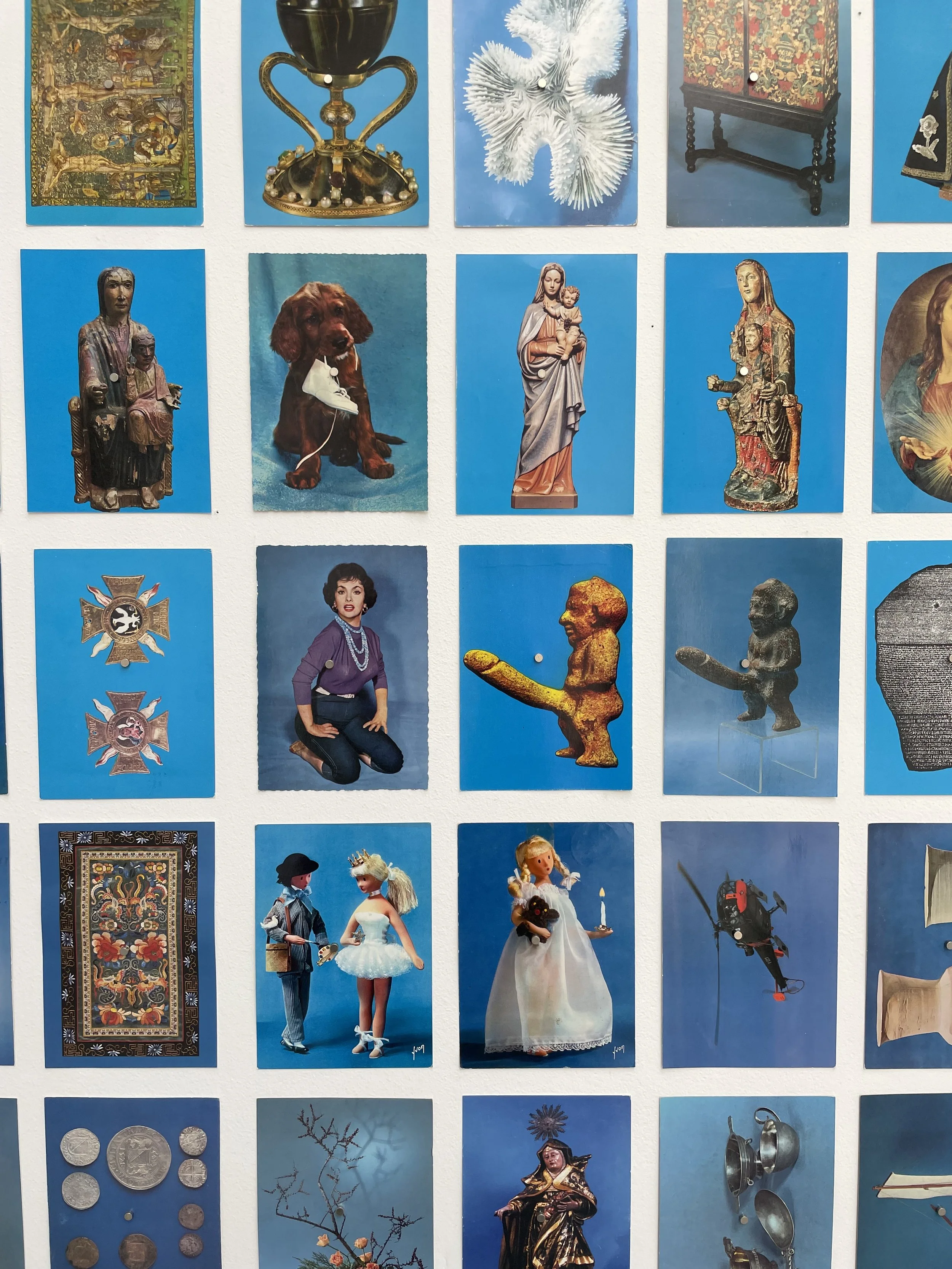
Seeing a postcard of a clay figure with a giant phallic “member,” led us, our group of 4 friends in the very mature and very adult stage of our life, 30s and 40s, to see how much dick art we could find (and it was honestly not as much as we expected it would be!)
Dick Art
Here was our, honestly, quite meager, collection of finds:
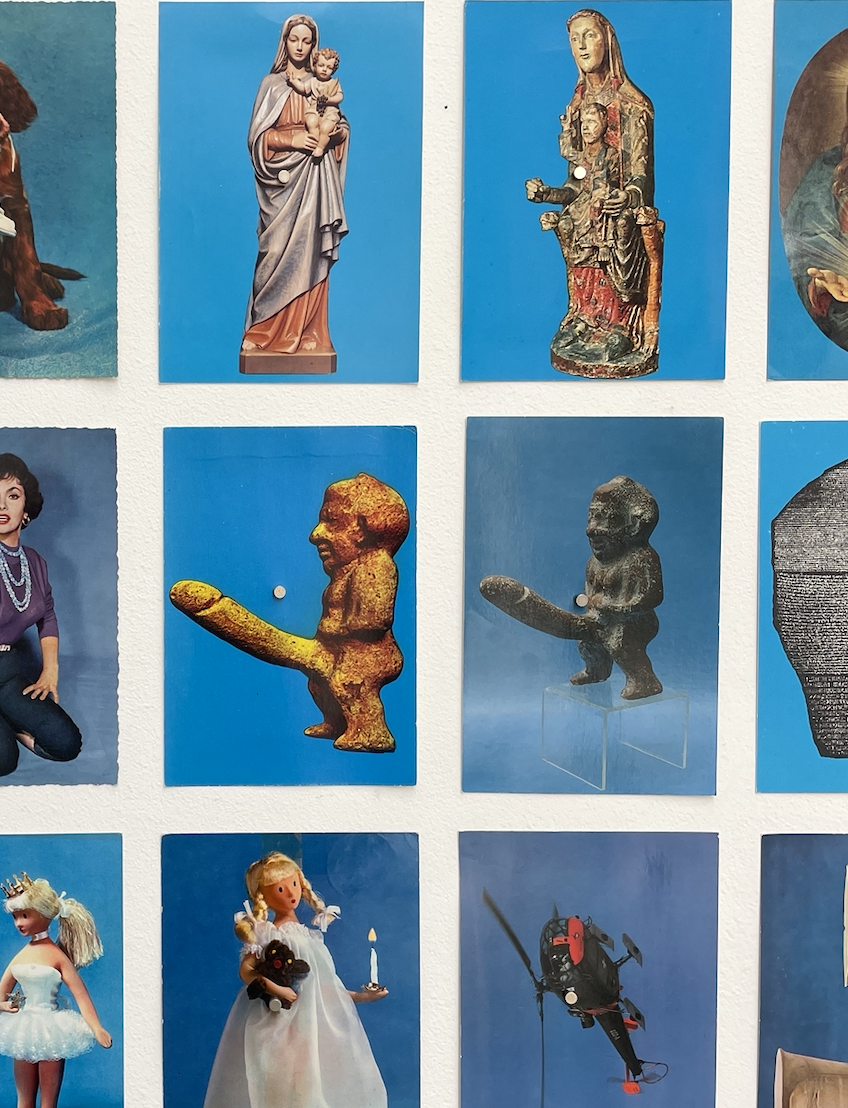
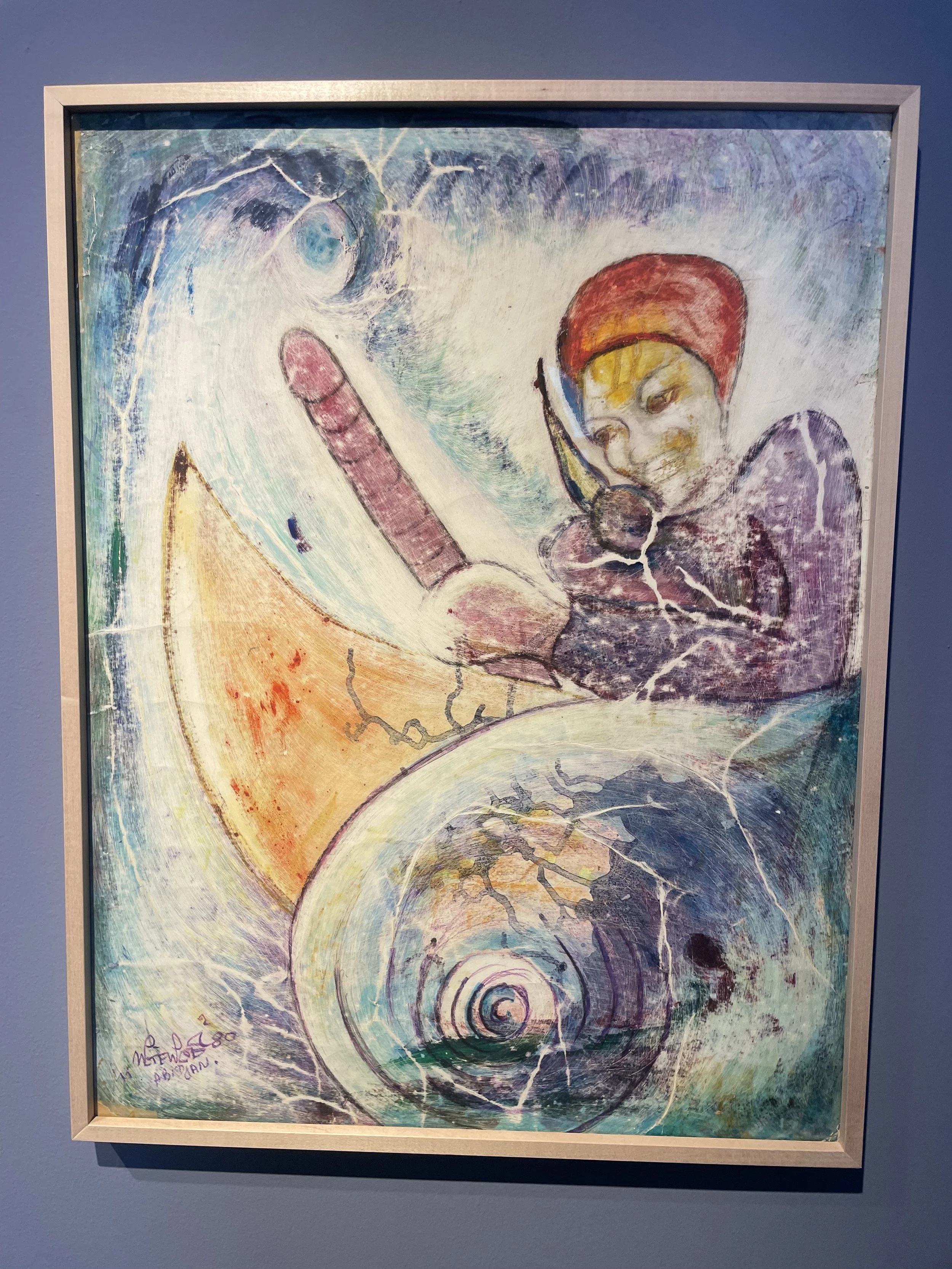
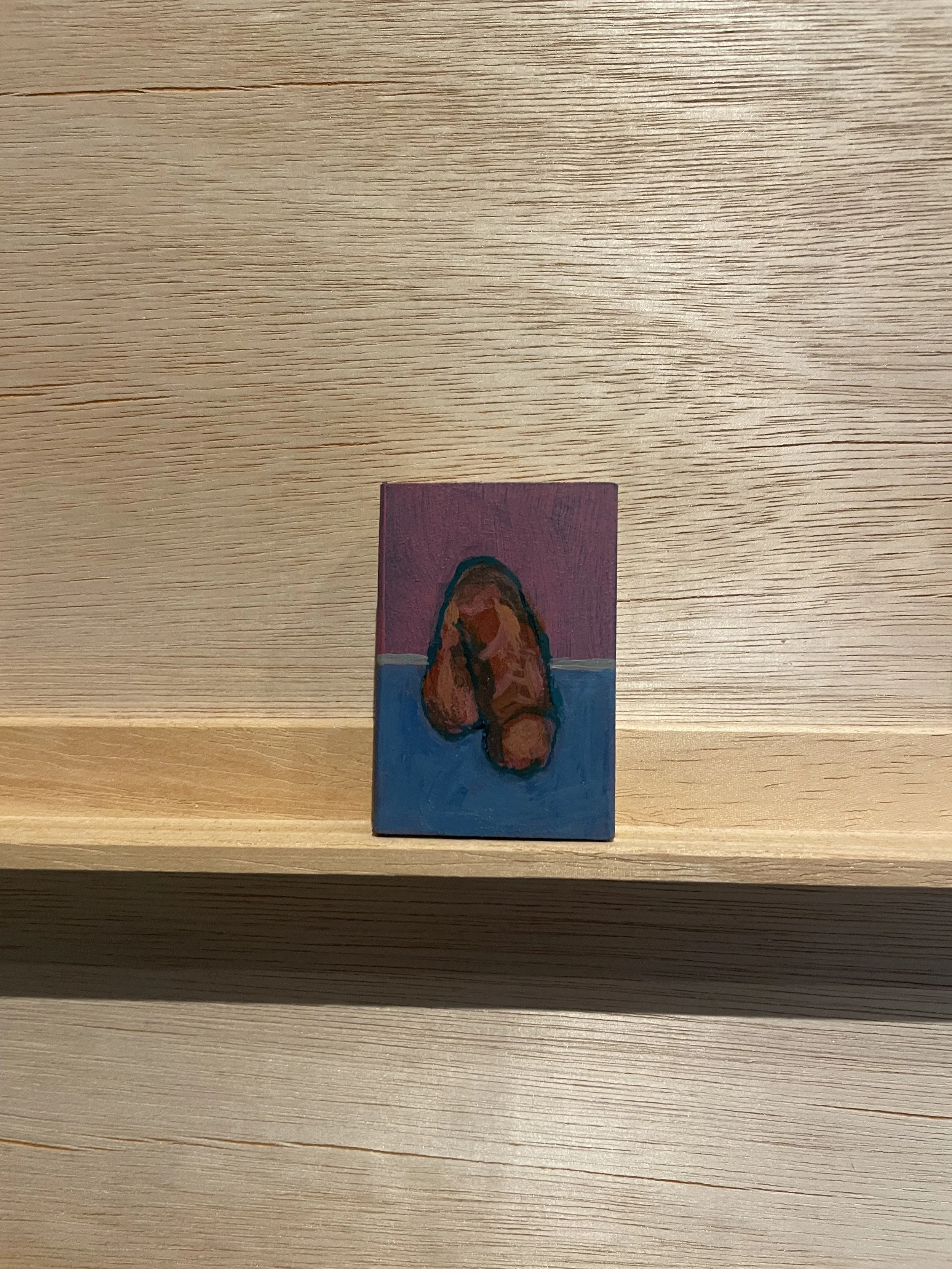
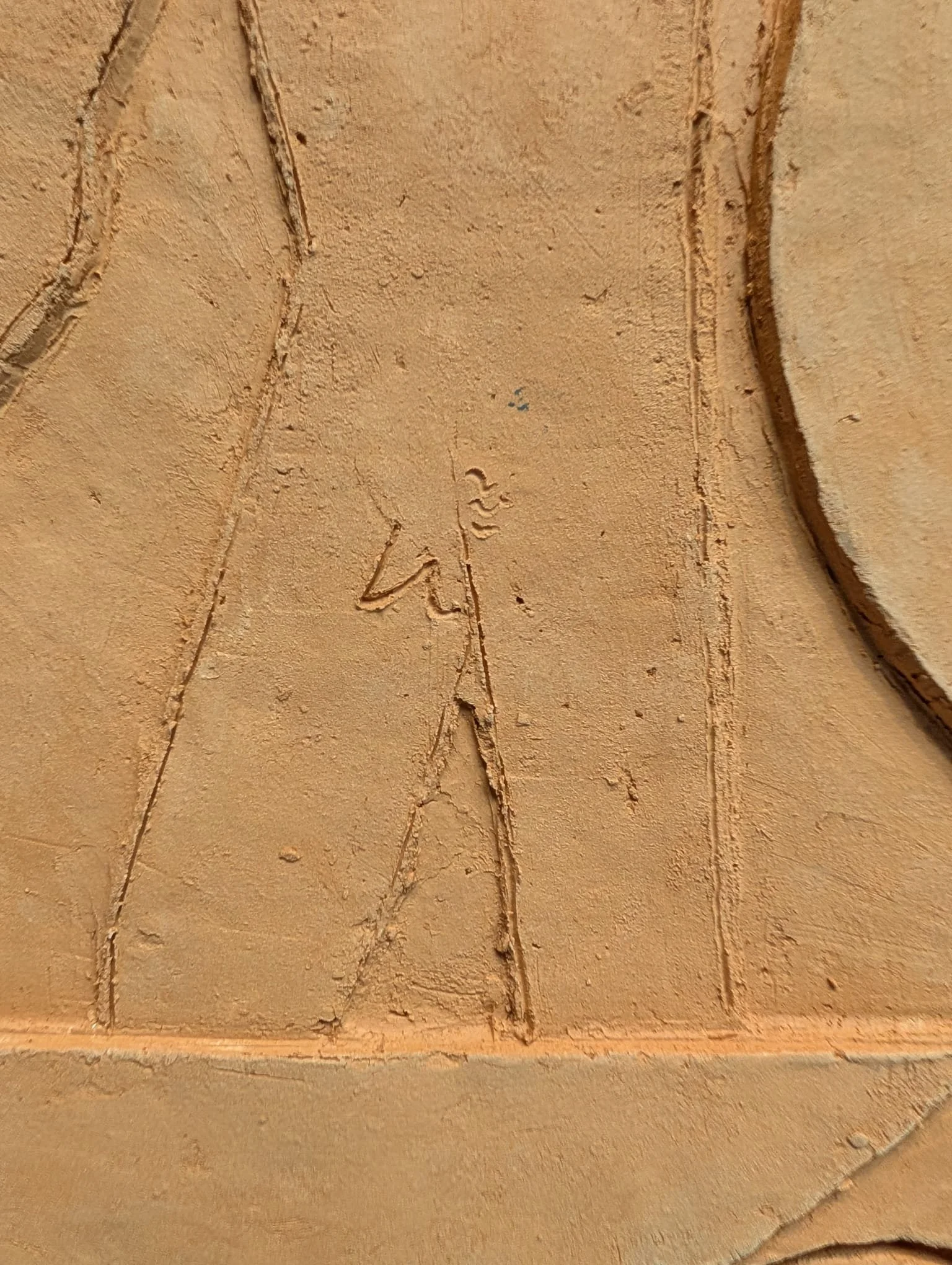
Don’t worry, I found some vag art too! That’s later…
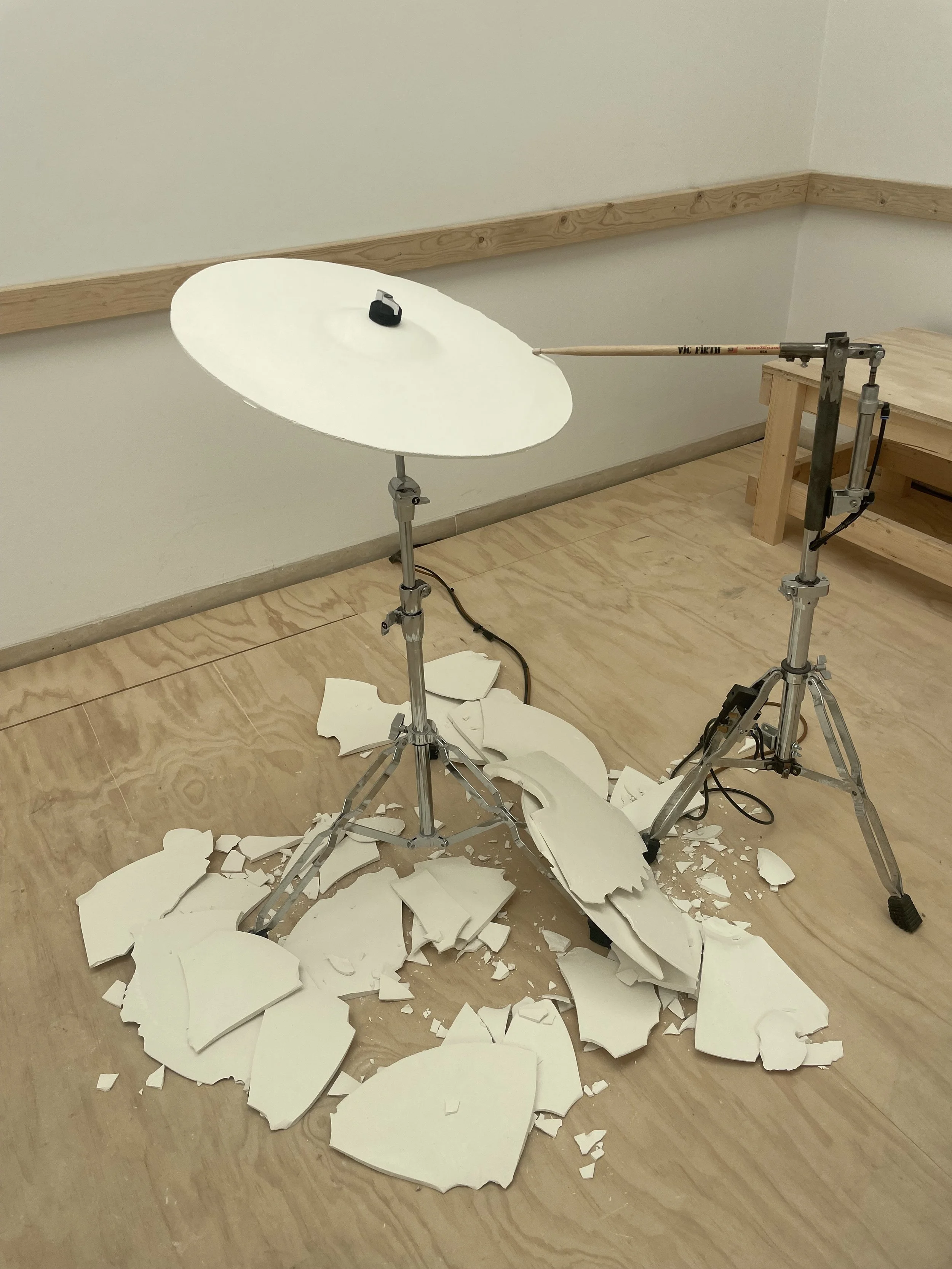
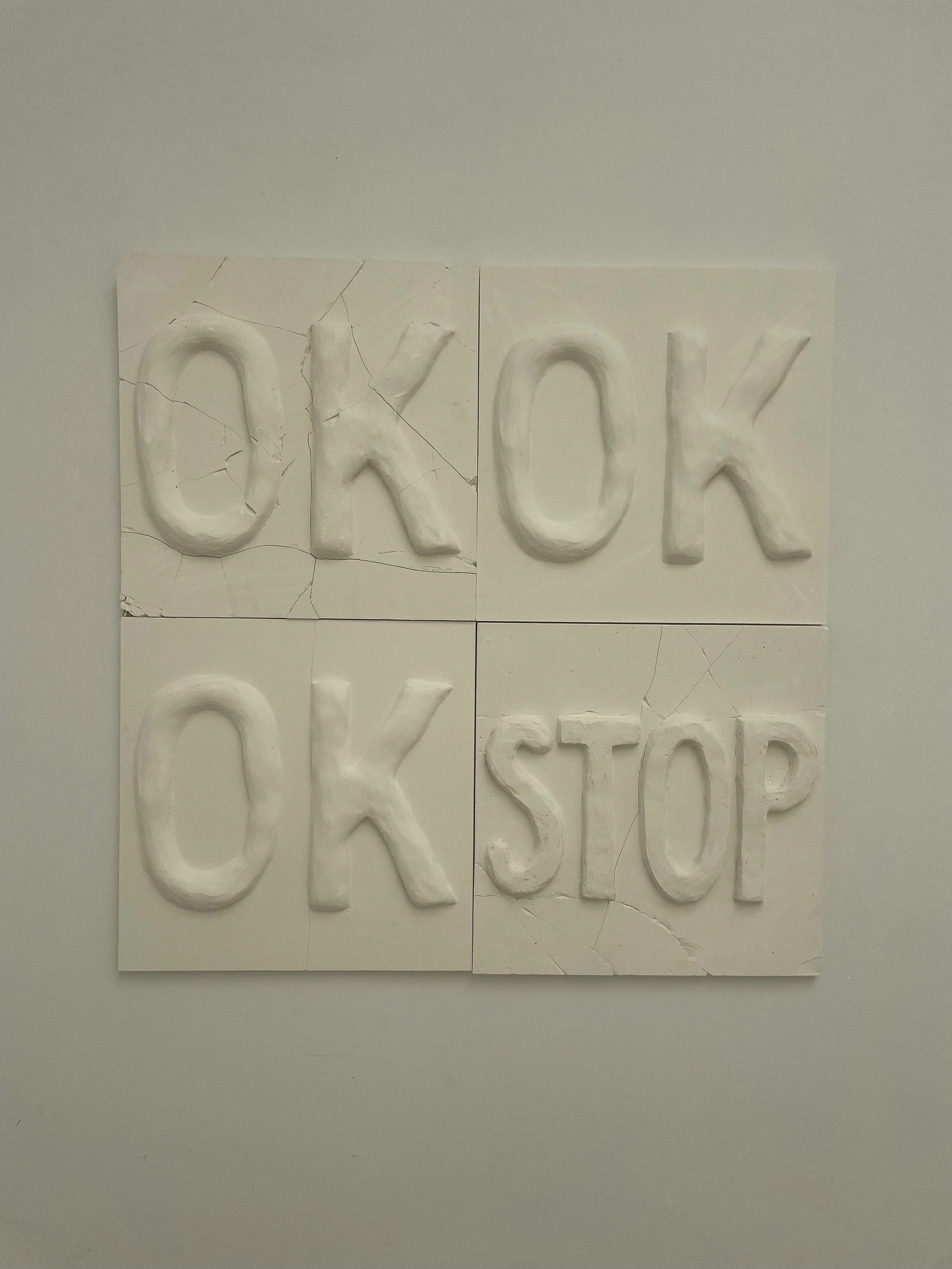
Belgian Pavilion
This one had interactive drum elements but weren’t available while we were there.
Central Pavilion
This was a large building in the garden with art from many different artists and countries.
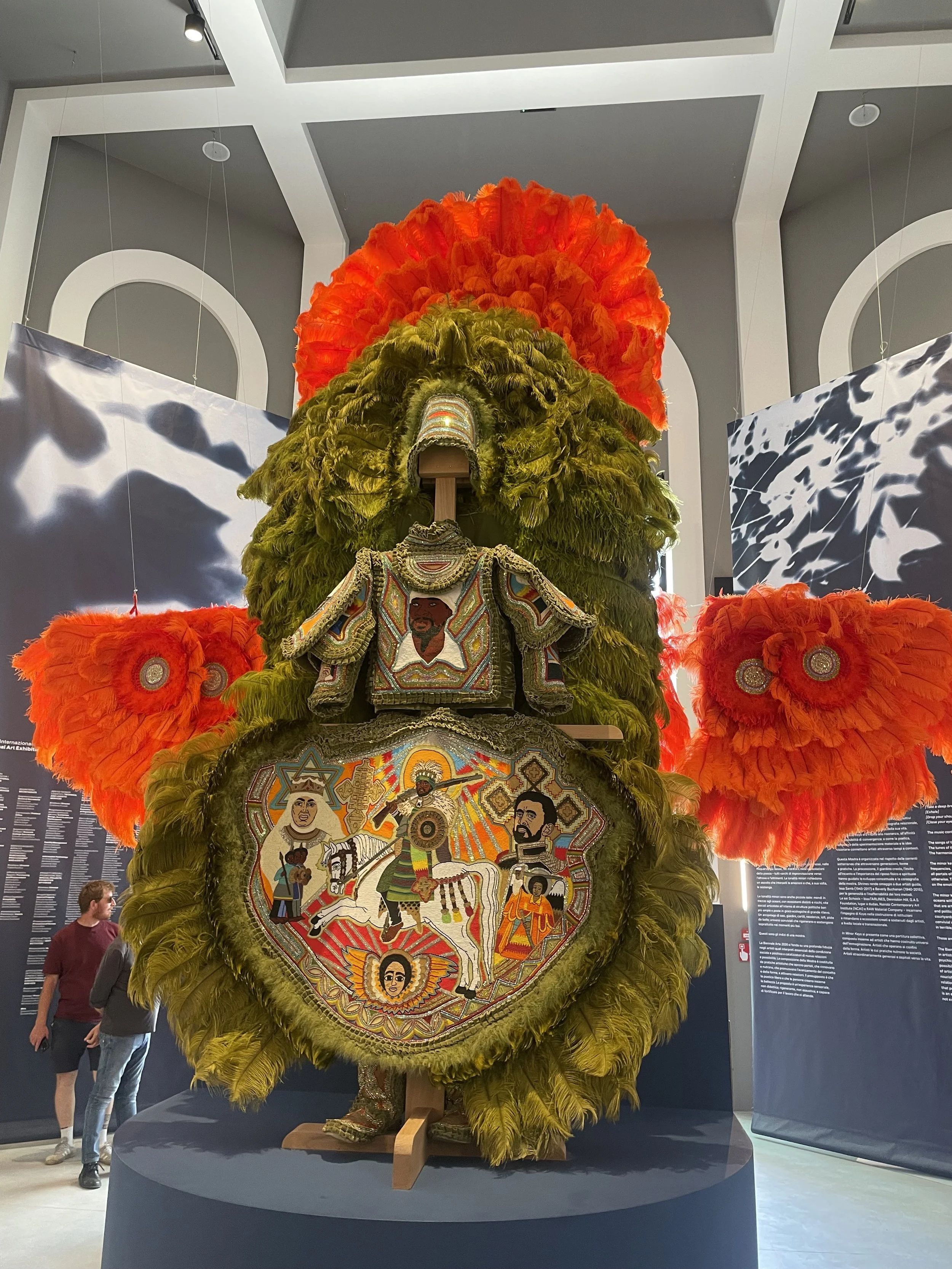
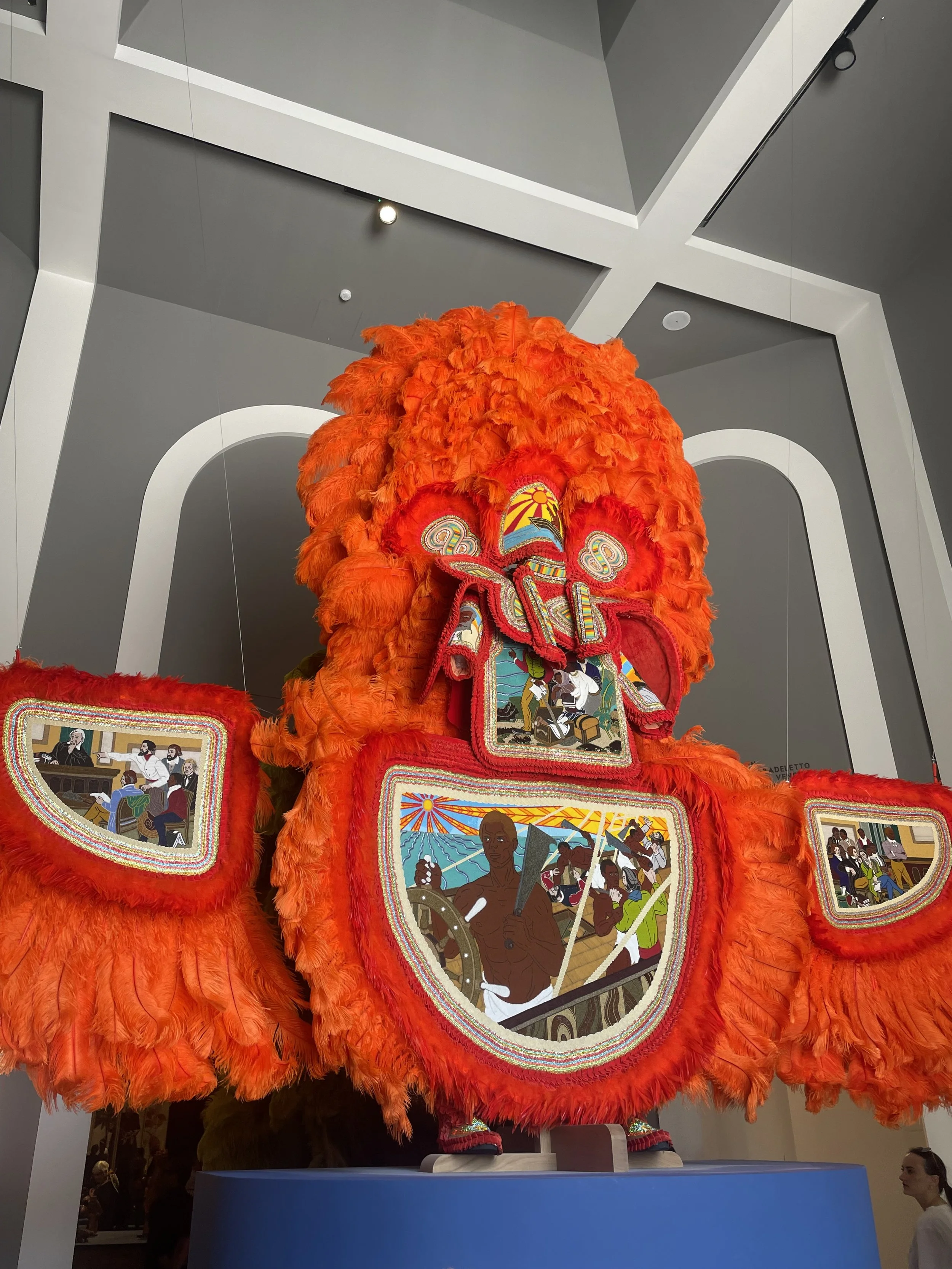
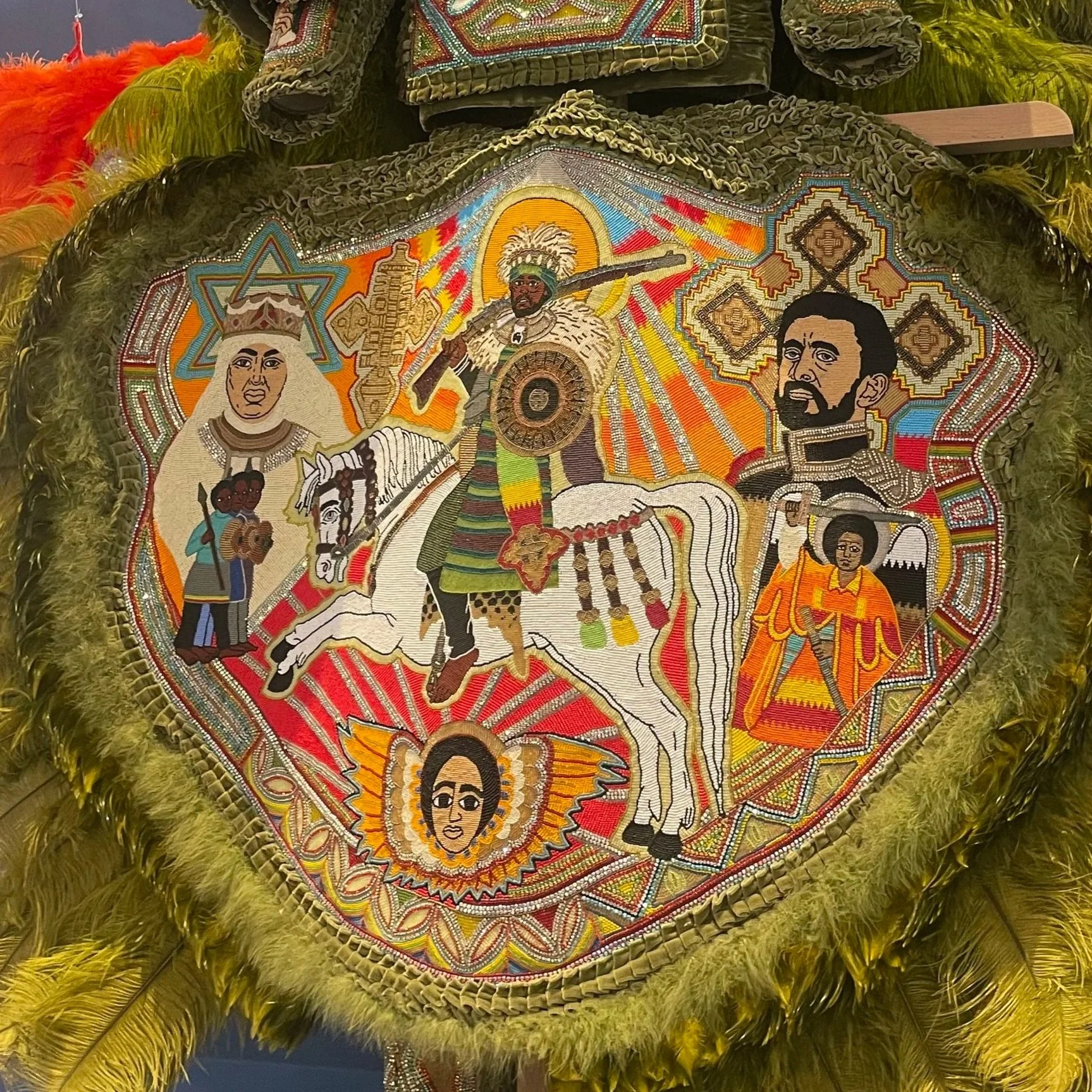
The entrance greeted us with large feather mardi gras costumes from New Orleans by Big Chief Demond Melancon of the Young Seminole Hunters tribe.
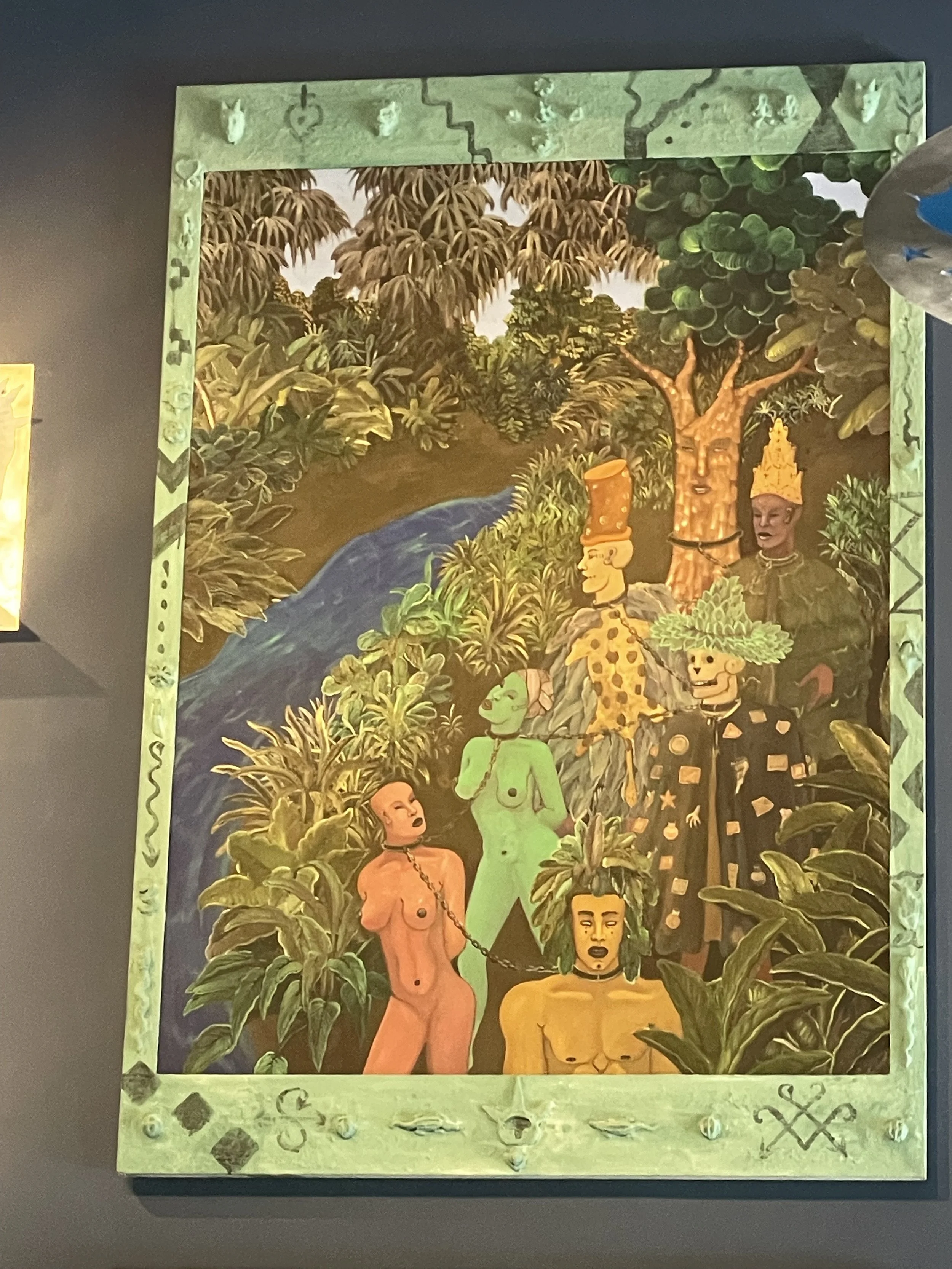
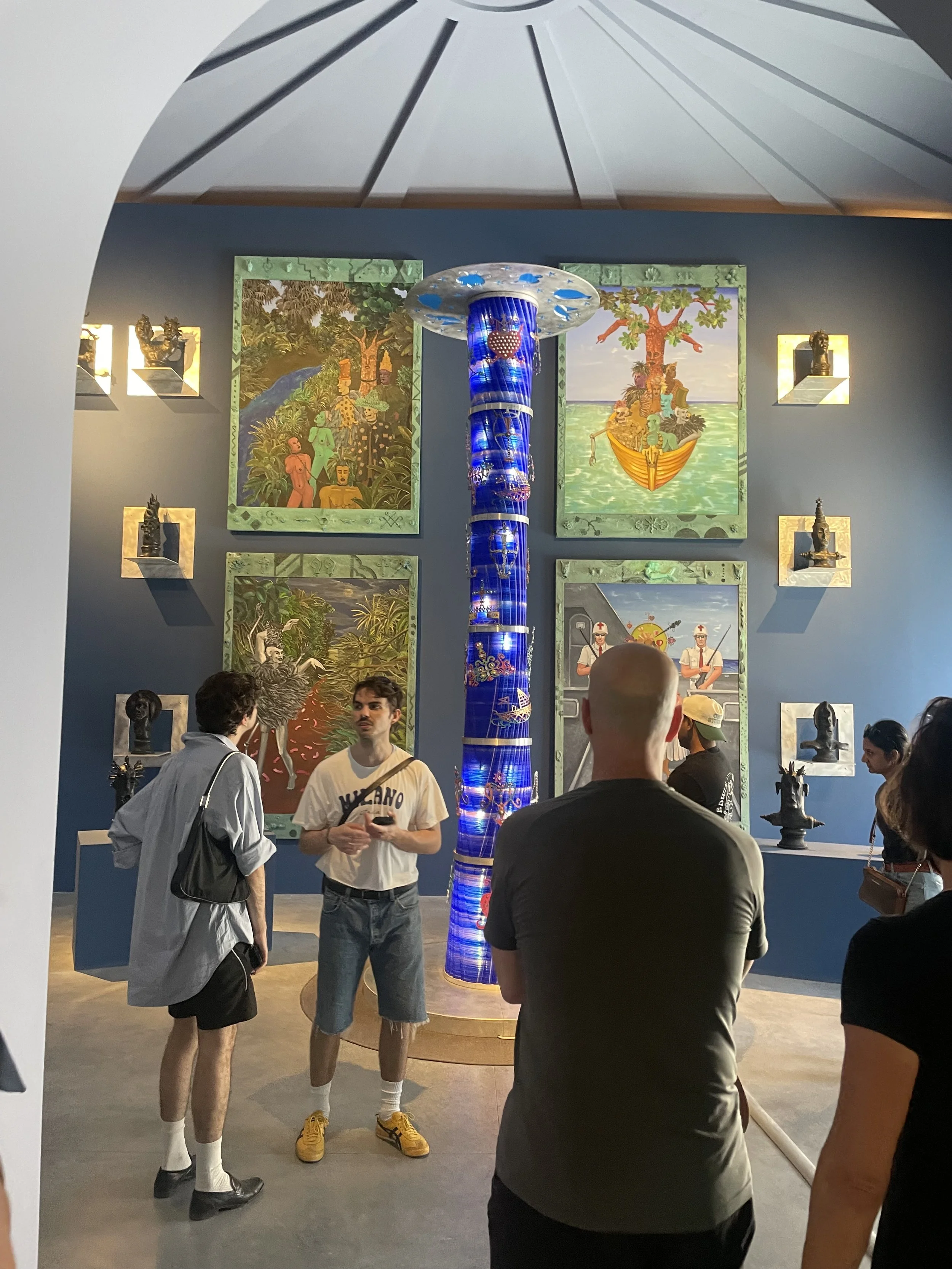
A Haitian artist:
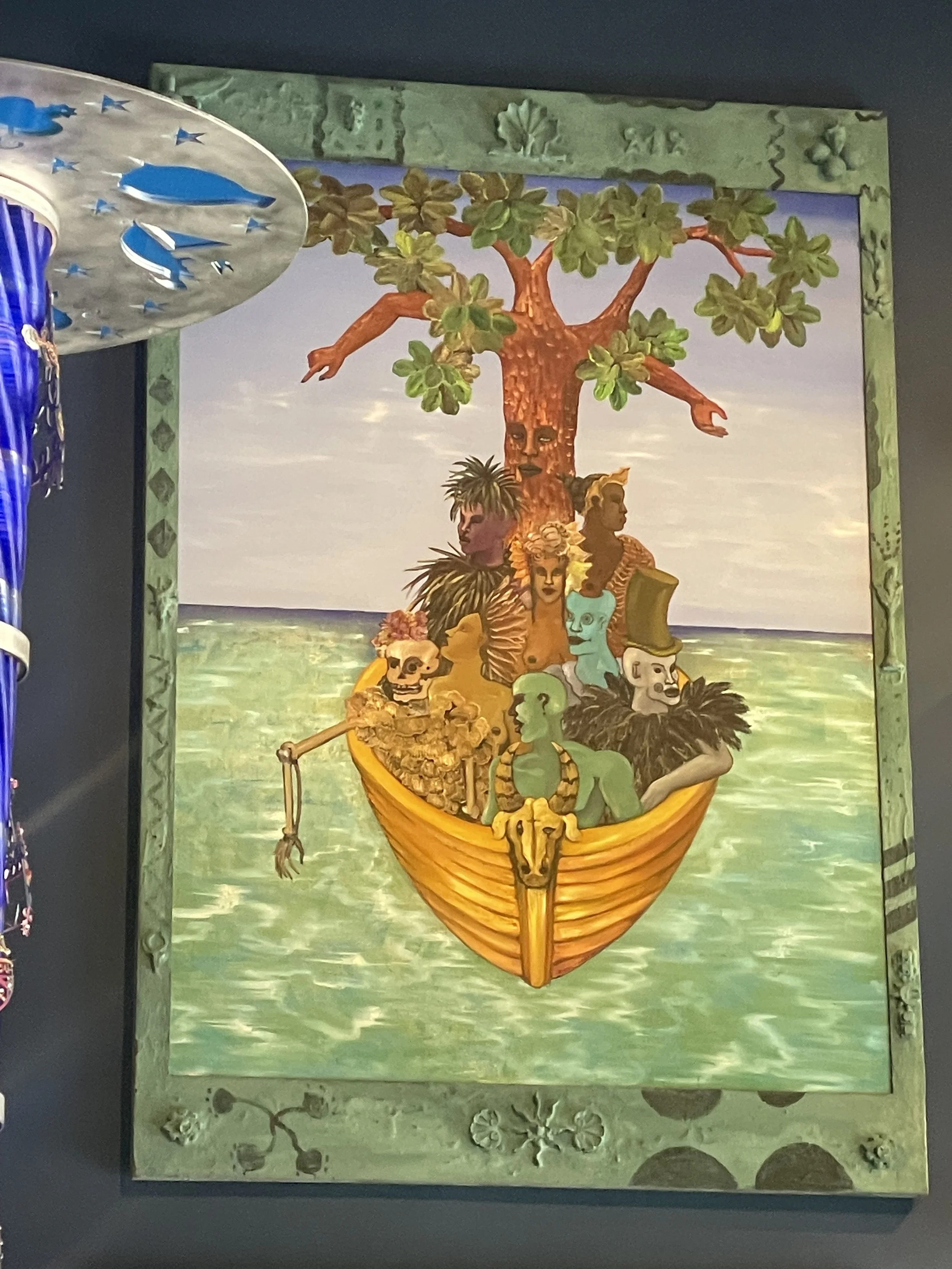
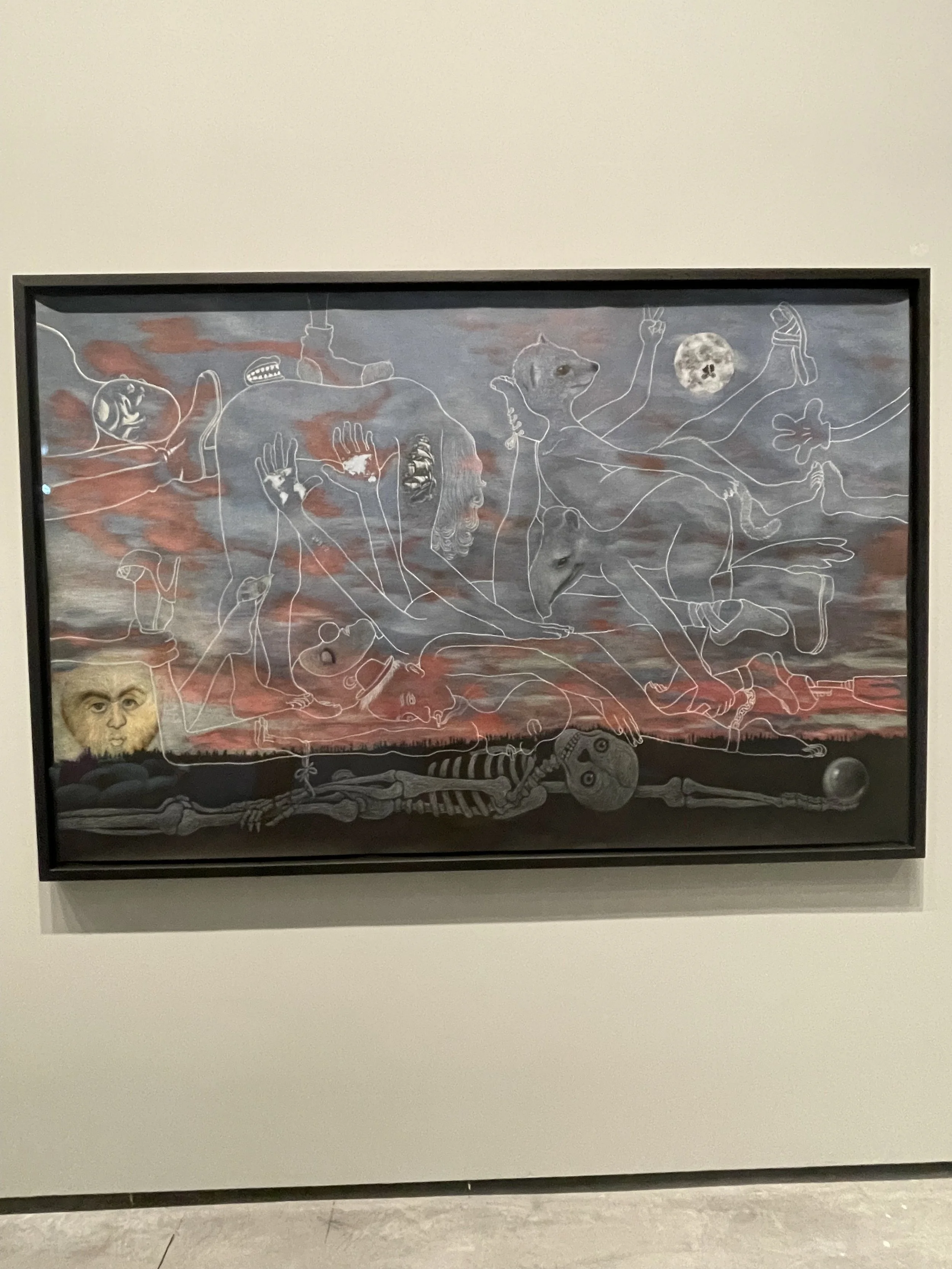
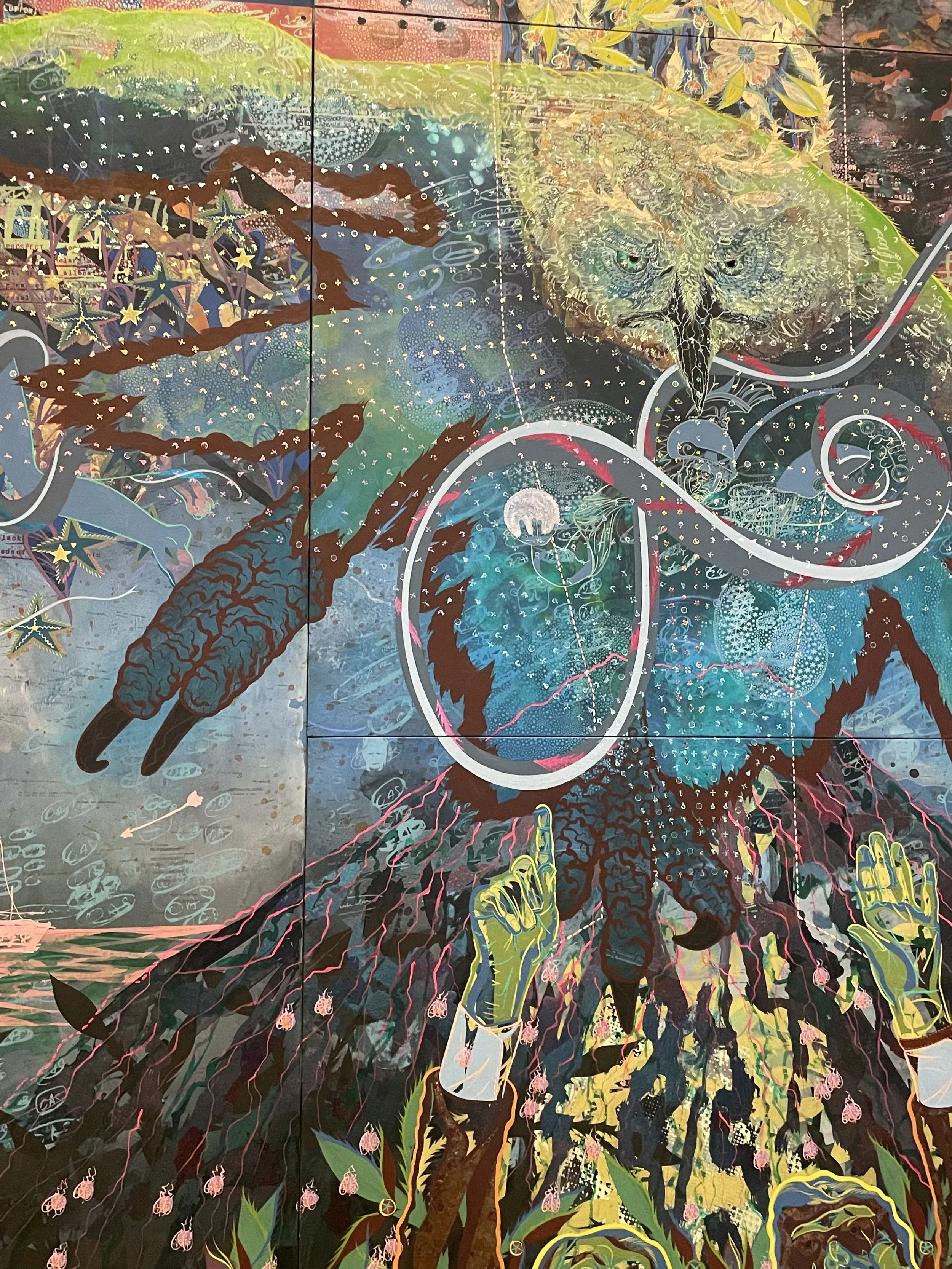
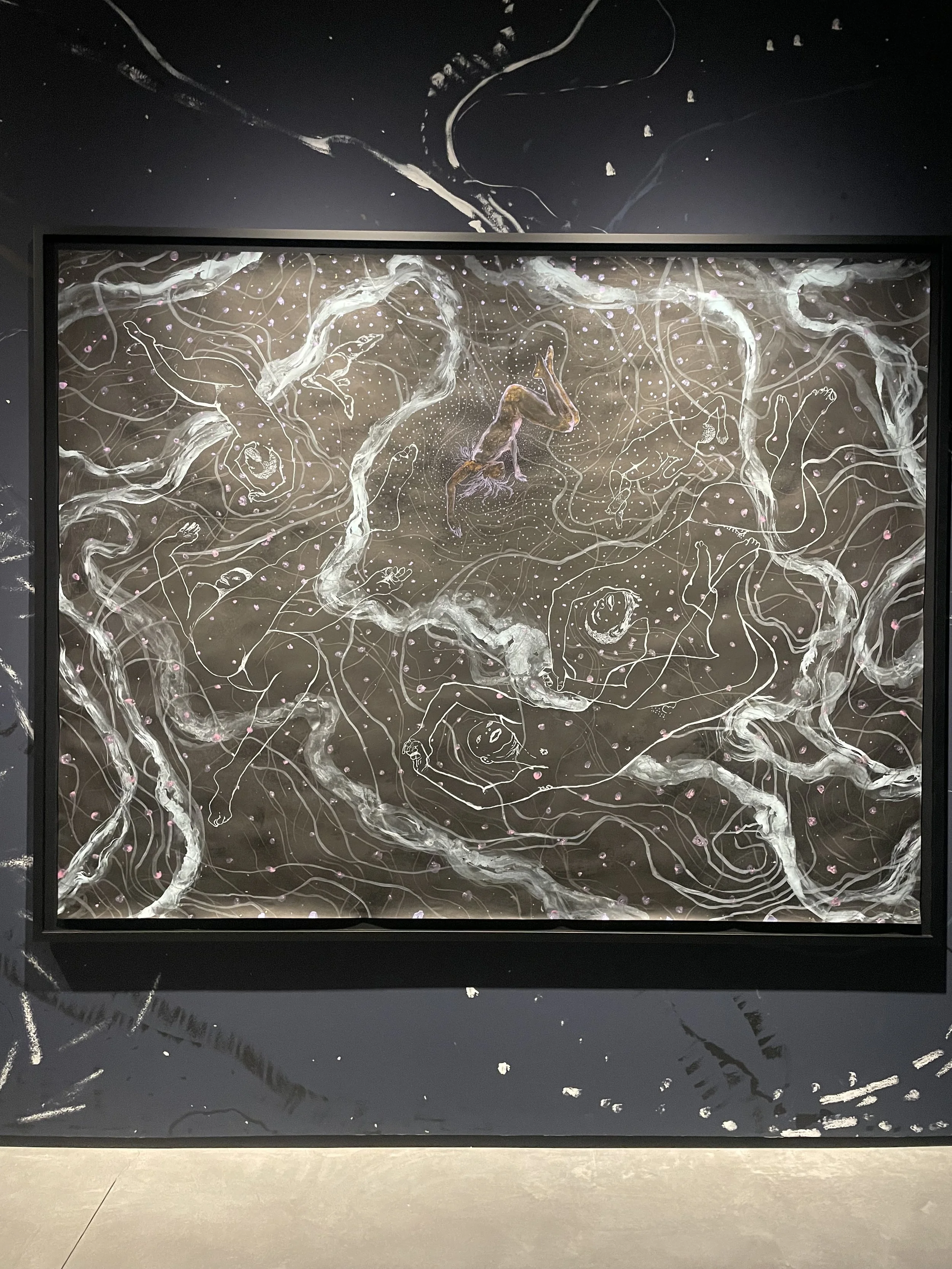
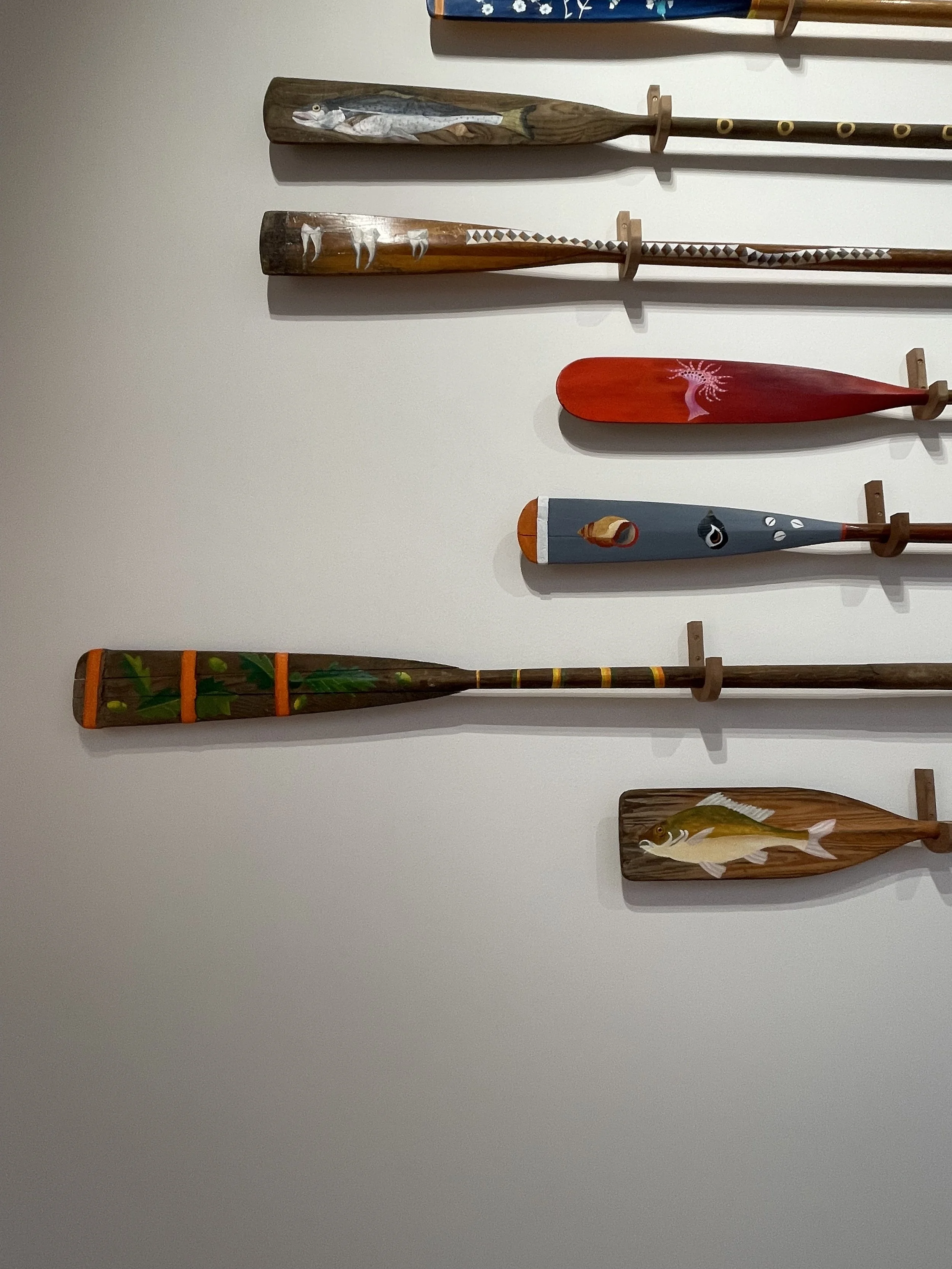
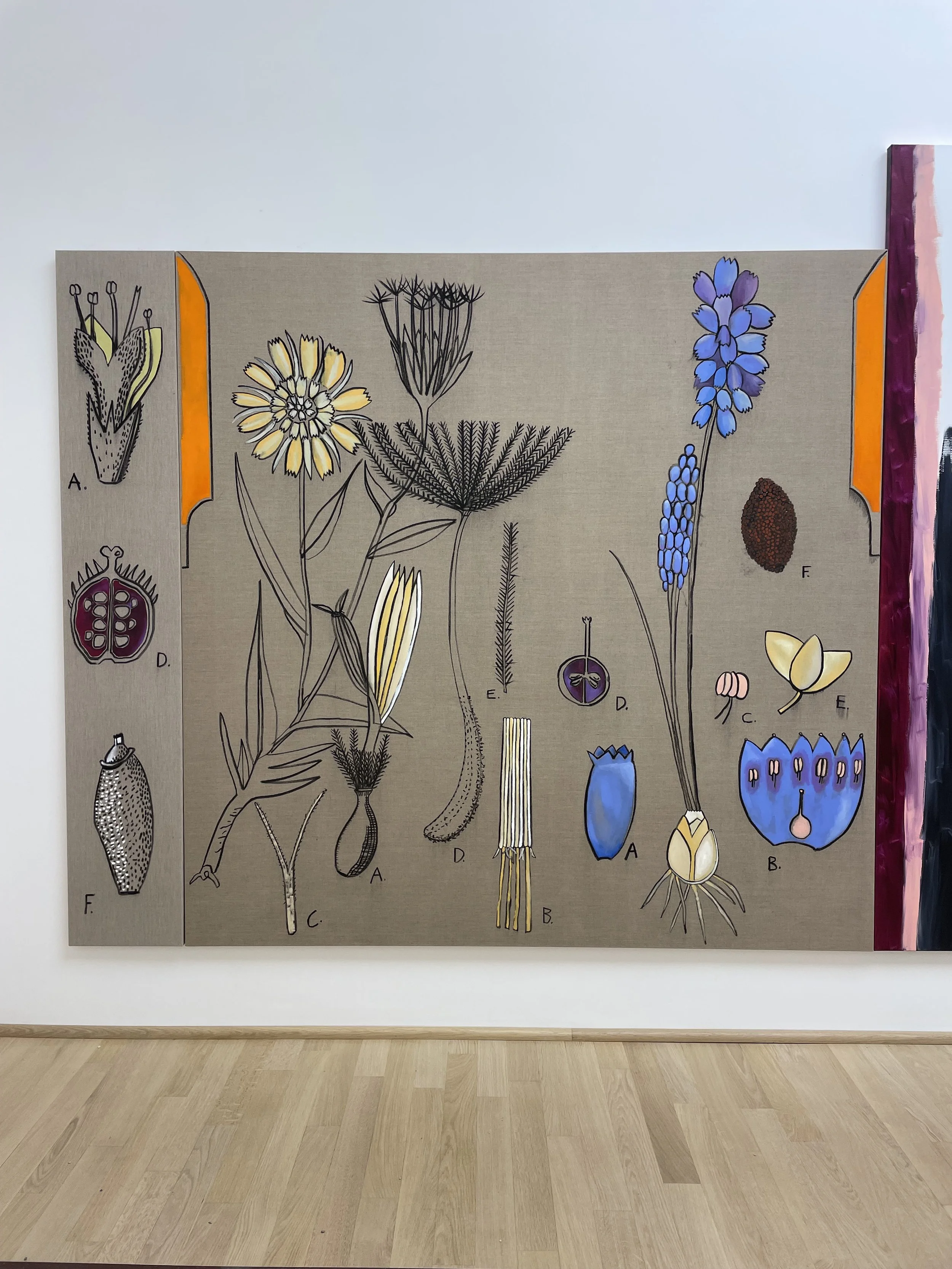
Some other pieces:
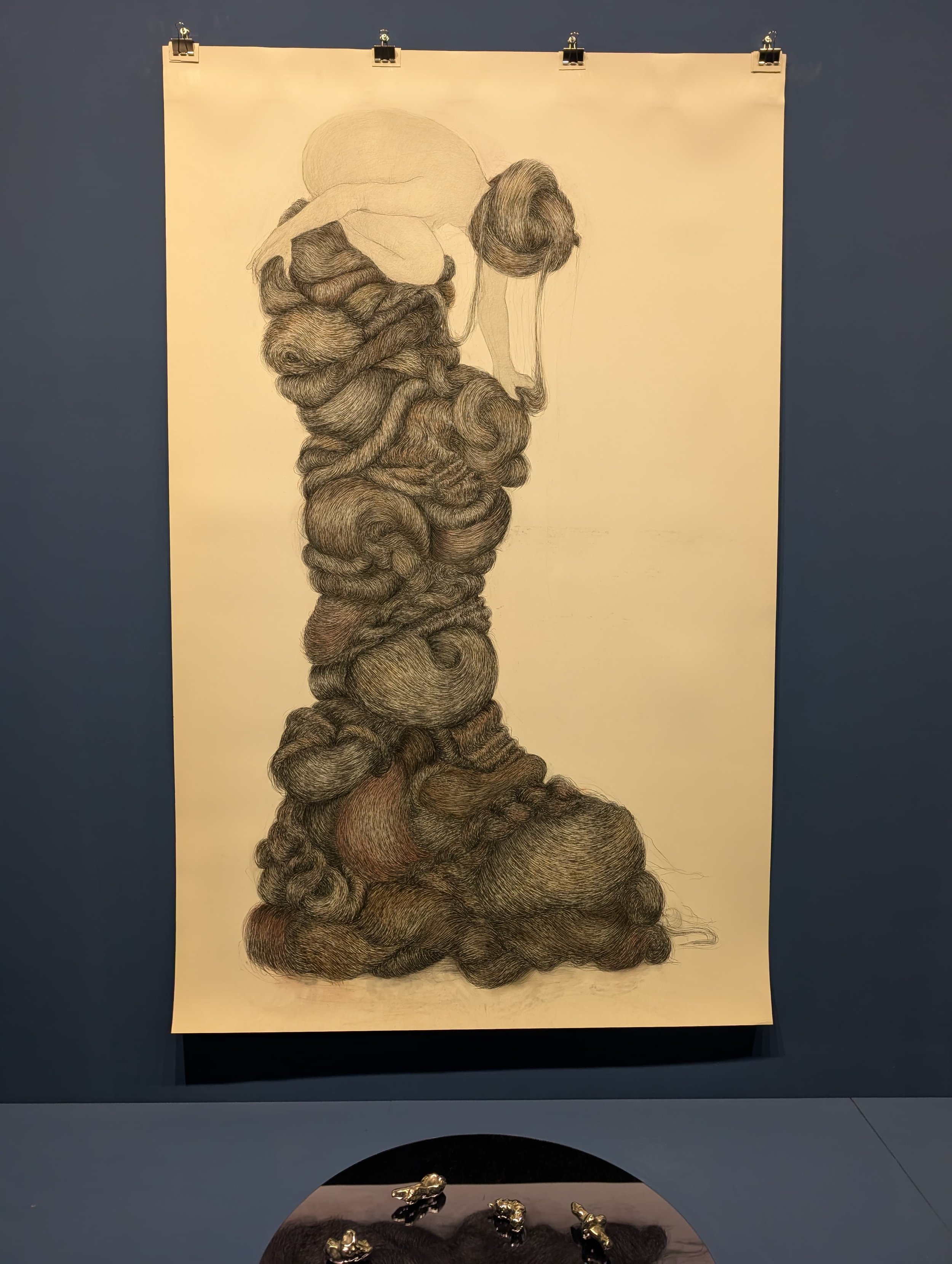
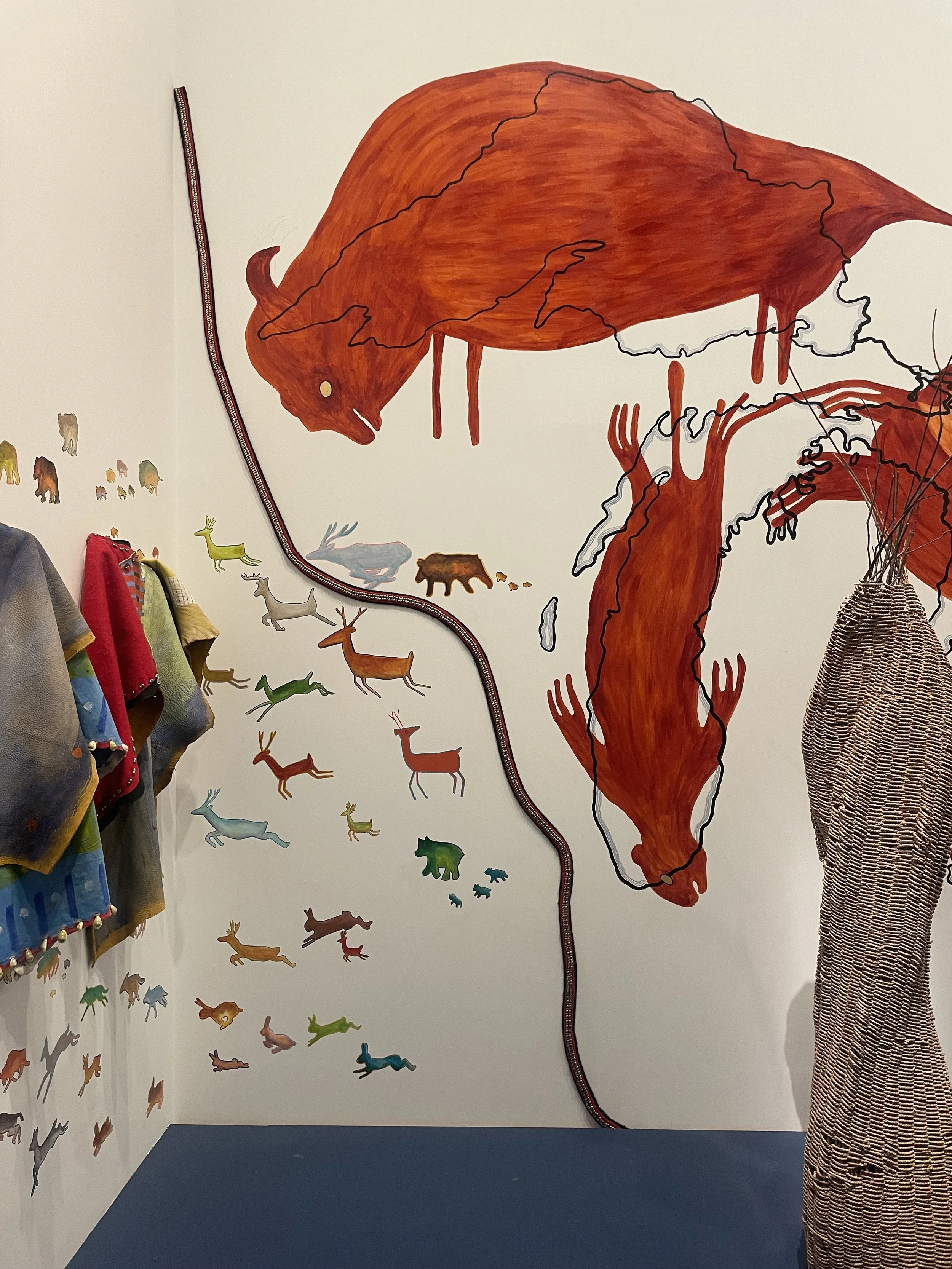
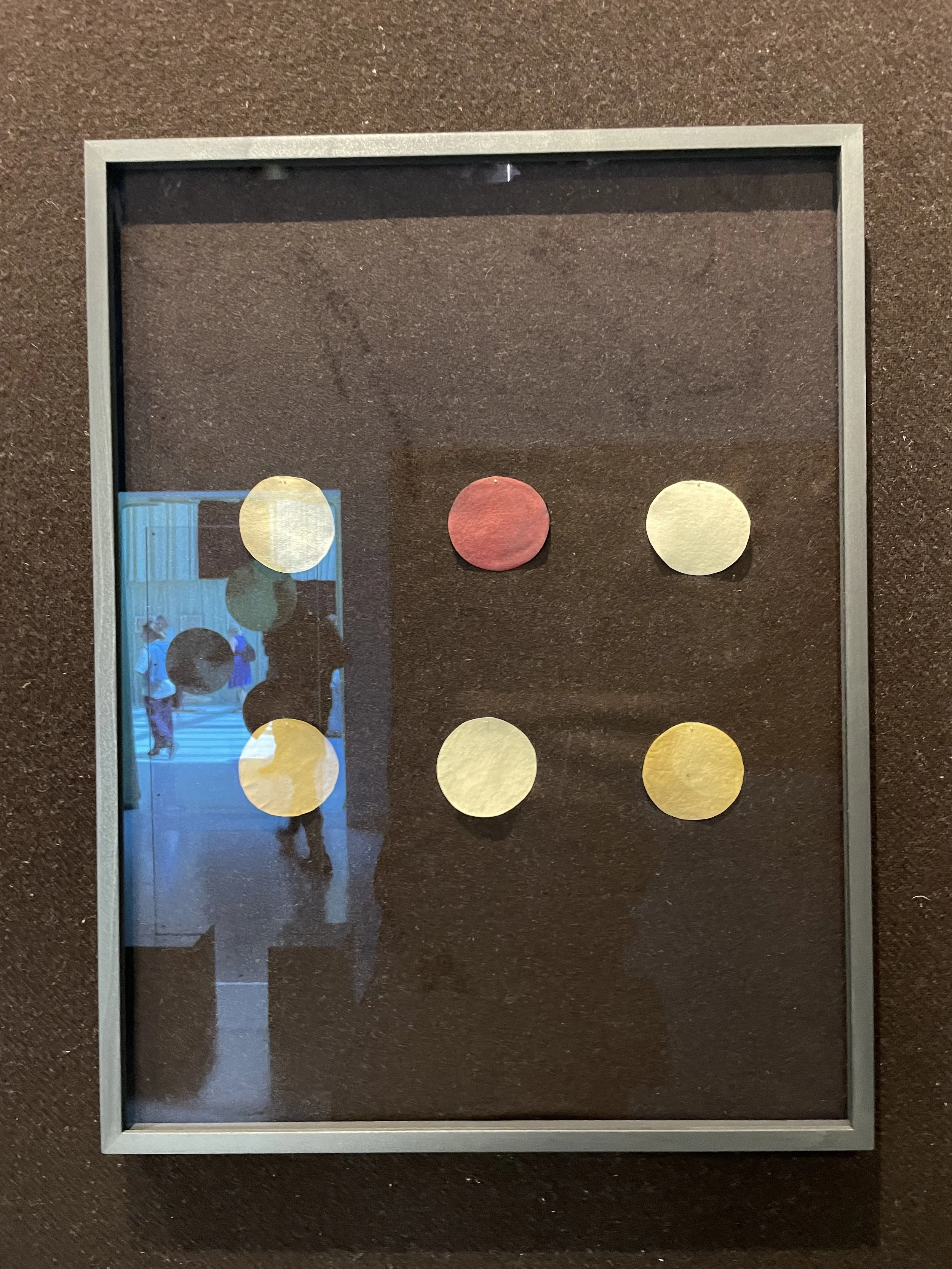
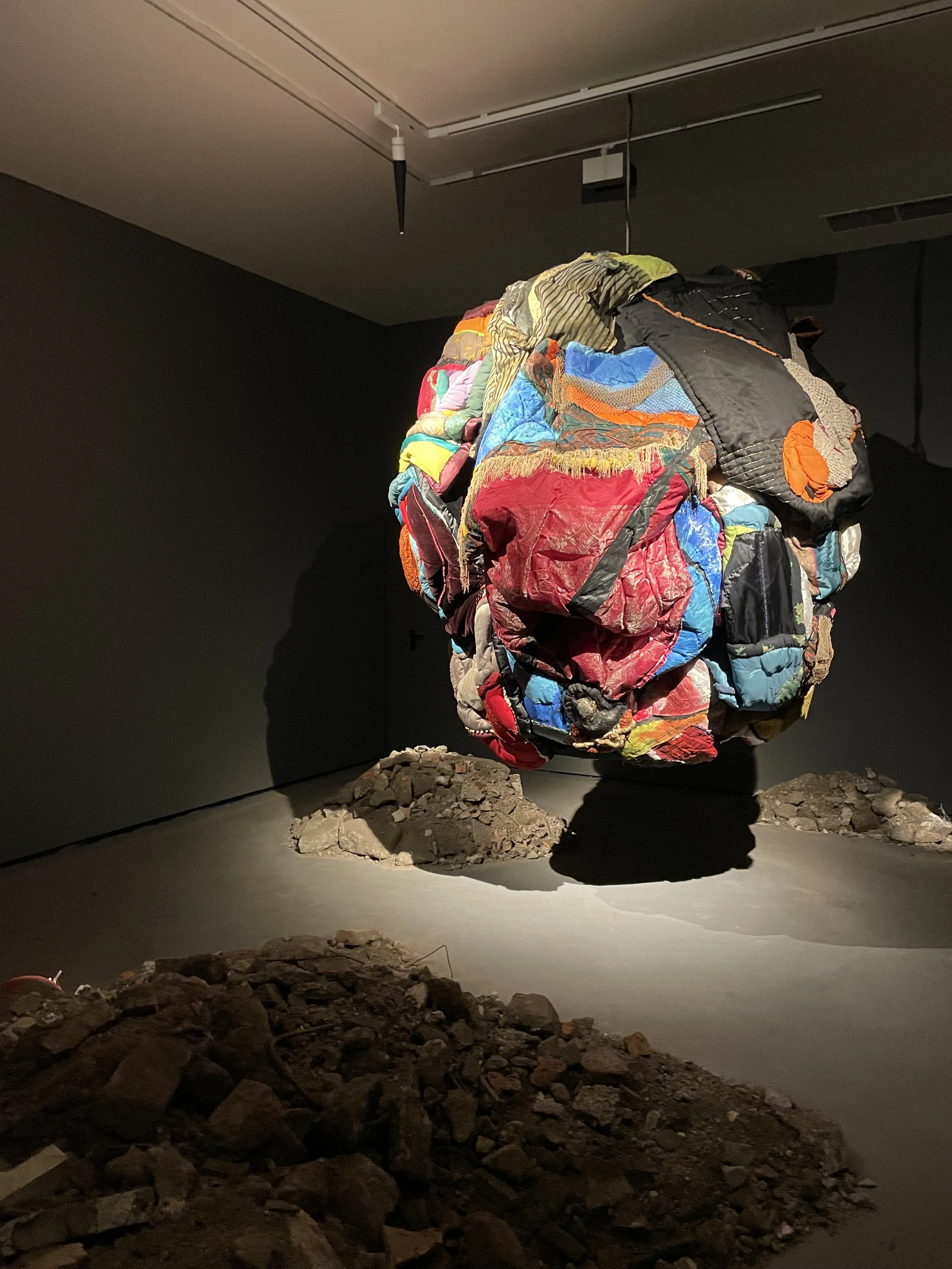
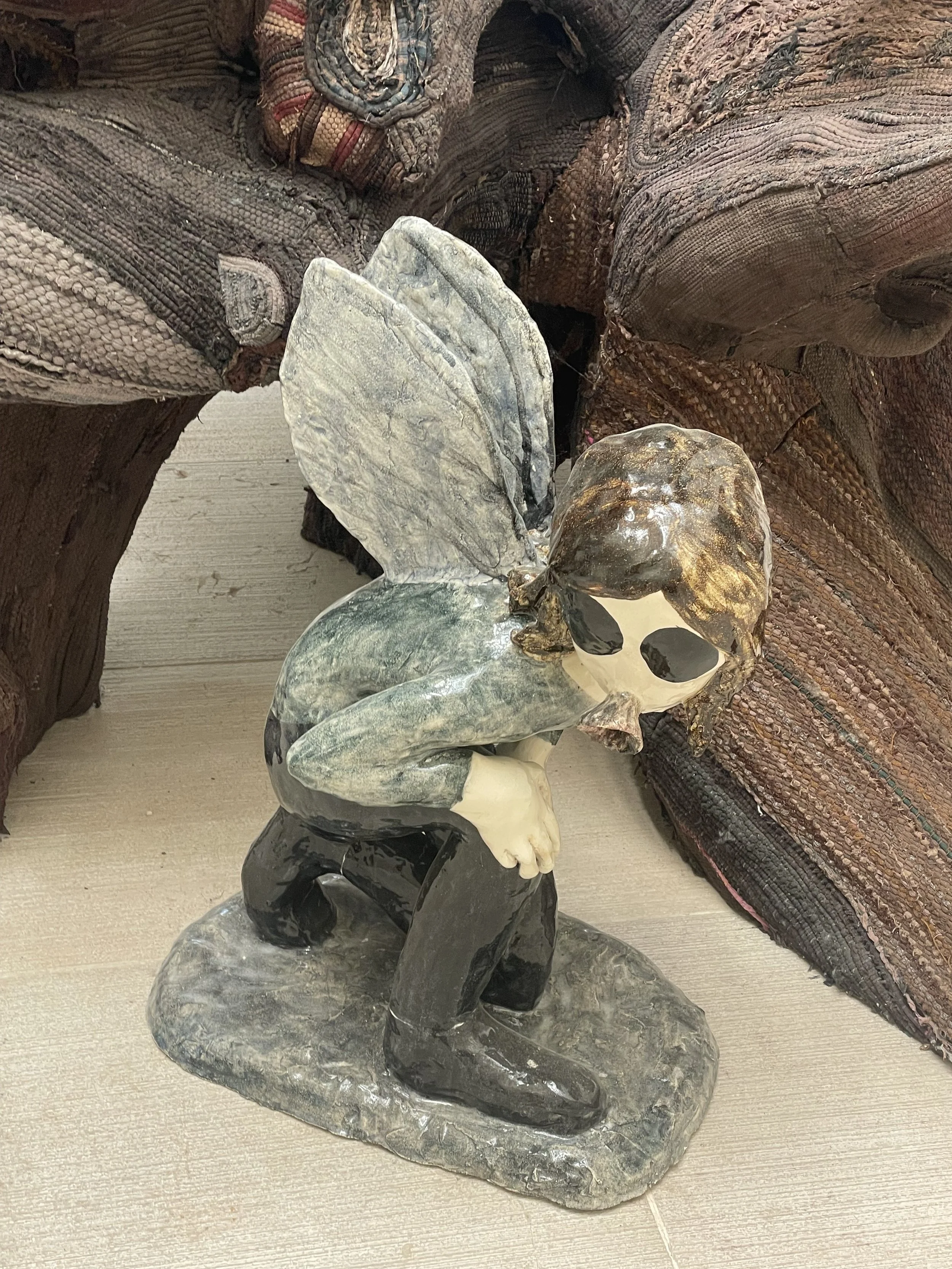
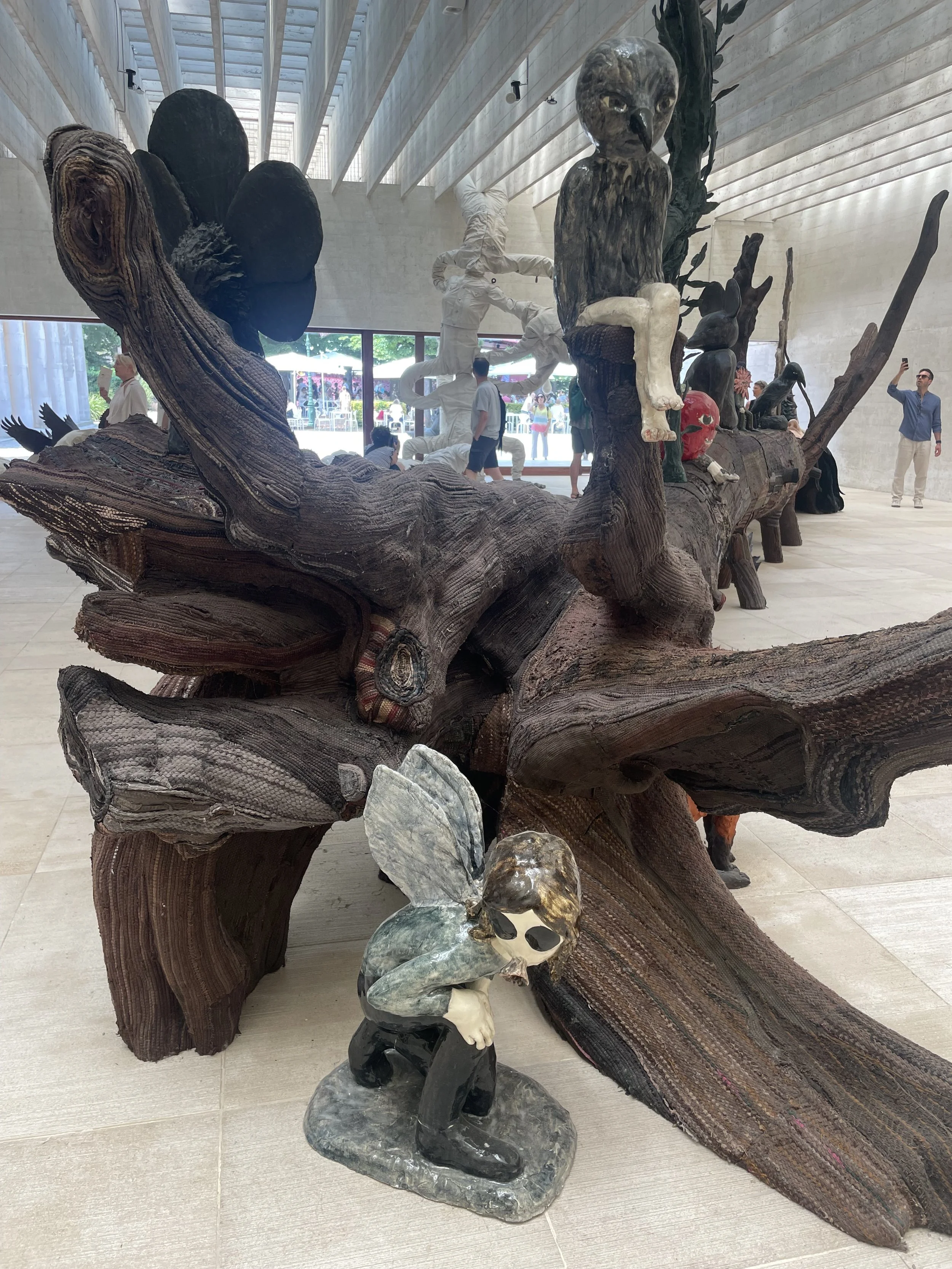
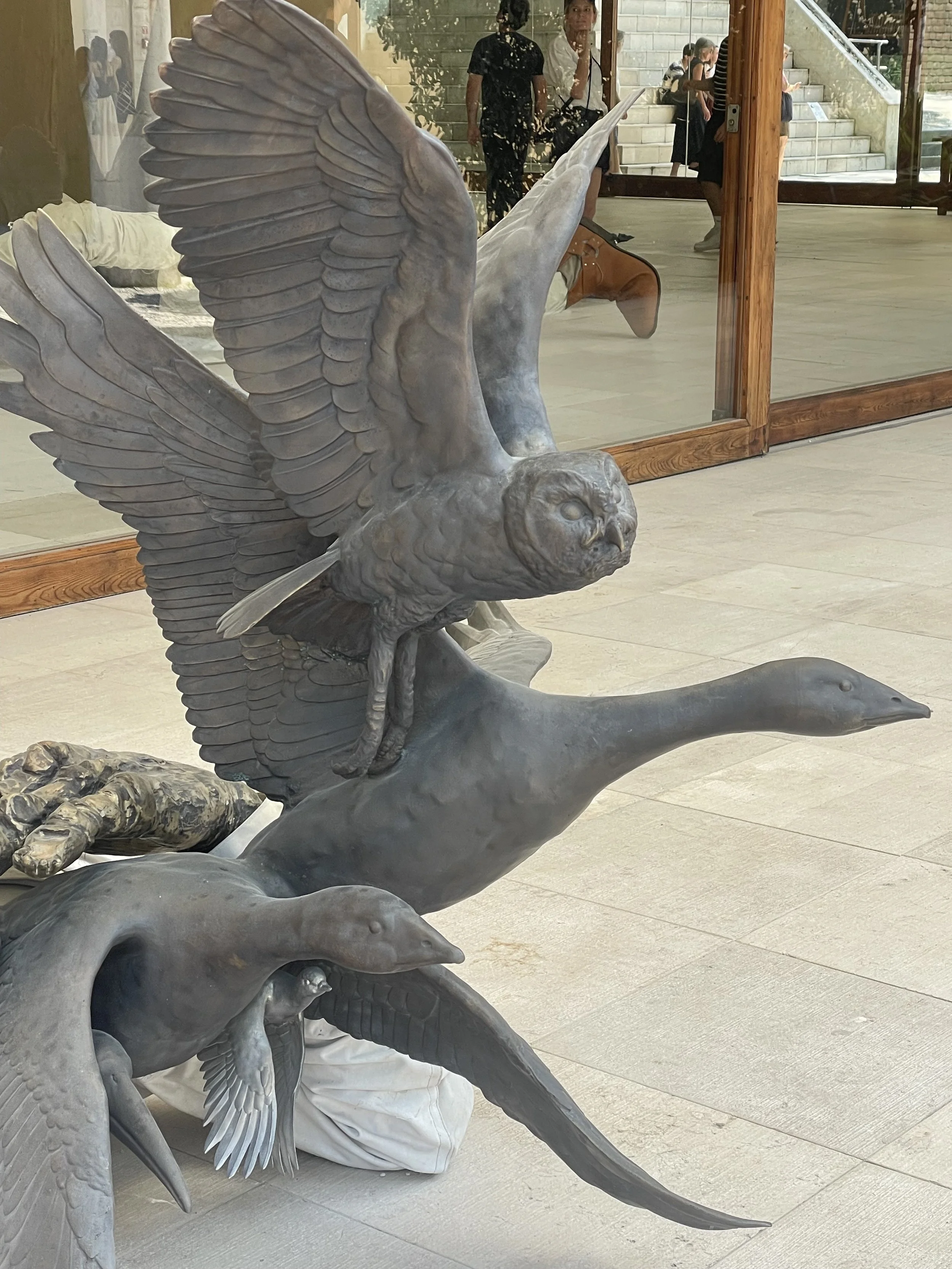
Nordic Pavilion (Sweden and Norway)
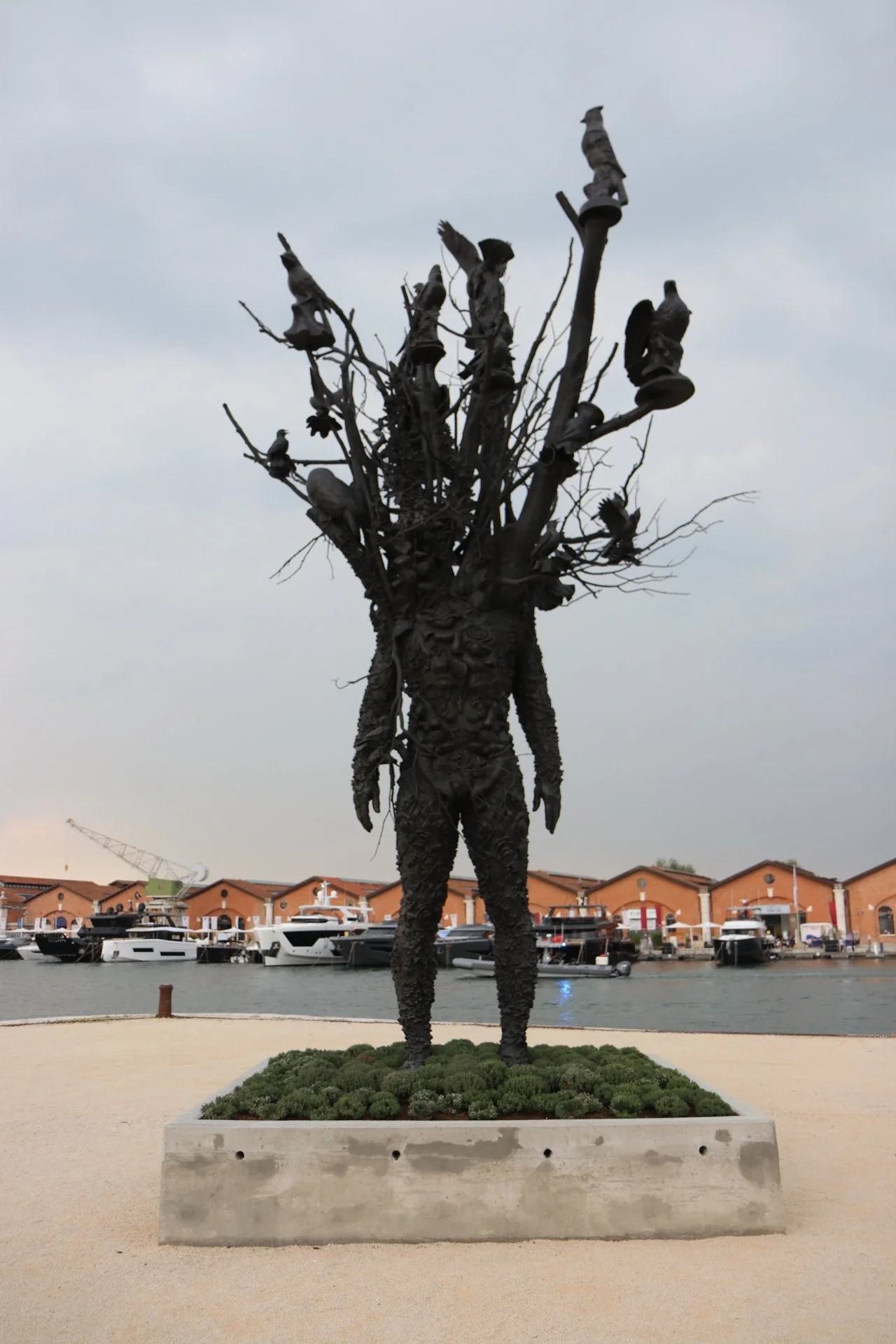
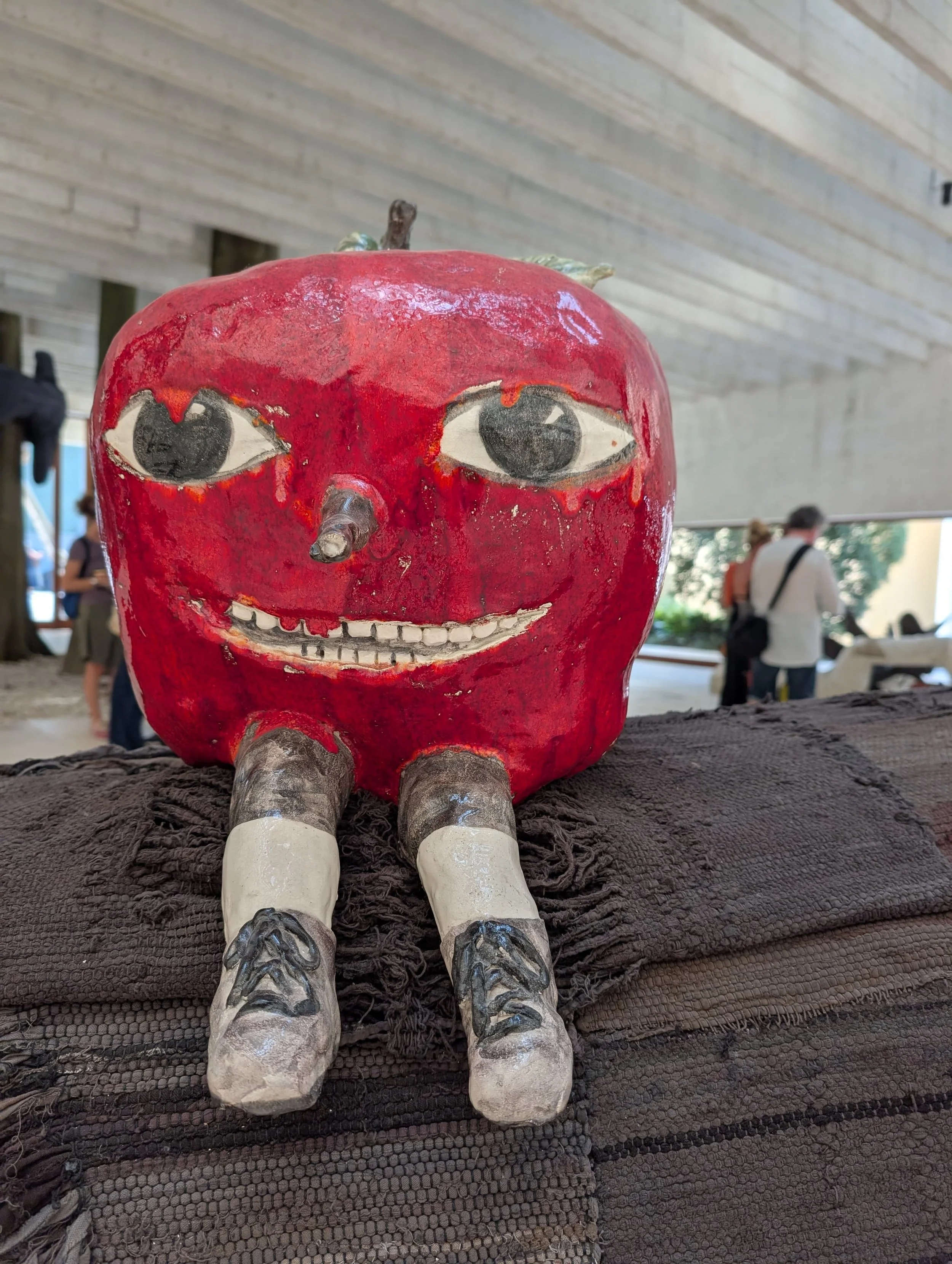
This art was dark and eerie, not unlike the Nordic Noir film and TV show genre I’ve been highlighting in my recent Check-In posts. Trees with little creatures.
(Some of these photos were taken by my boyfriend).
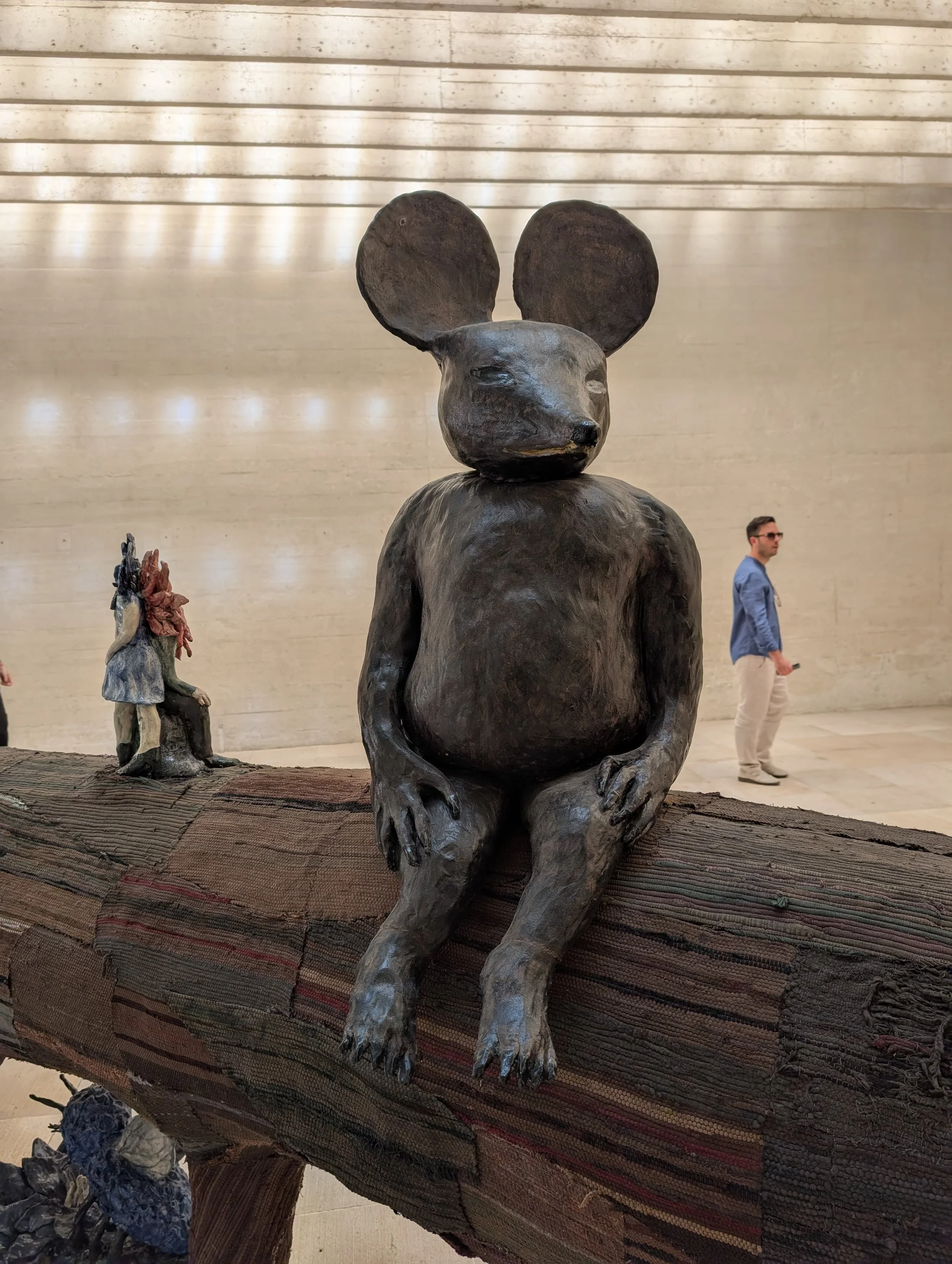
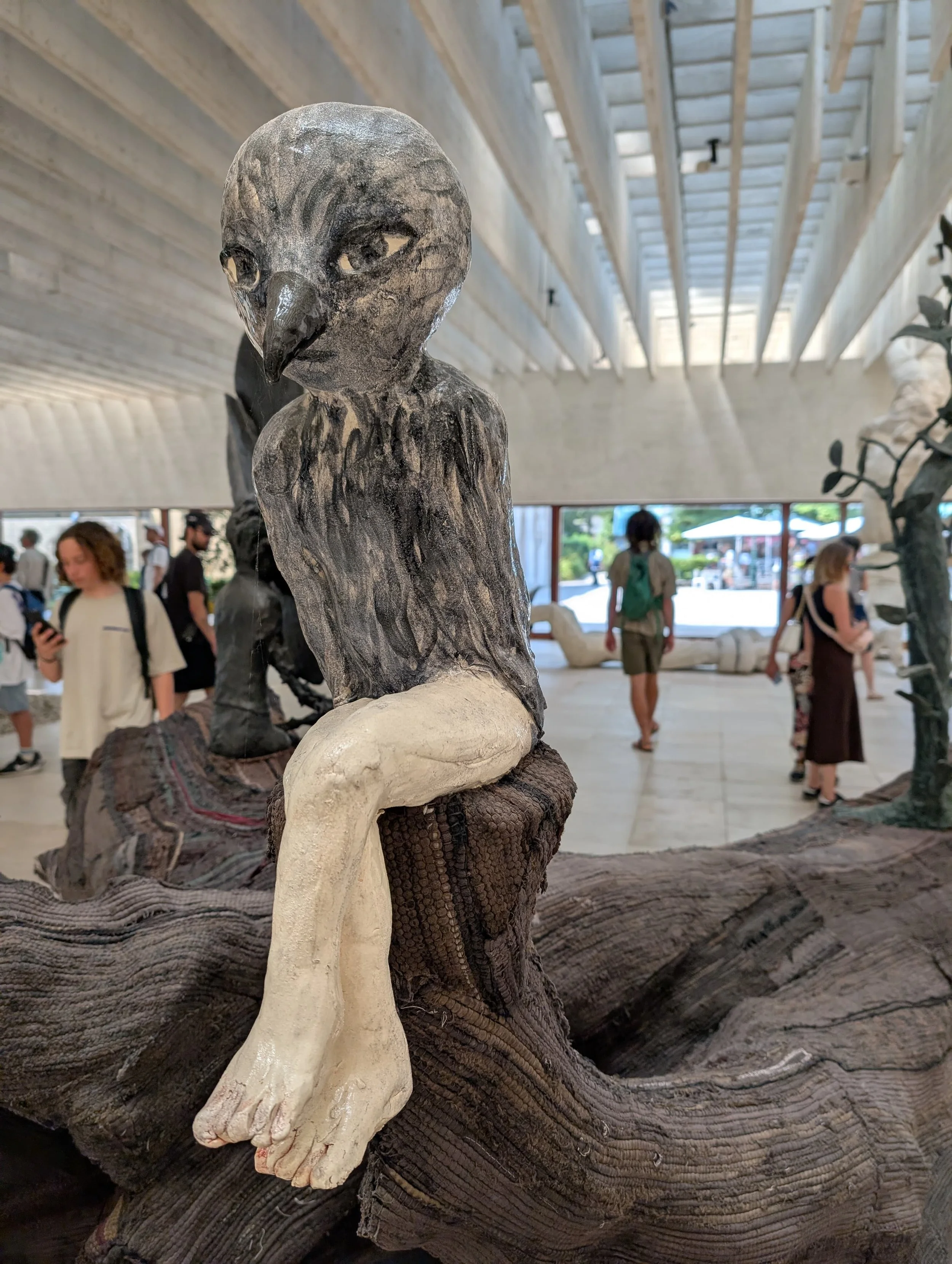
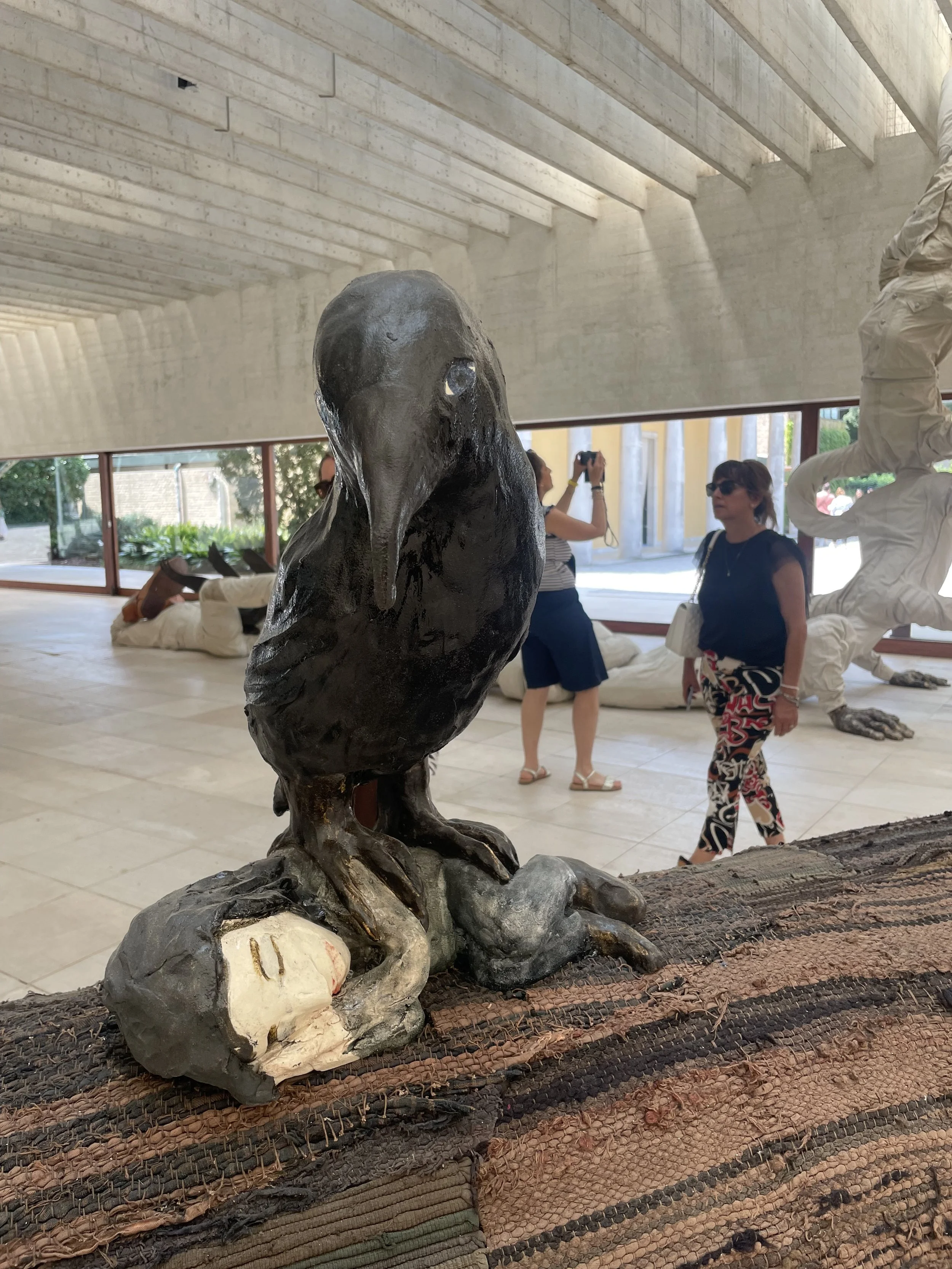
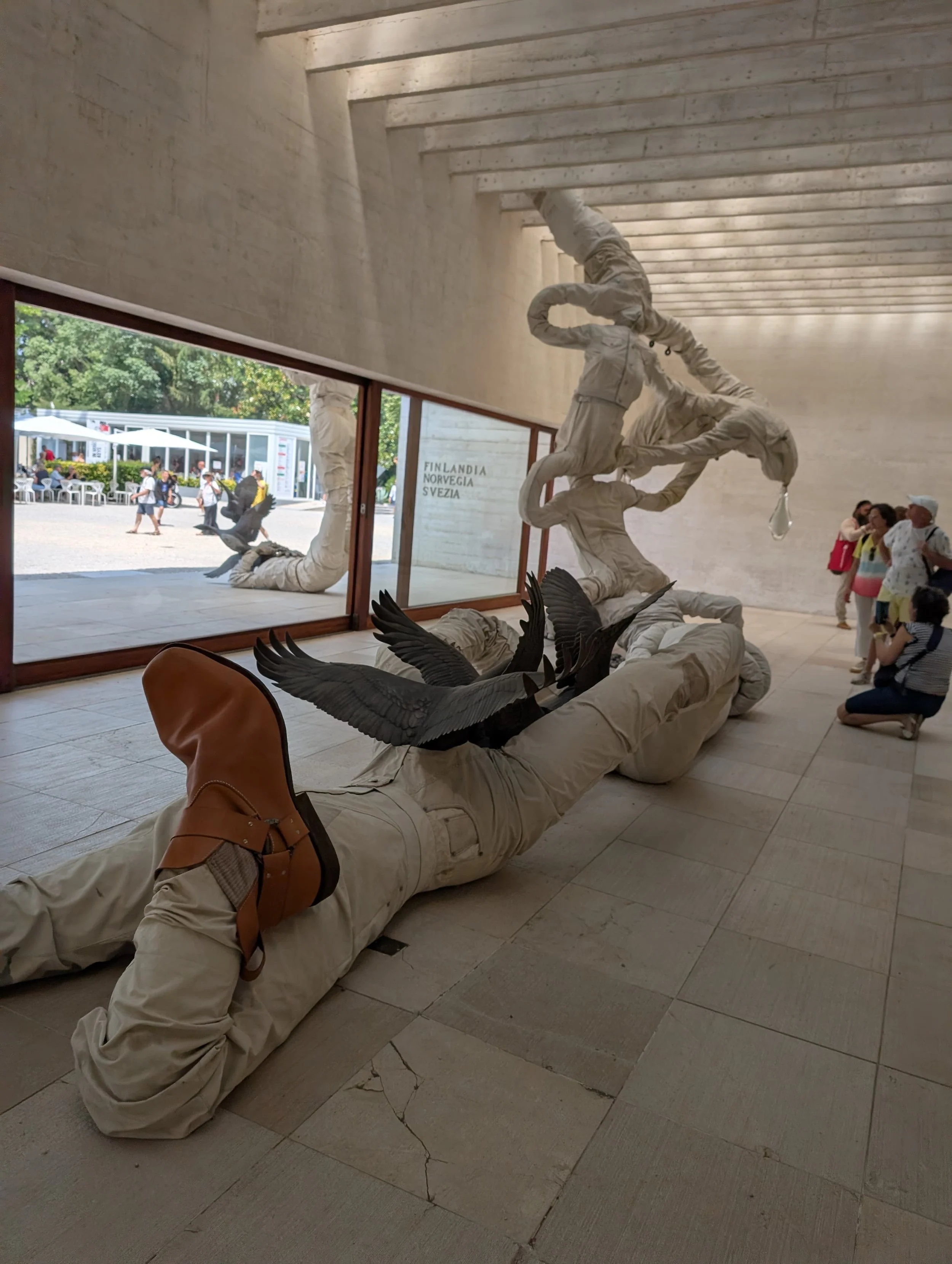
United States of America Pavilion
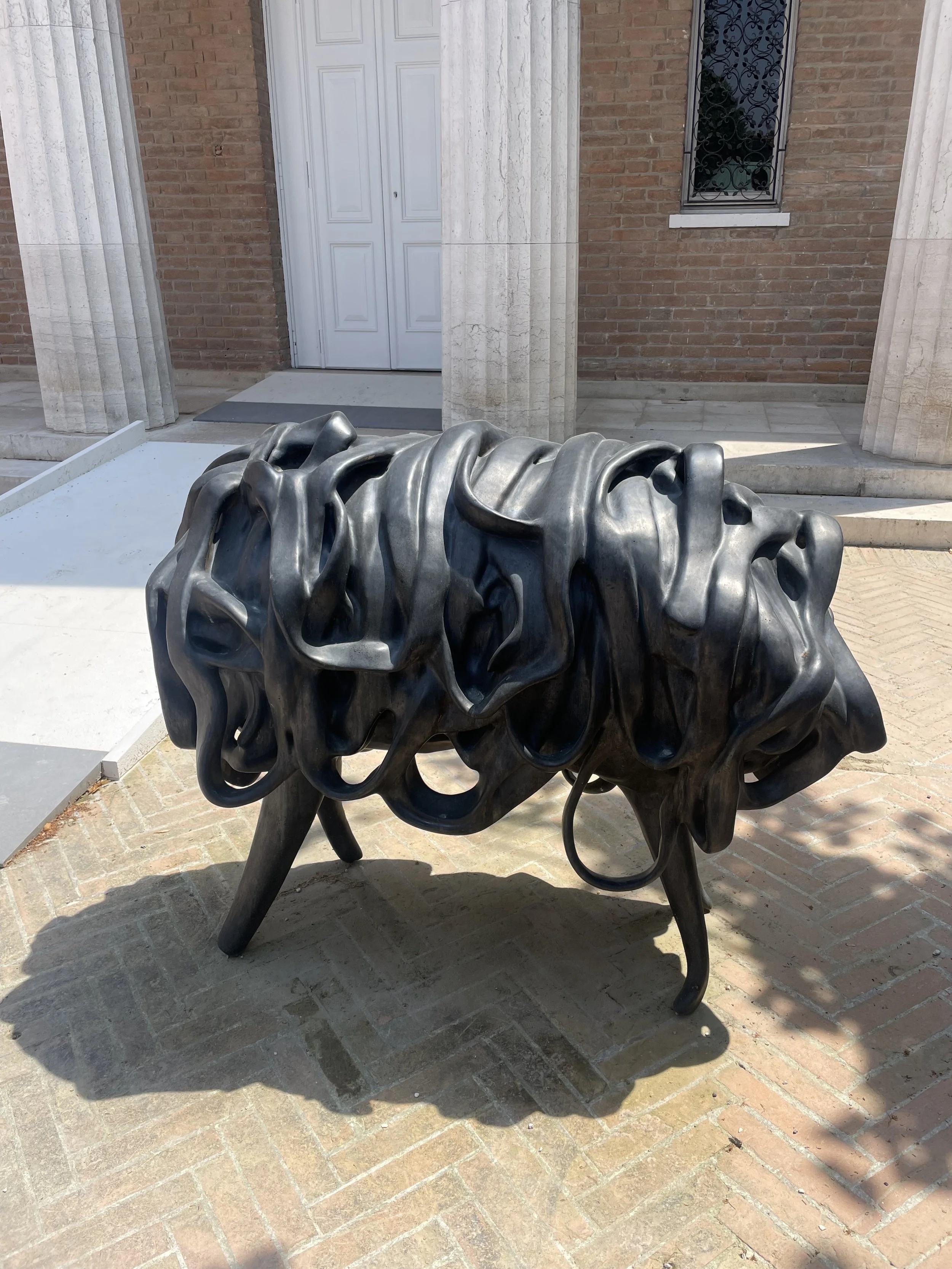
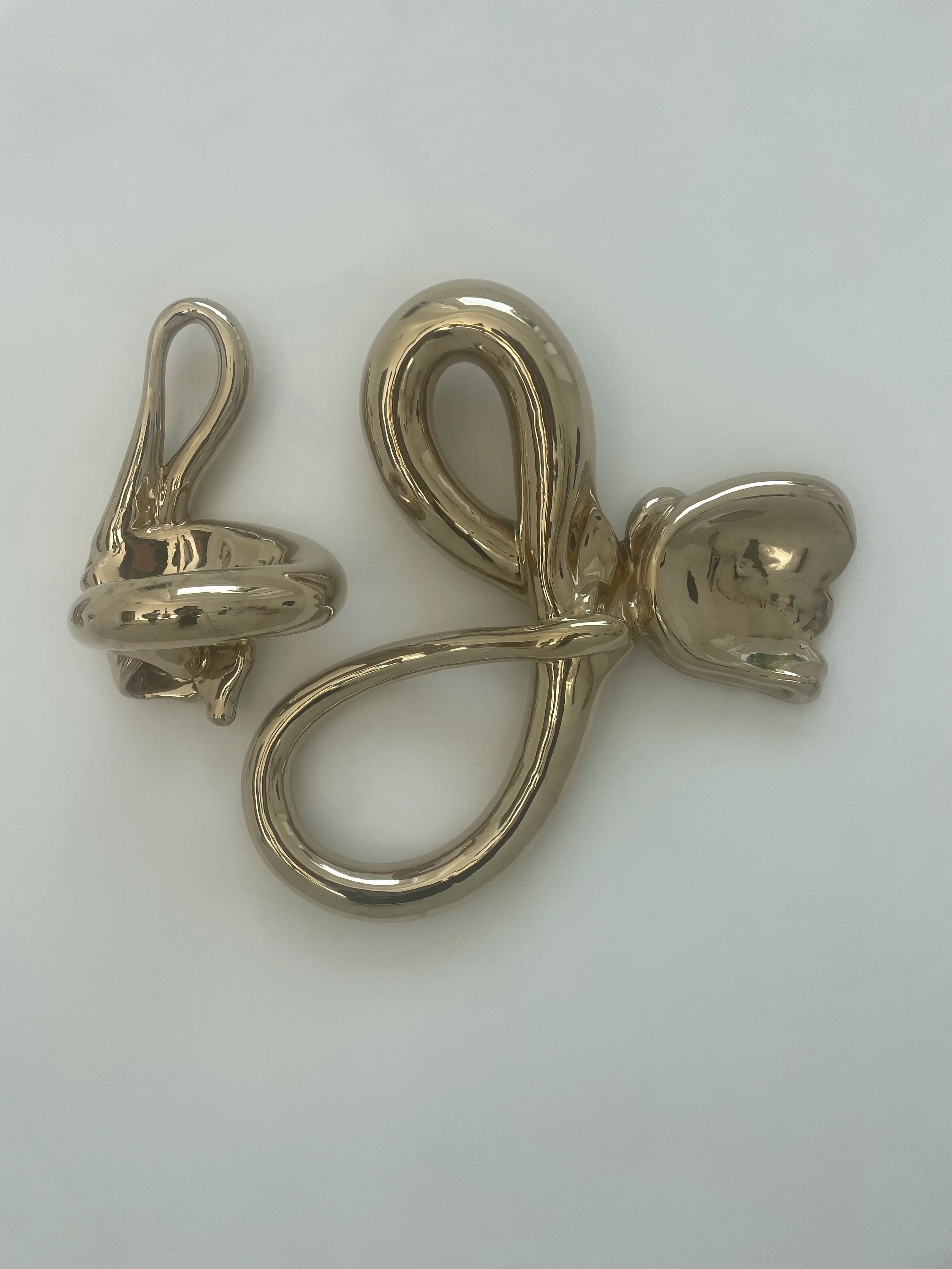
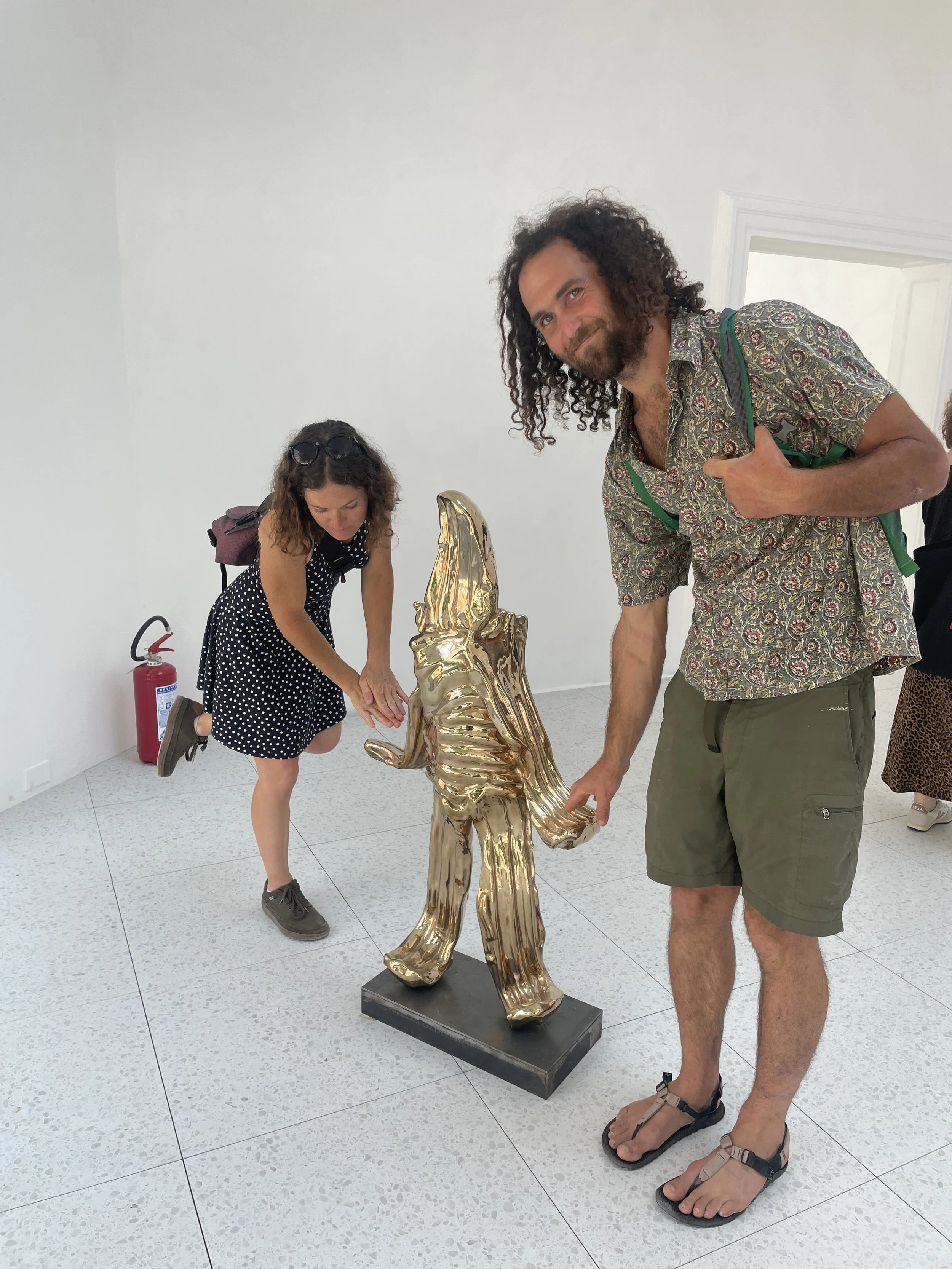
Art by Alma Allen was described as “a whole lot of nothing” by art critic Hakim Bishara.
Indeed, we didn’t get it. I guess it was just what Trump asked for.
In a way, I reflected to my companions, the blobby nature of the sculptures does represent the way many Americans are feeling right now: “meh” and without any feeling of agency to change the trajectory.
Maybe even tangled up in a mess of fettuccine like this headless bovine creature.
So, take that, Trump! Political feelings were evoked!
Japanese Pavilion
This was one exhibit that we knew we wanted to visit, and we made it happen! Felt good.
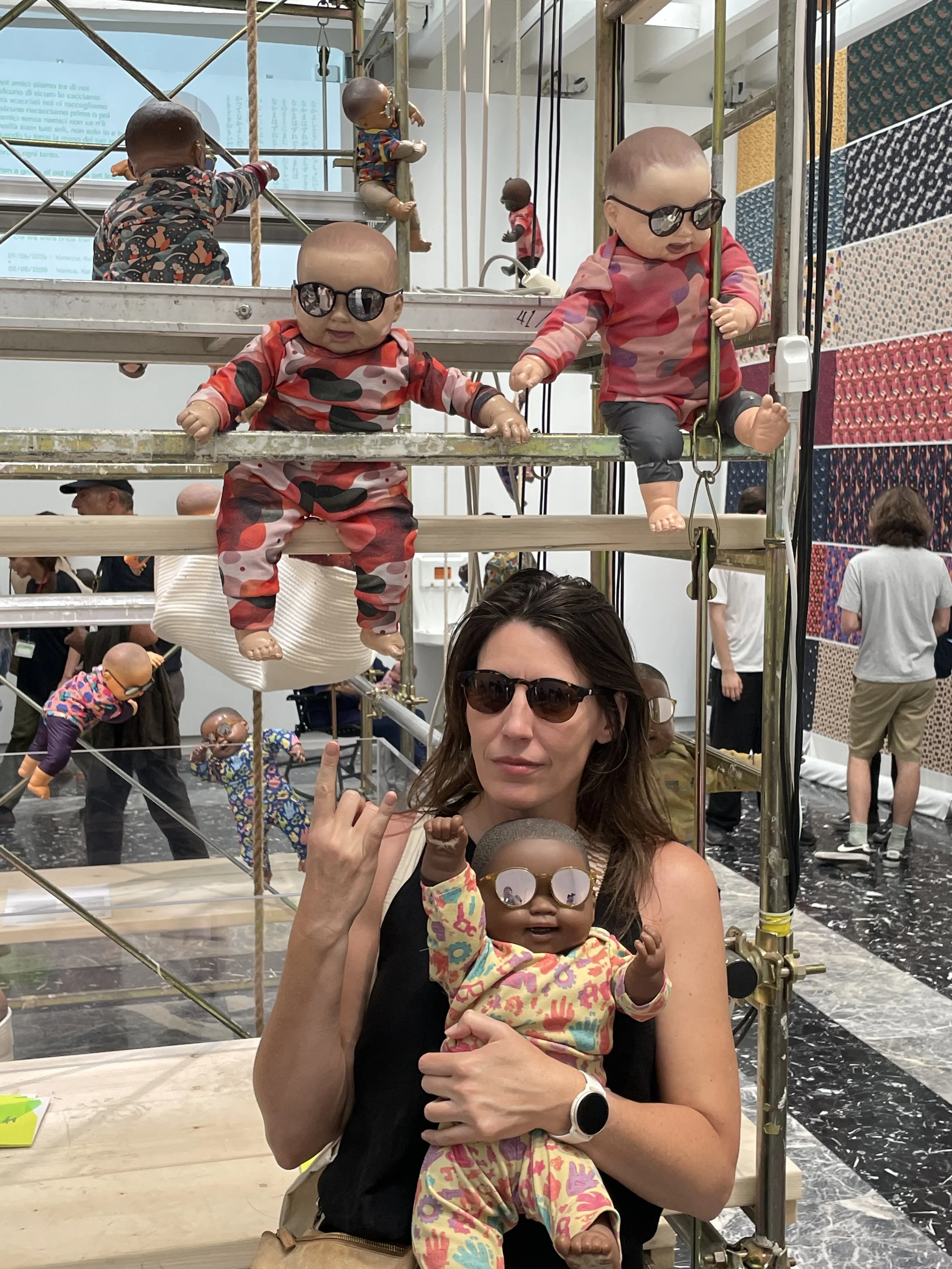
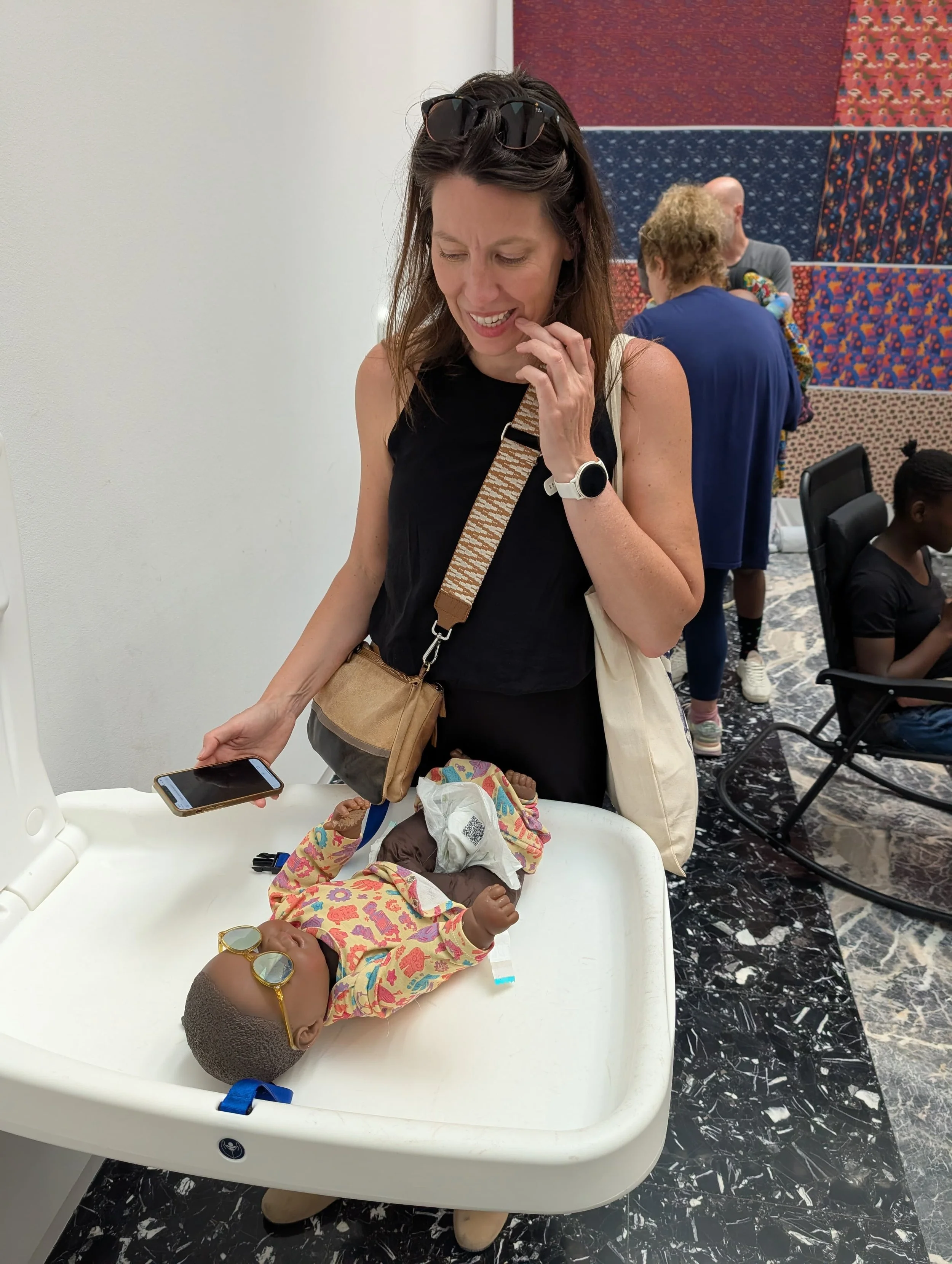
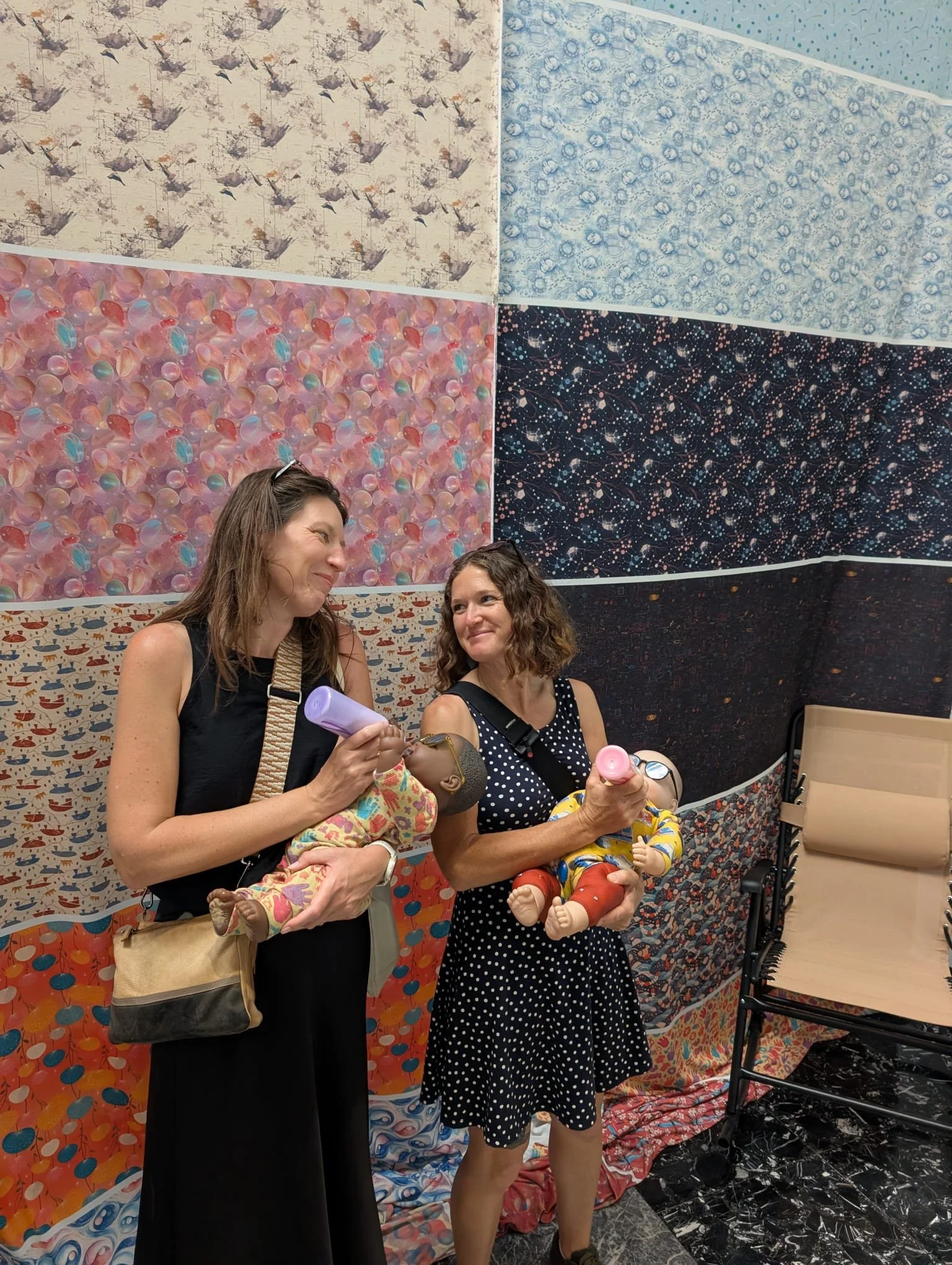
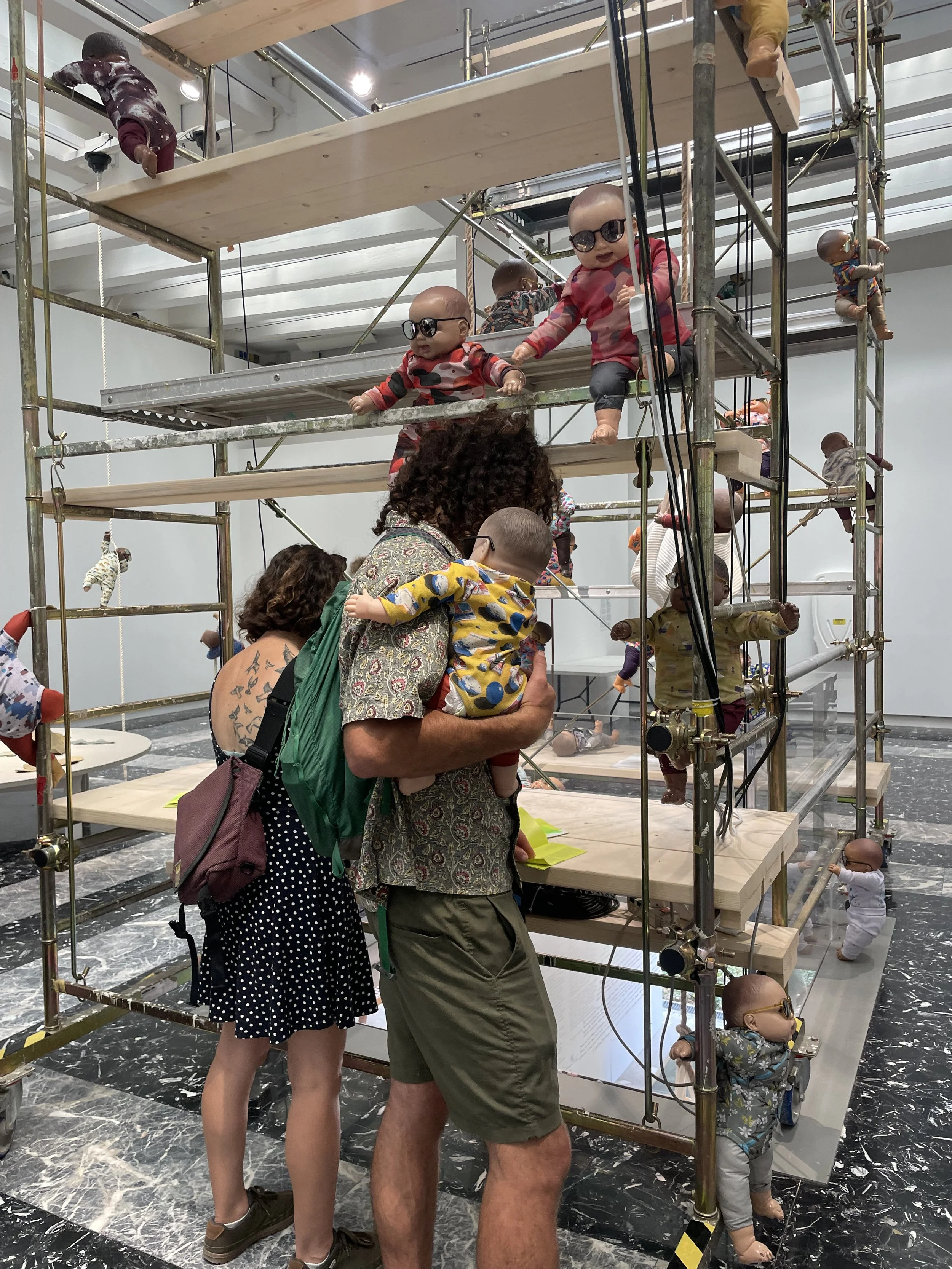
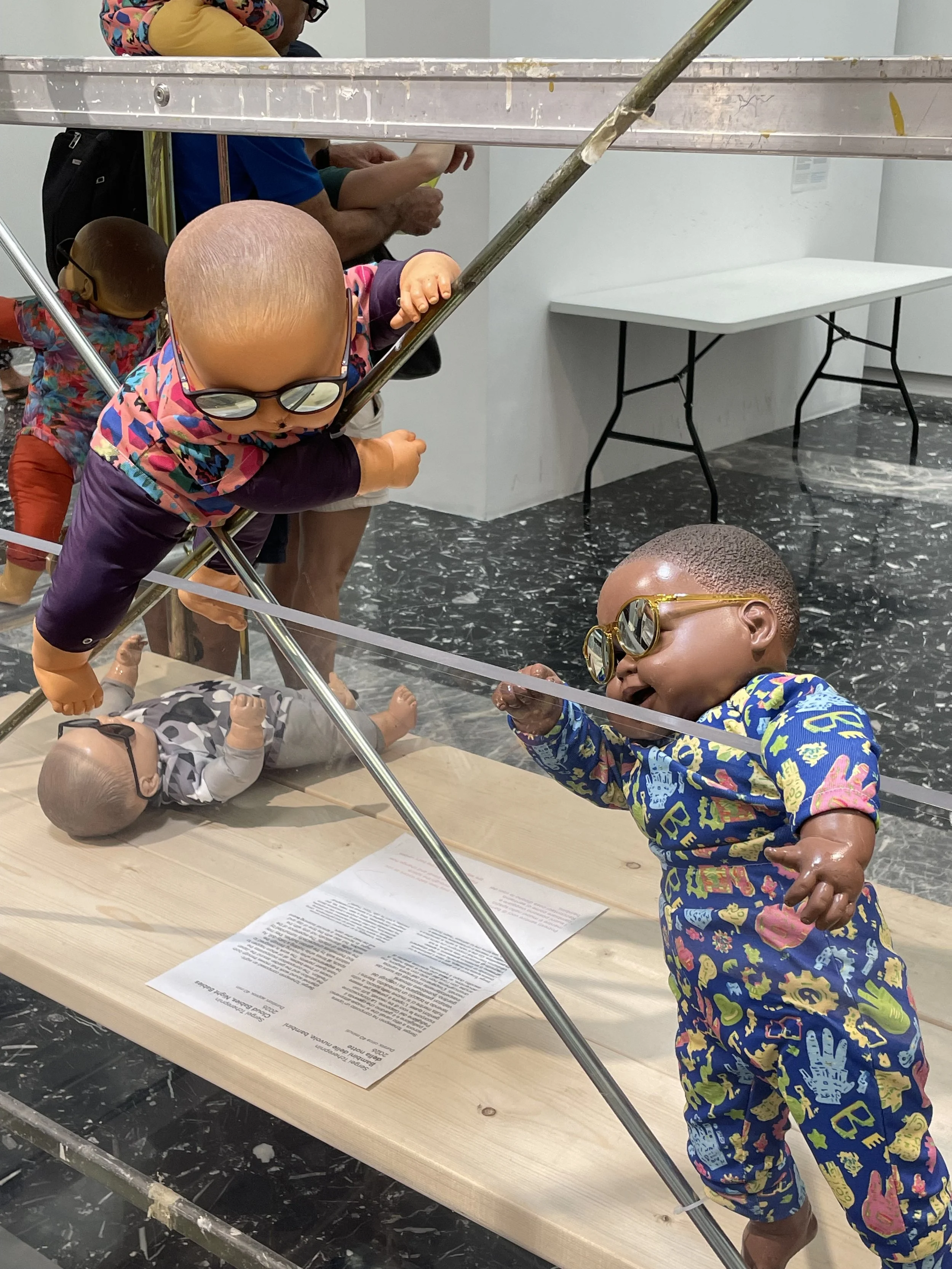
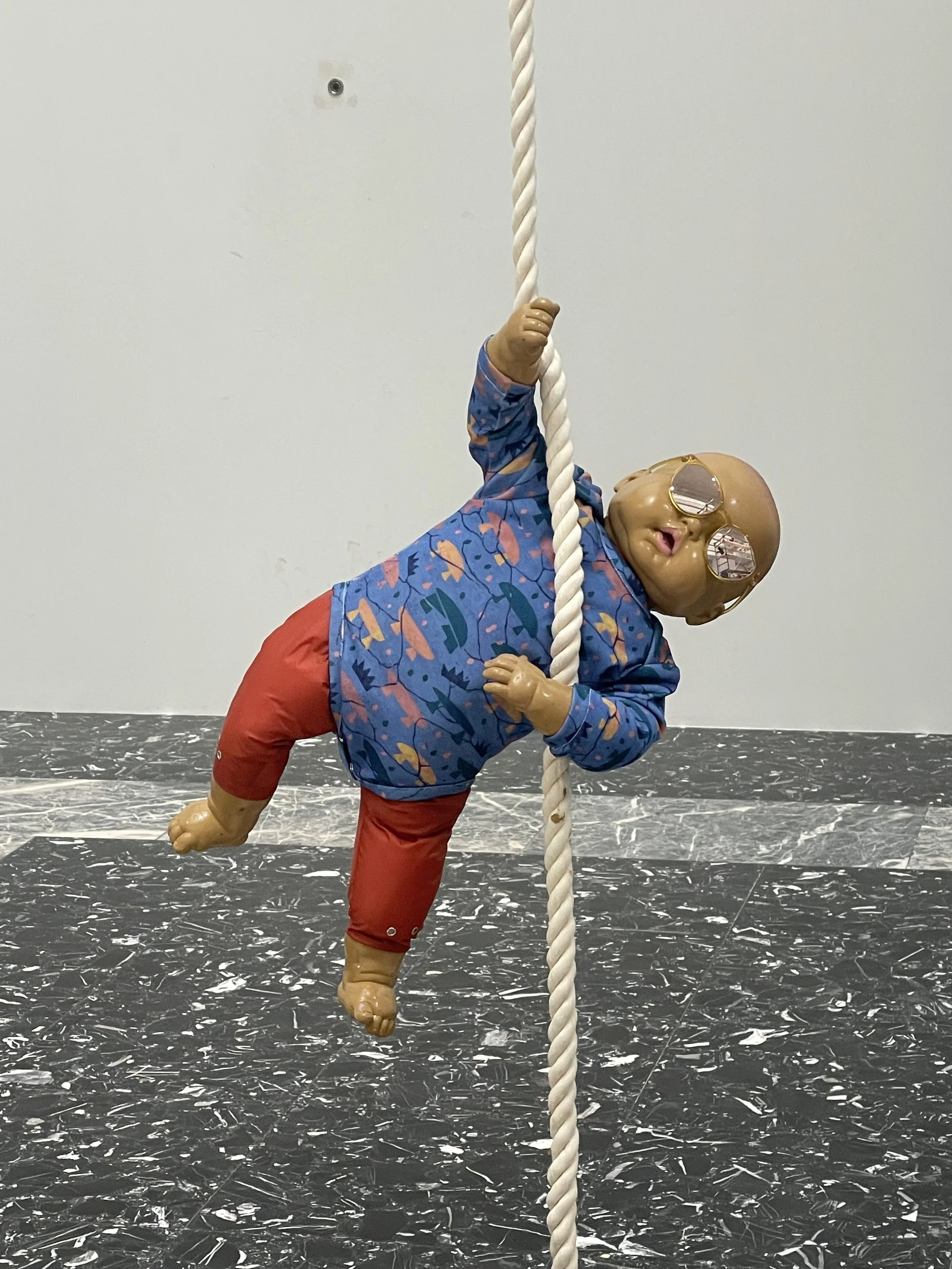
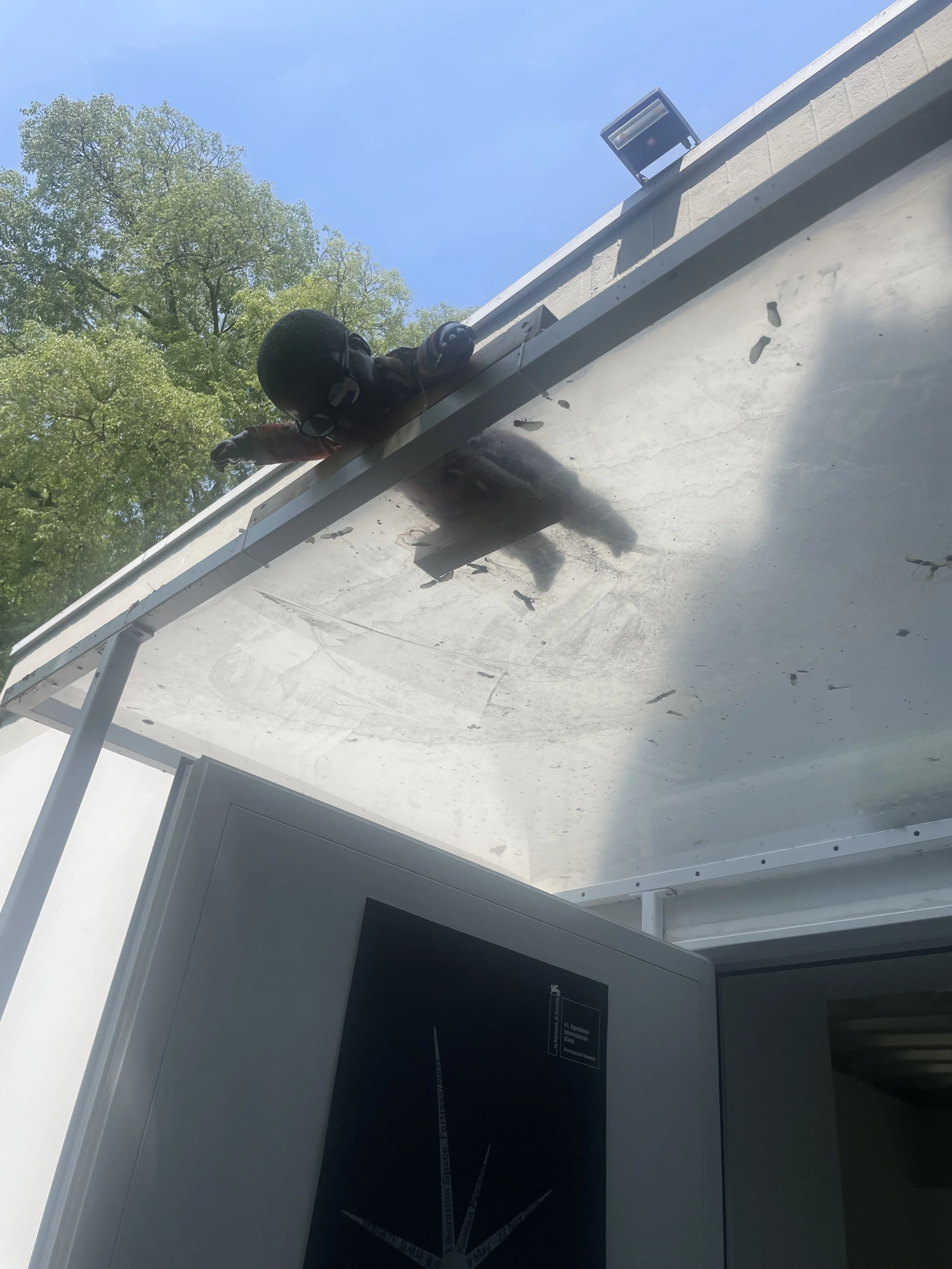
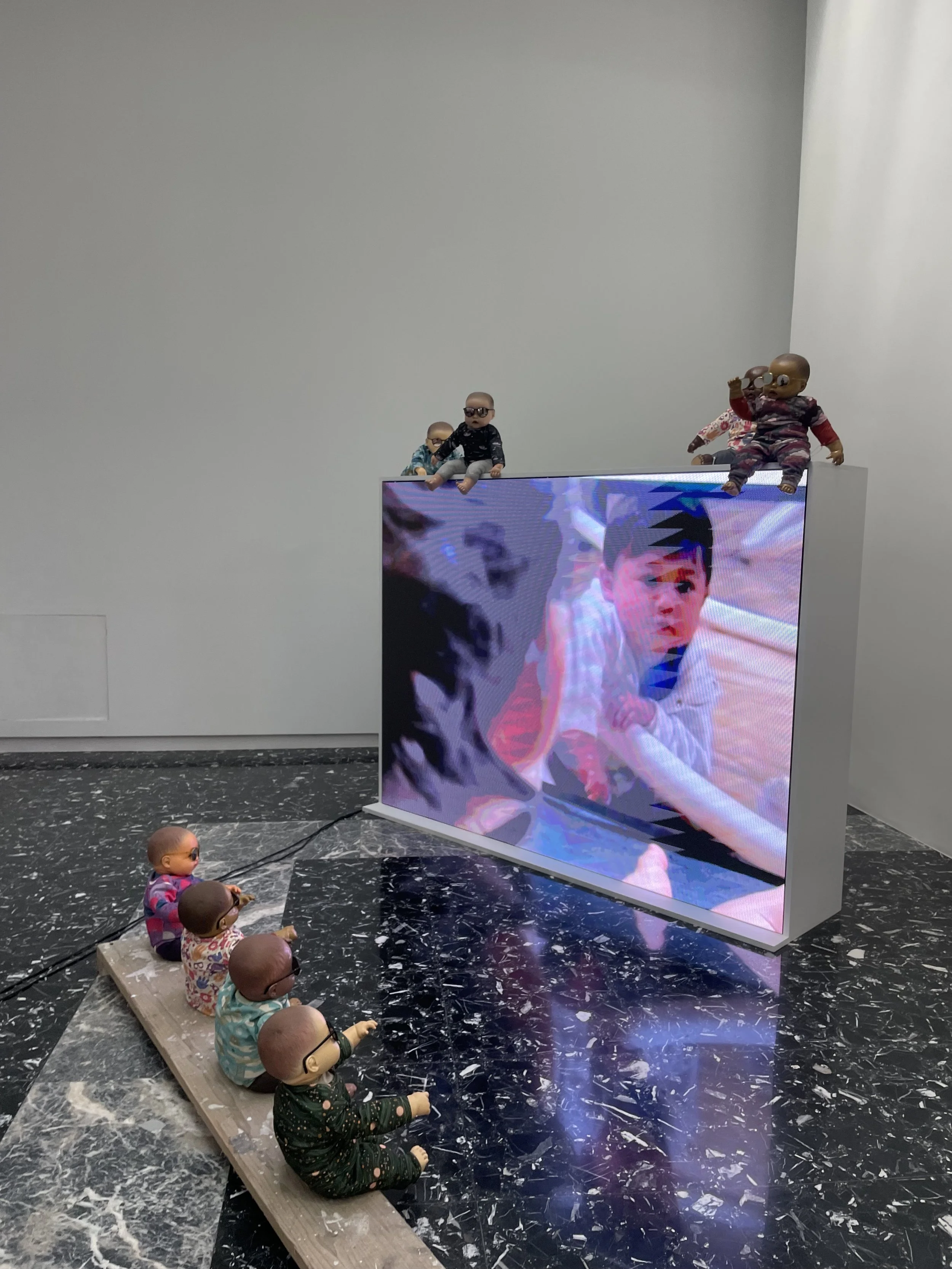
Japanese-American artist Ei Arakawa-Nash installed over 200 “babies,” dolls of the same weight and size of a real baby, in this pavilion. Comically, the babies were crawling all over scaffolding and up ropes, all while donning cool sets of sunnies.
Ei Arakawa-Nash, a queer person, recently became a parent with their partner. The birthrate has been plummeting in both Japan and Italy, along with most of the developed world. As participants walked around holding babies and interacting with this joyful, light-filled exhibit, they wanted us to think about themes of parenthood and birthrate.
We stood in line to get our own life-like babydoll. We were instructed that we could not choose the race. An African-Italian man ahead of us, already a parent to a teenager also in line with him, requested a Black baby but was given a white one. He immediately hoisted the baby up on his shoulders and proclaimed for all of us to hear that this is how you hold a baby in his home country, which we didn’t catch. (We inferred that he was an immigrant to Italy from an African country based on the colorful, patterned shirt he was wearing and his accent.)
We stepped up next and, by chance, received the Black baby doll that the man ahead of us had wanted. What a great exercise in expanding attendees’ experience of nurturance and care to all babies, we thought. Although it may have been primarily a logistical choice, as waiting to give attendees their exact baby of preference would have been a nightmare, causing a queue pile-up.
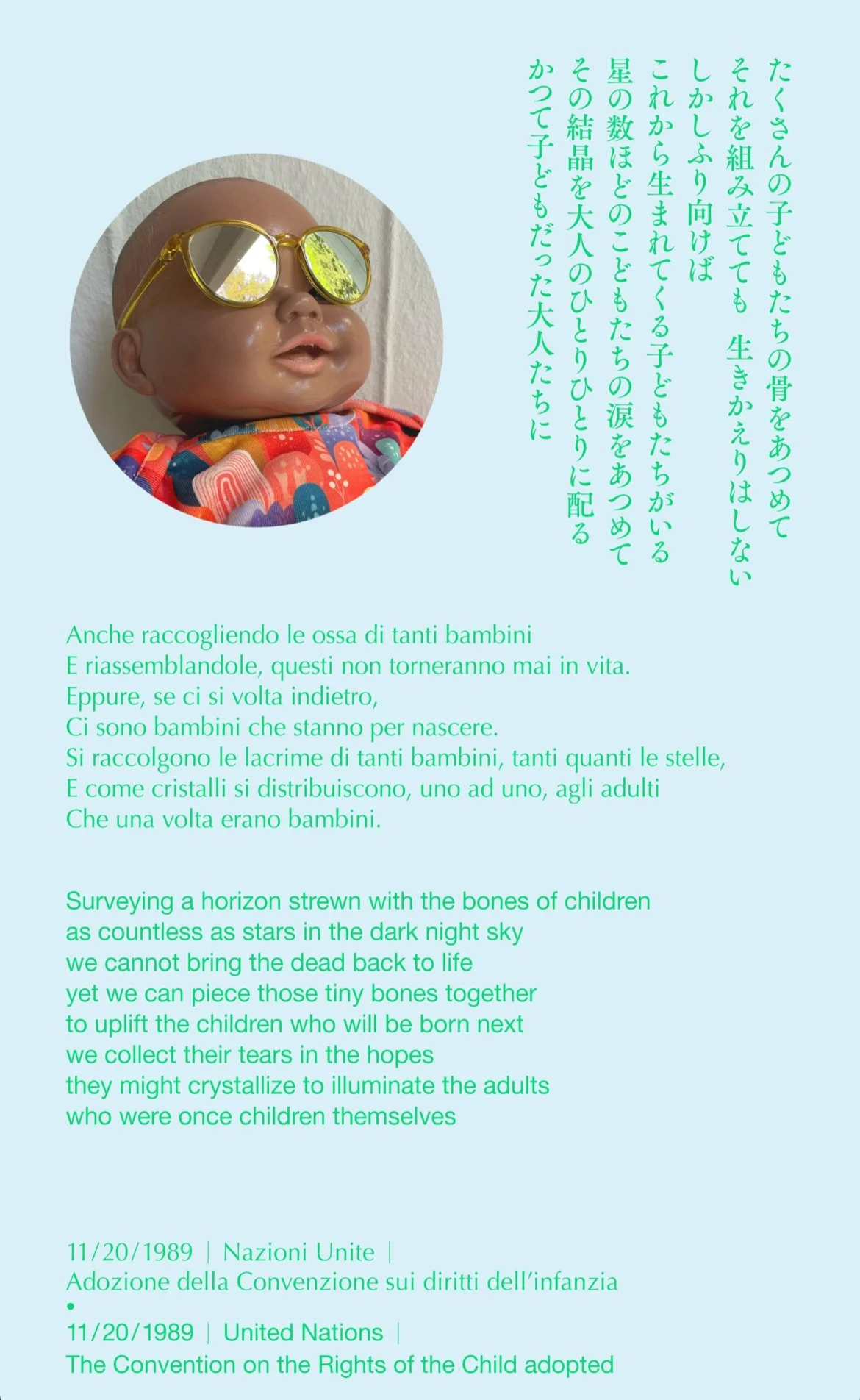
One fun interactive element was that we could change the baby’s diaper and find a QR code, which, when scanned, revealed a poem.
A feeding room provided bottles of fake milk.
Austrian Pavilion
This was the one getting a lot of talk in the media! There was such a long line to get in that we opted out of going inside the pavilion.
What we missed, though, sadly, was the chance to participate by peeing and then watching performers swim in our filtered pee.
We did manage to catch a piece of the exhibit that happened outside of the pavilion: a completely naked performer, save for a harness and a clapper on each thigh, climbing up a rope into a bell, then hanging upside down and swinging from side to side. Each time a clapper attached to her thigh hit the bell, we heard a classic dong sound from the large bell.
So impressive! This woman was very strong!
Australian Pavilion
We mixed this one up with the Austrian one we were trying to get to and the front-door woman kindly showed us how to get to Austria. “How many times so far today have you had to clear that up?” I asked her. She didn’t hesitate: “A lot!”
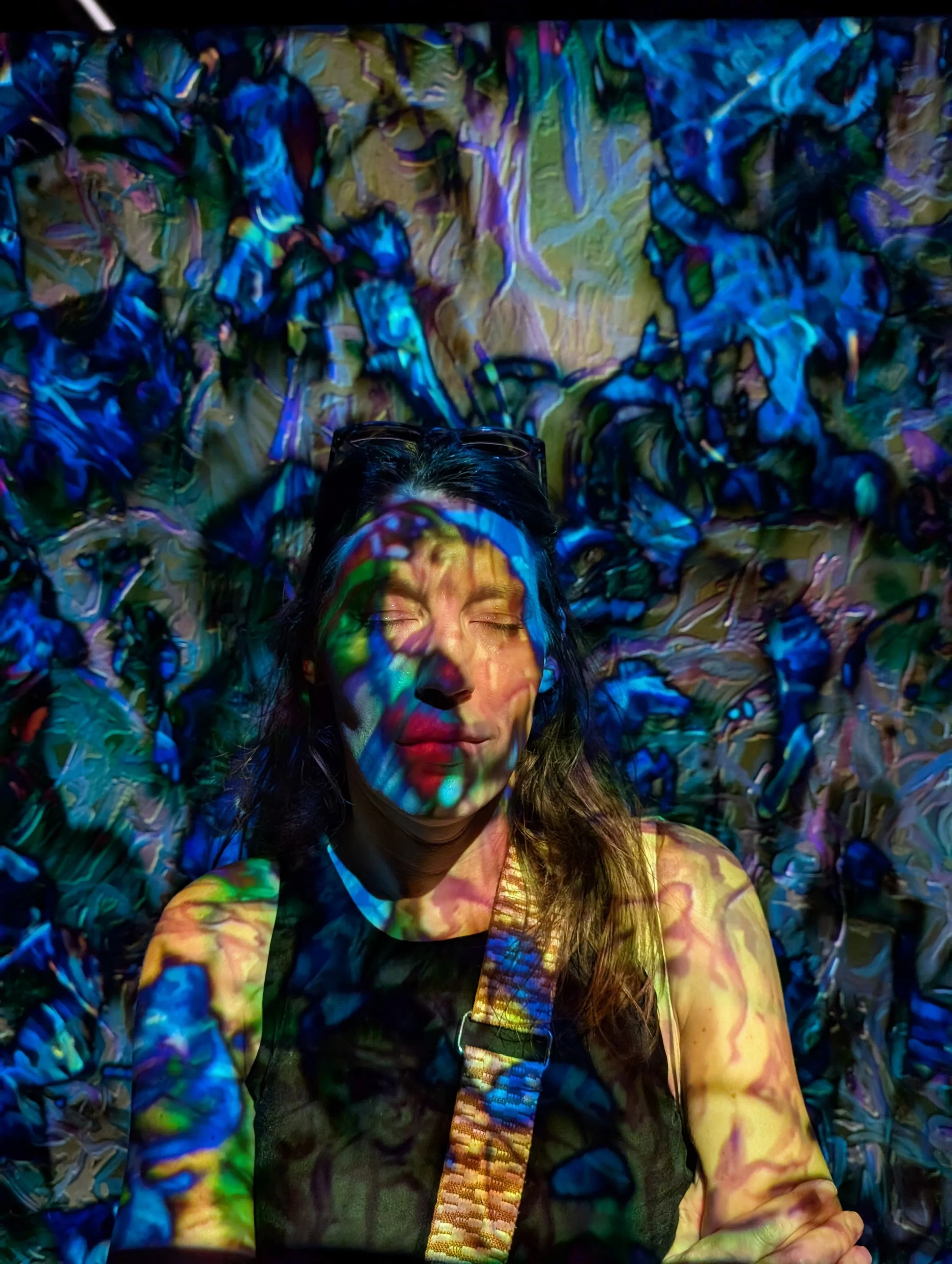
This room had a giant projection of trippy patterns that was soothing and calming.
We also went into the Czech and Slovak Pavilion and saw a video of a mole-human antagonizing other people. It was eerie but also captivating. We didn’t capture any photos or videos.
The Arsenale
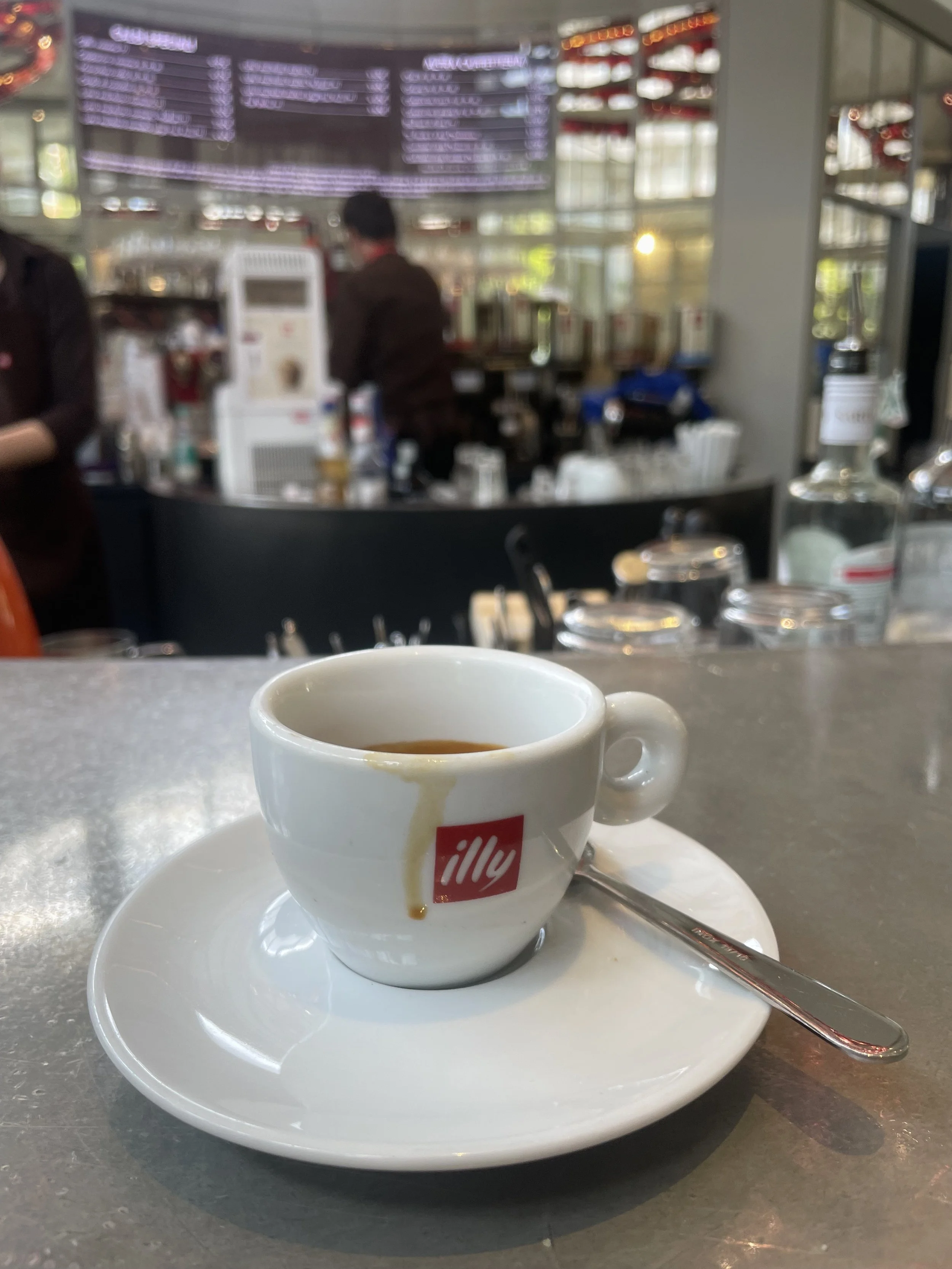
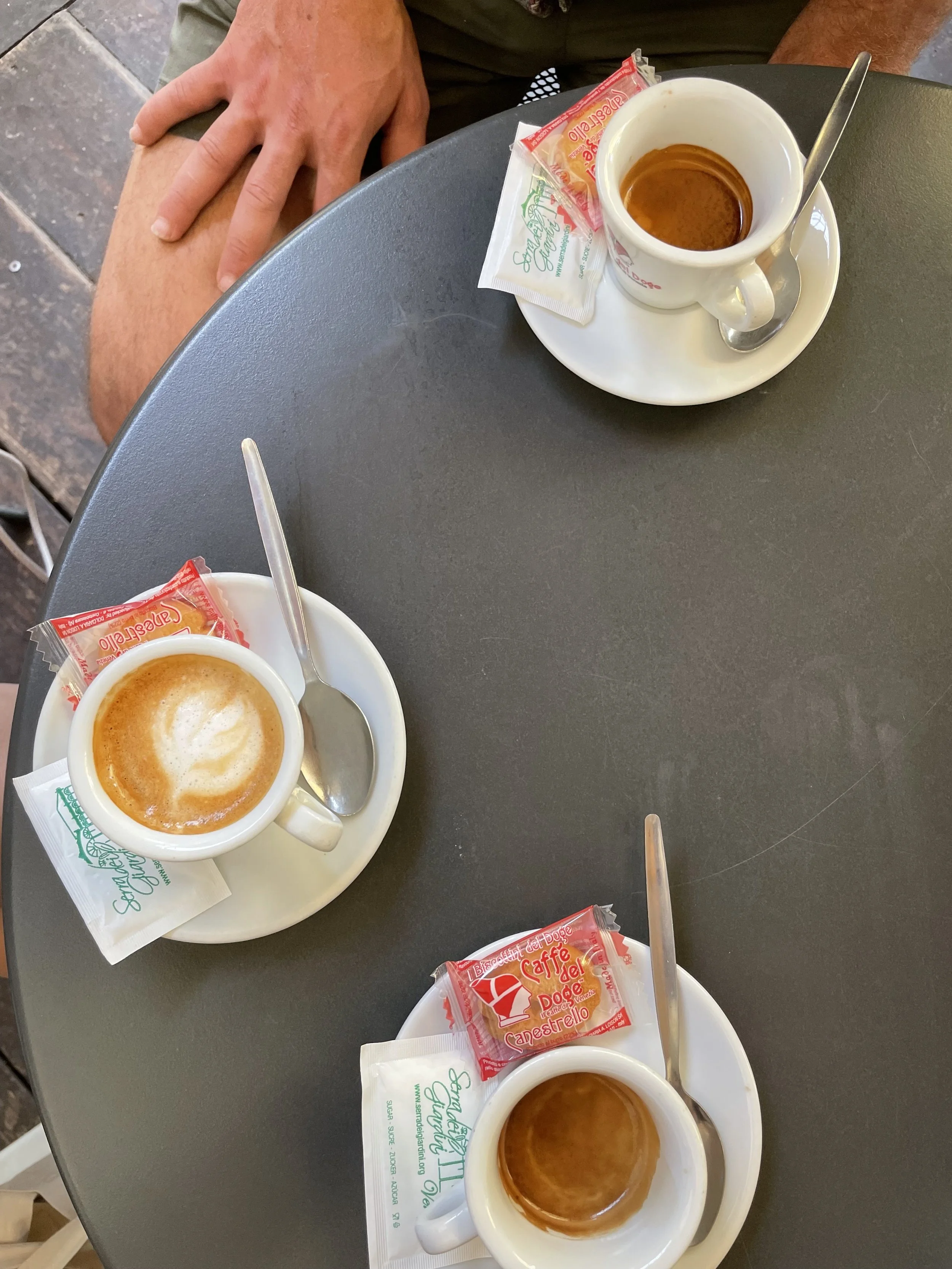
This was the other venue of the Bienneale. We walked over after lunch, stopping for espresso along the way.
Main Arsenale Hall
This hall was massive and broken into many segments. It seemed to go on forever!
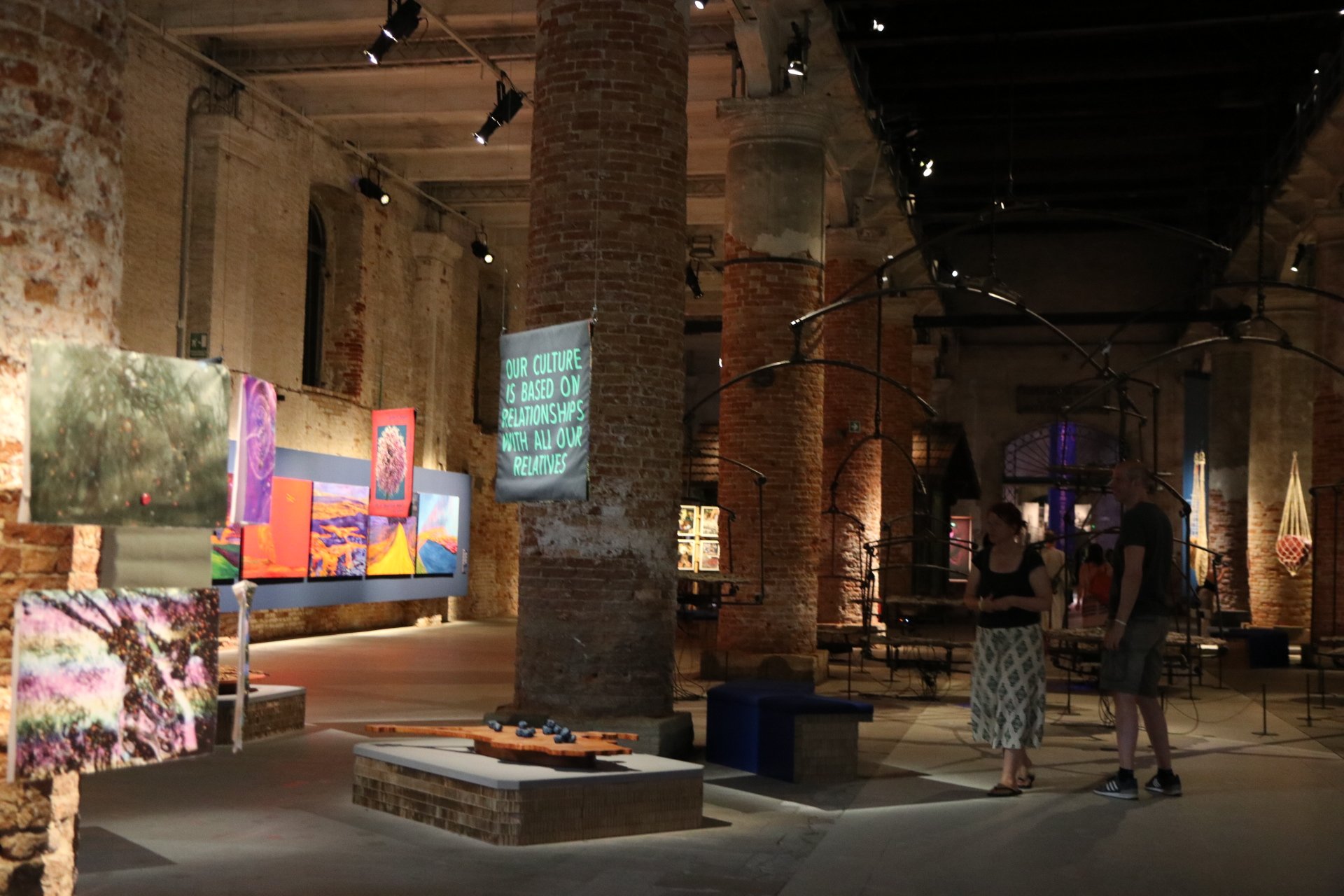
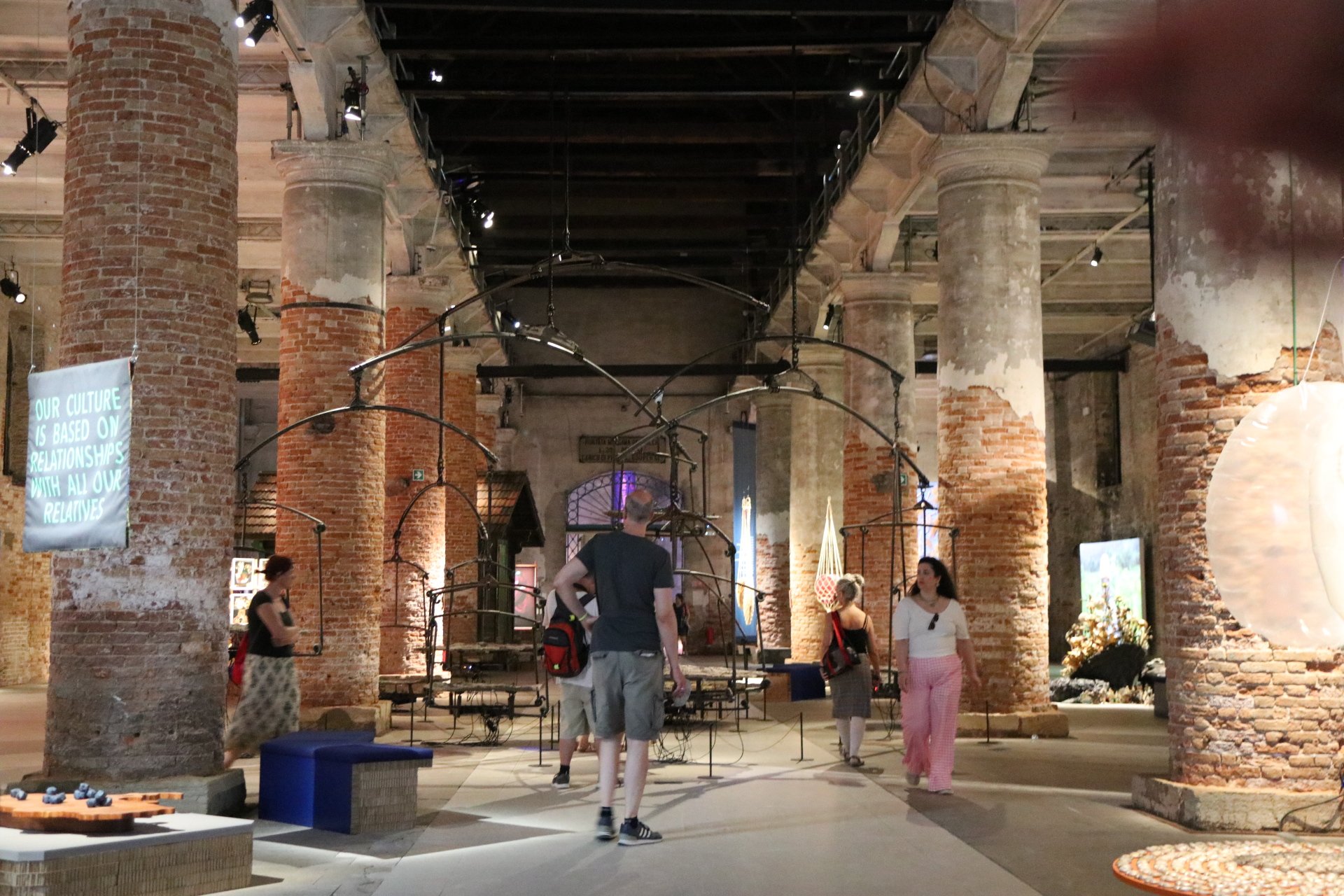
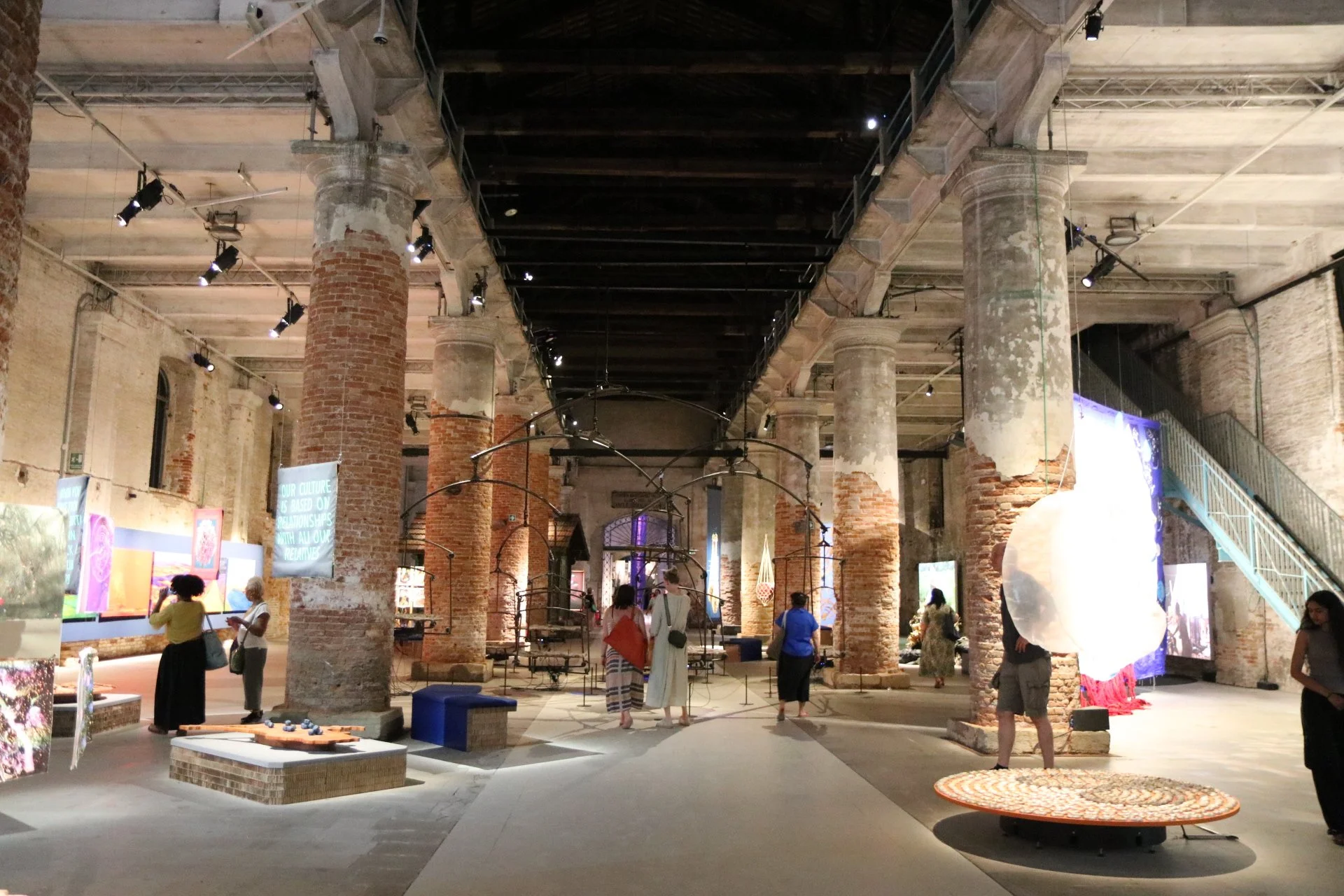
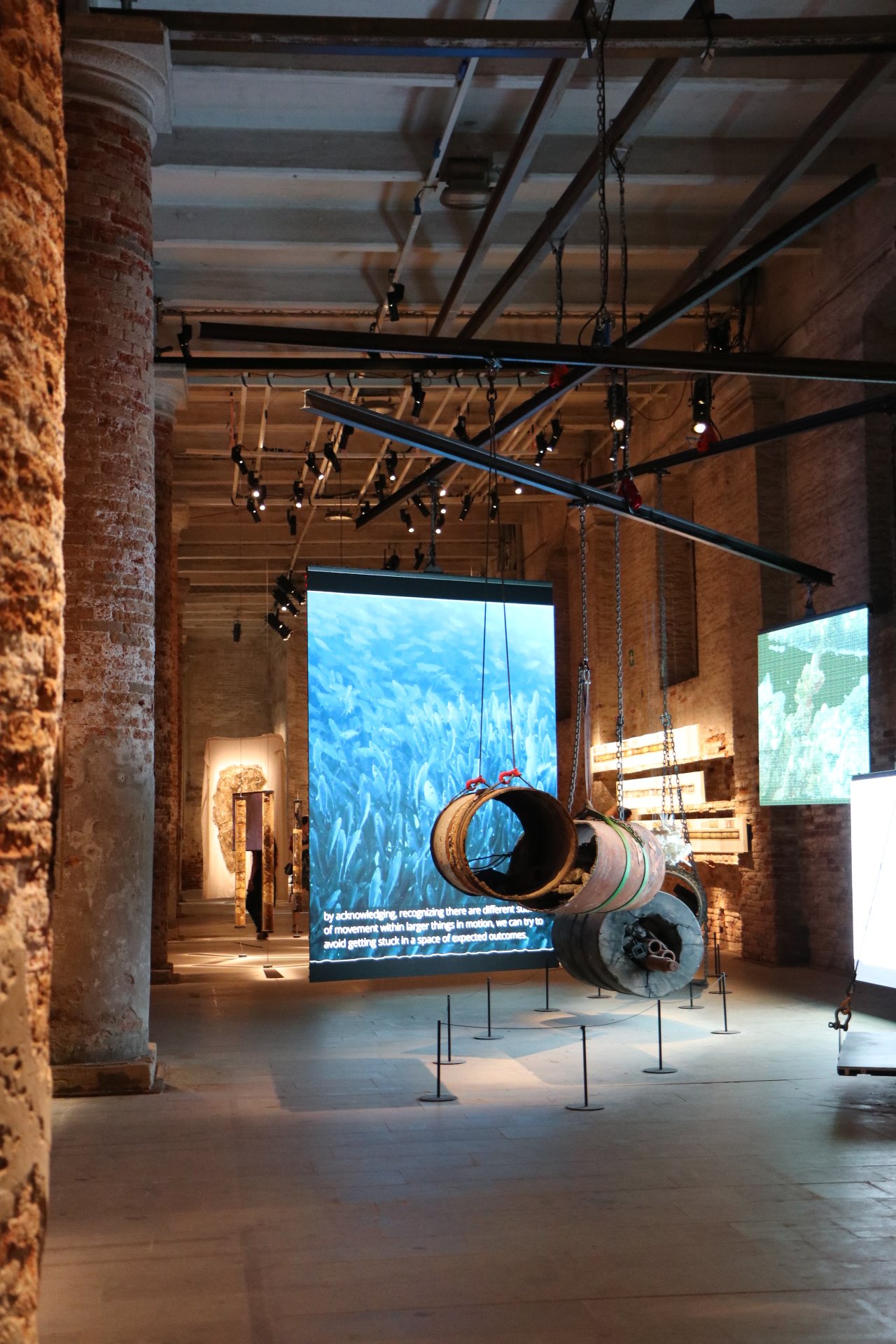
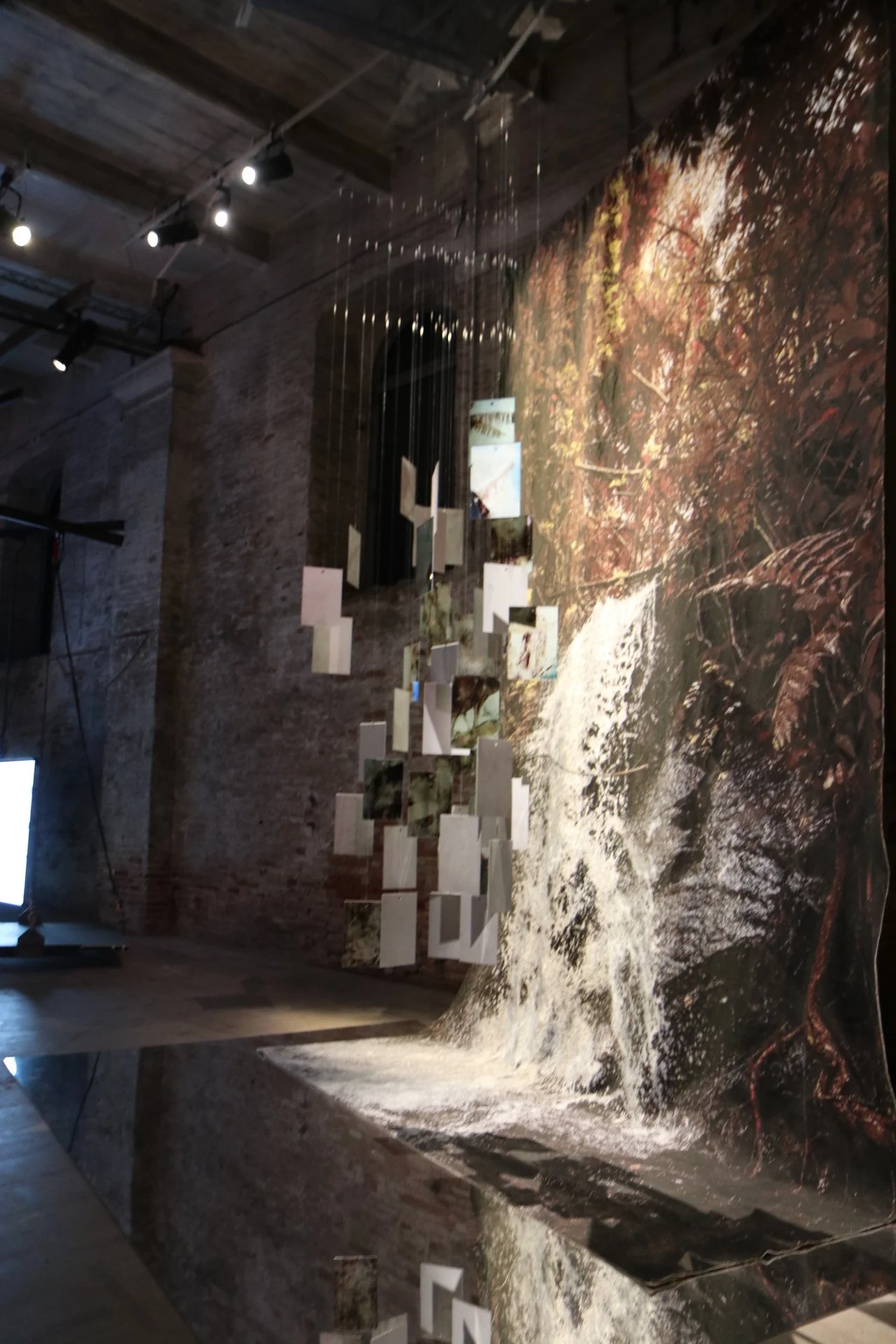
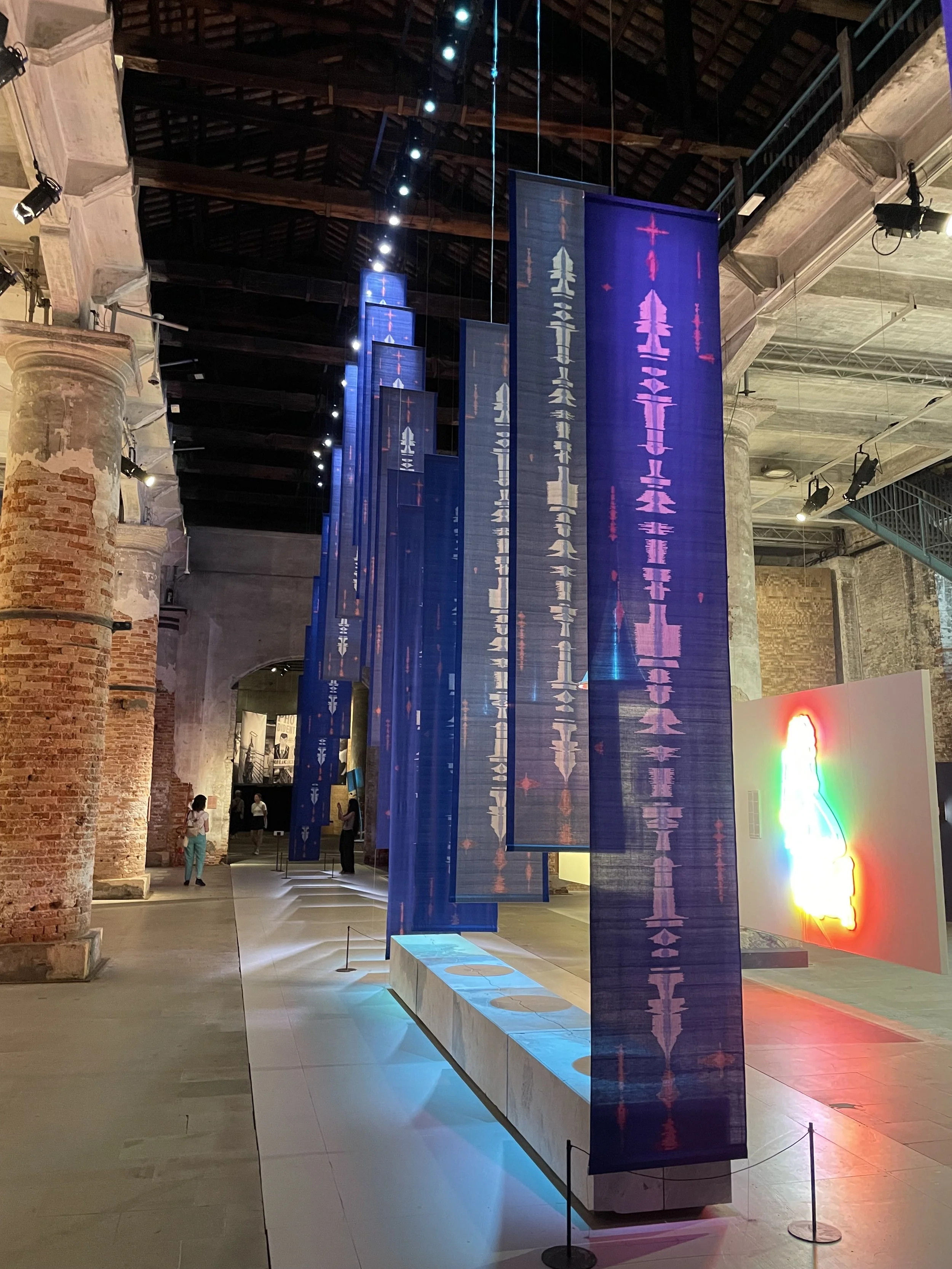
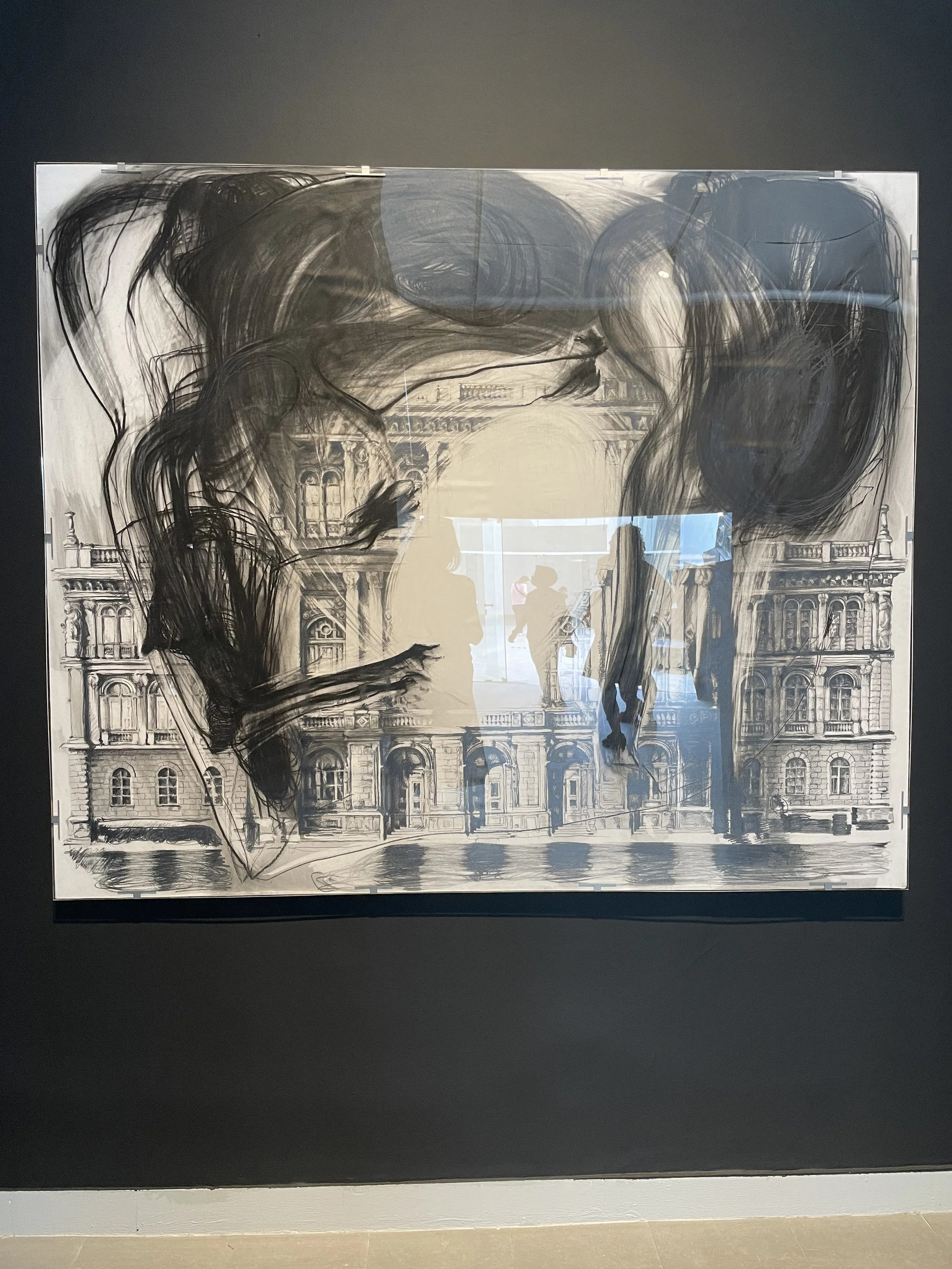
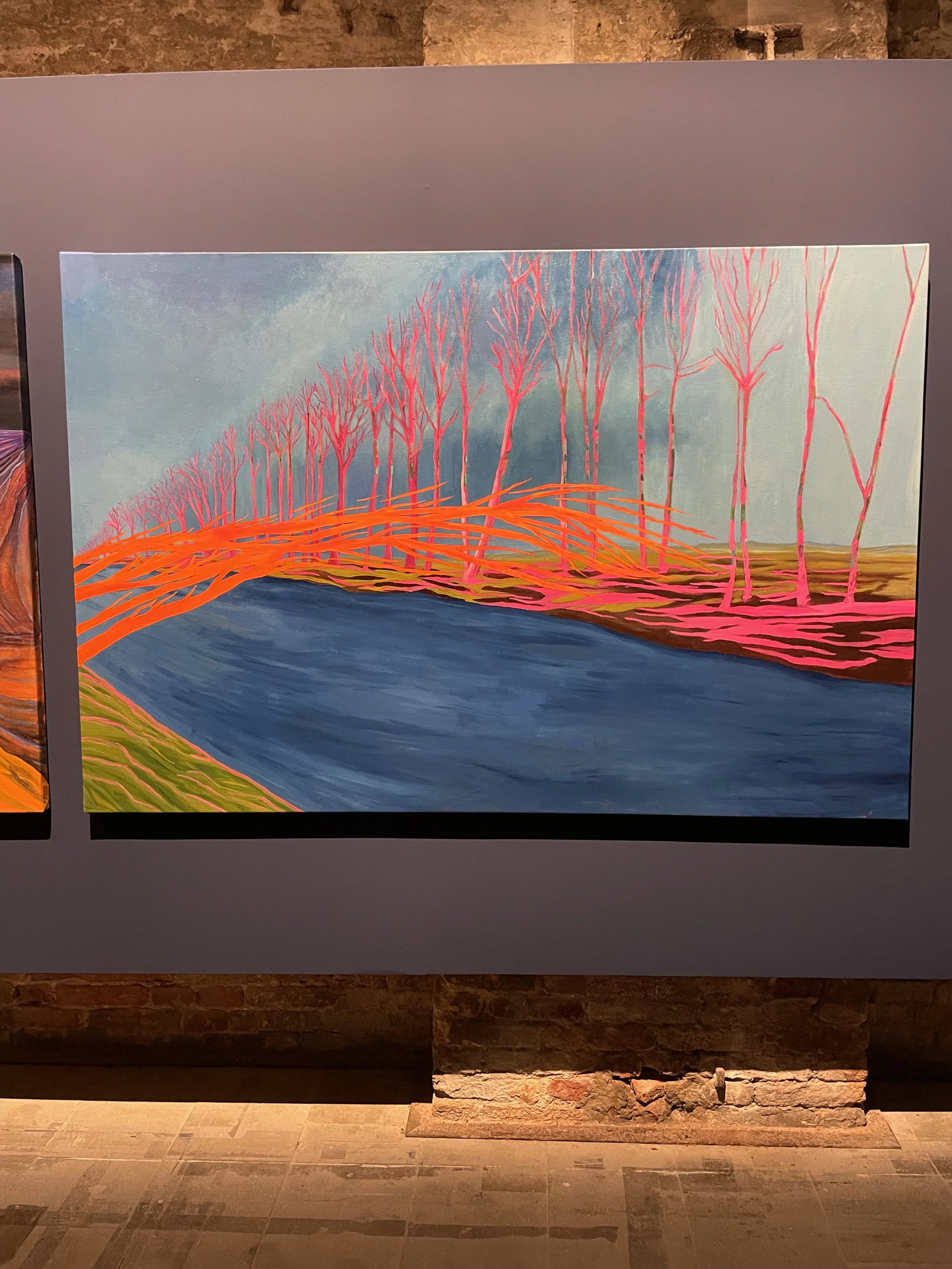
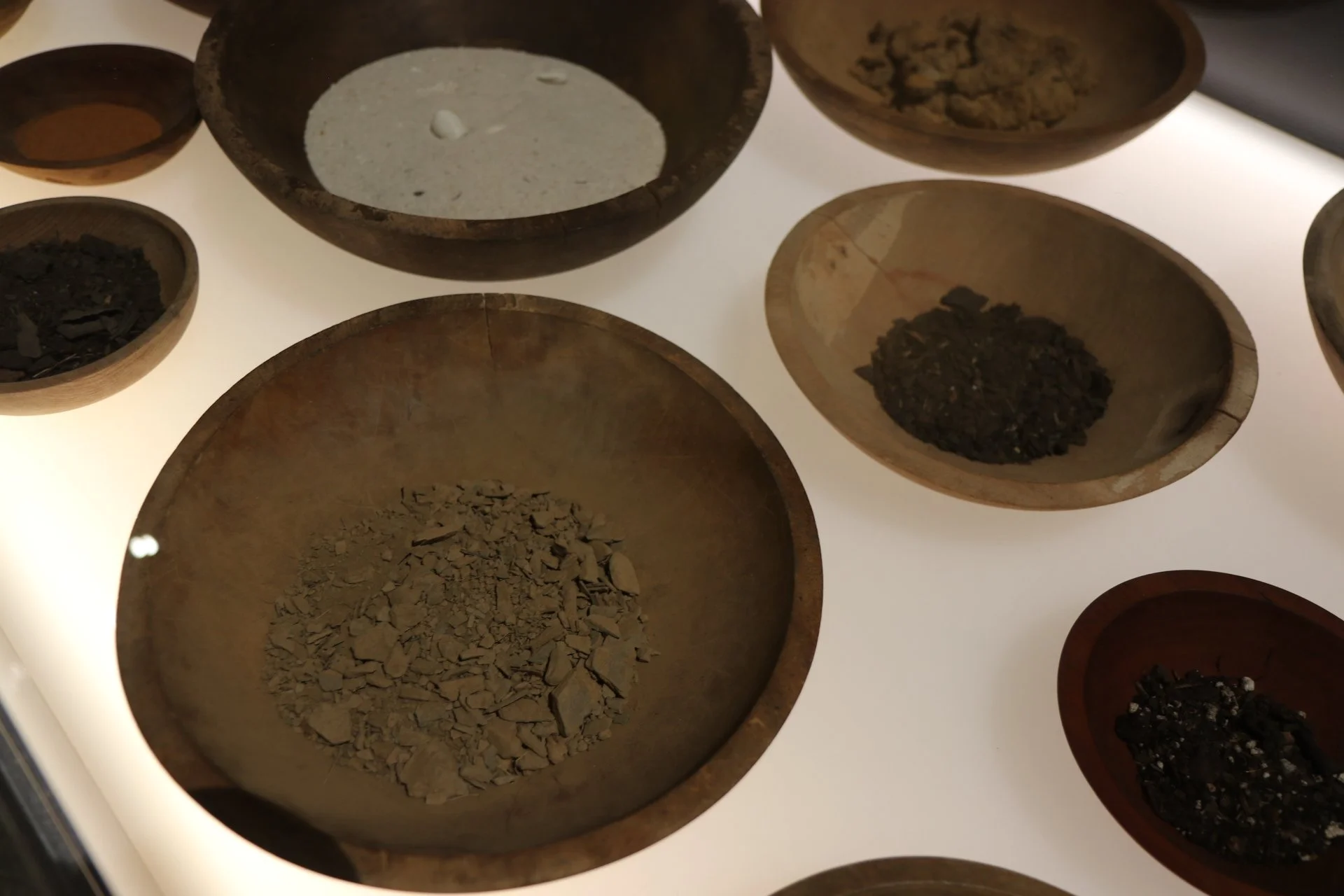
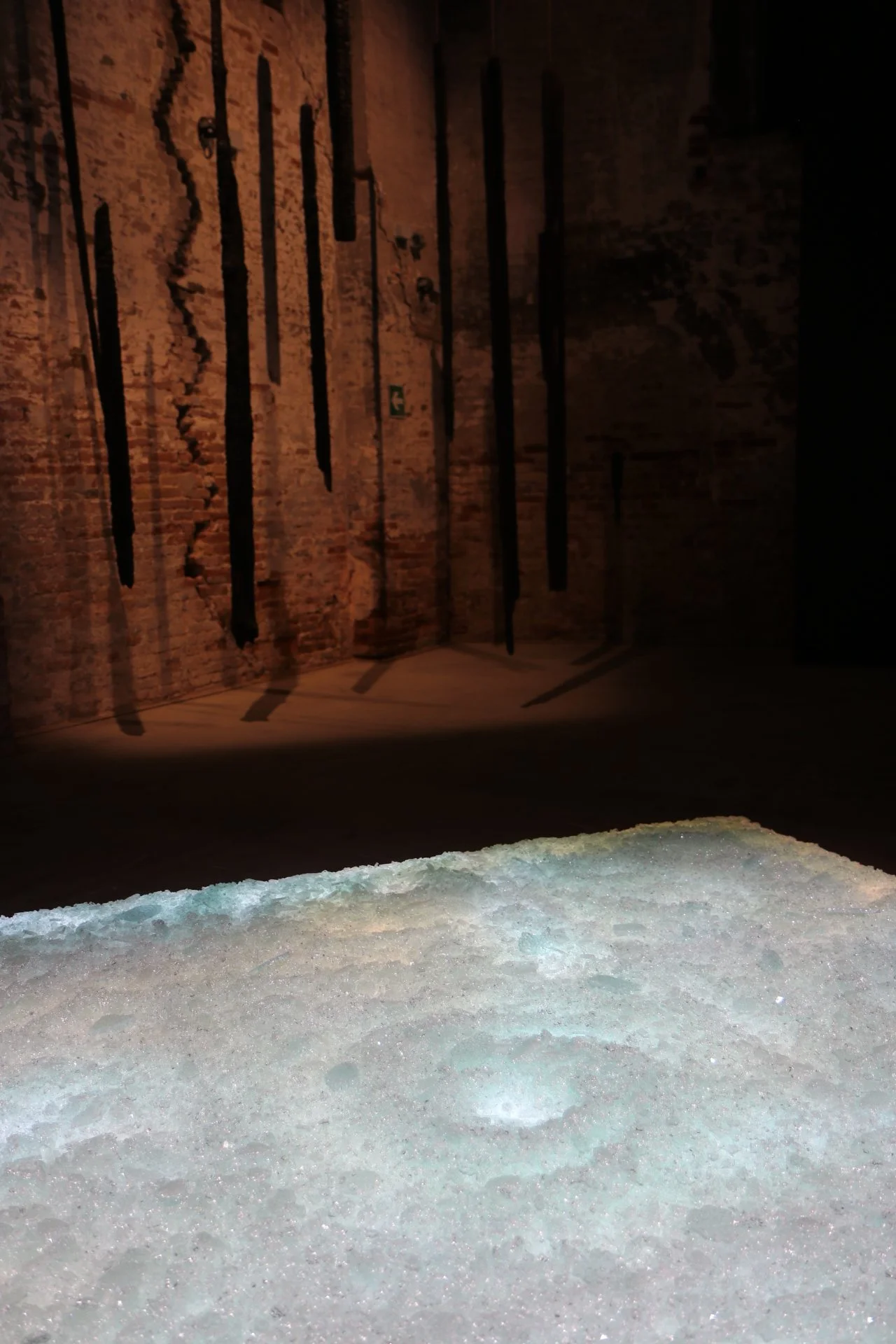
Some art:
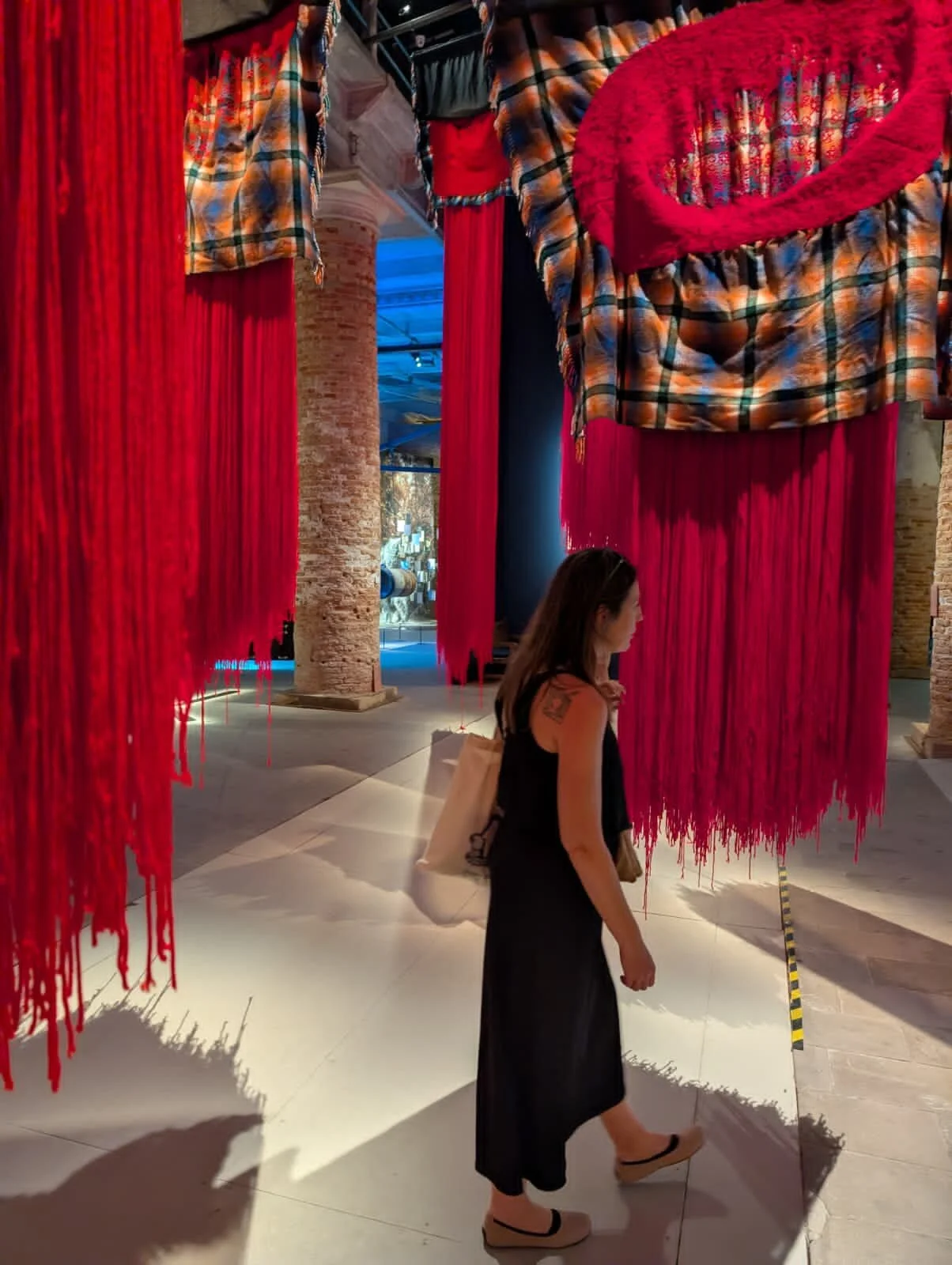
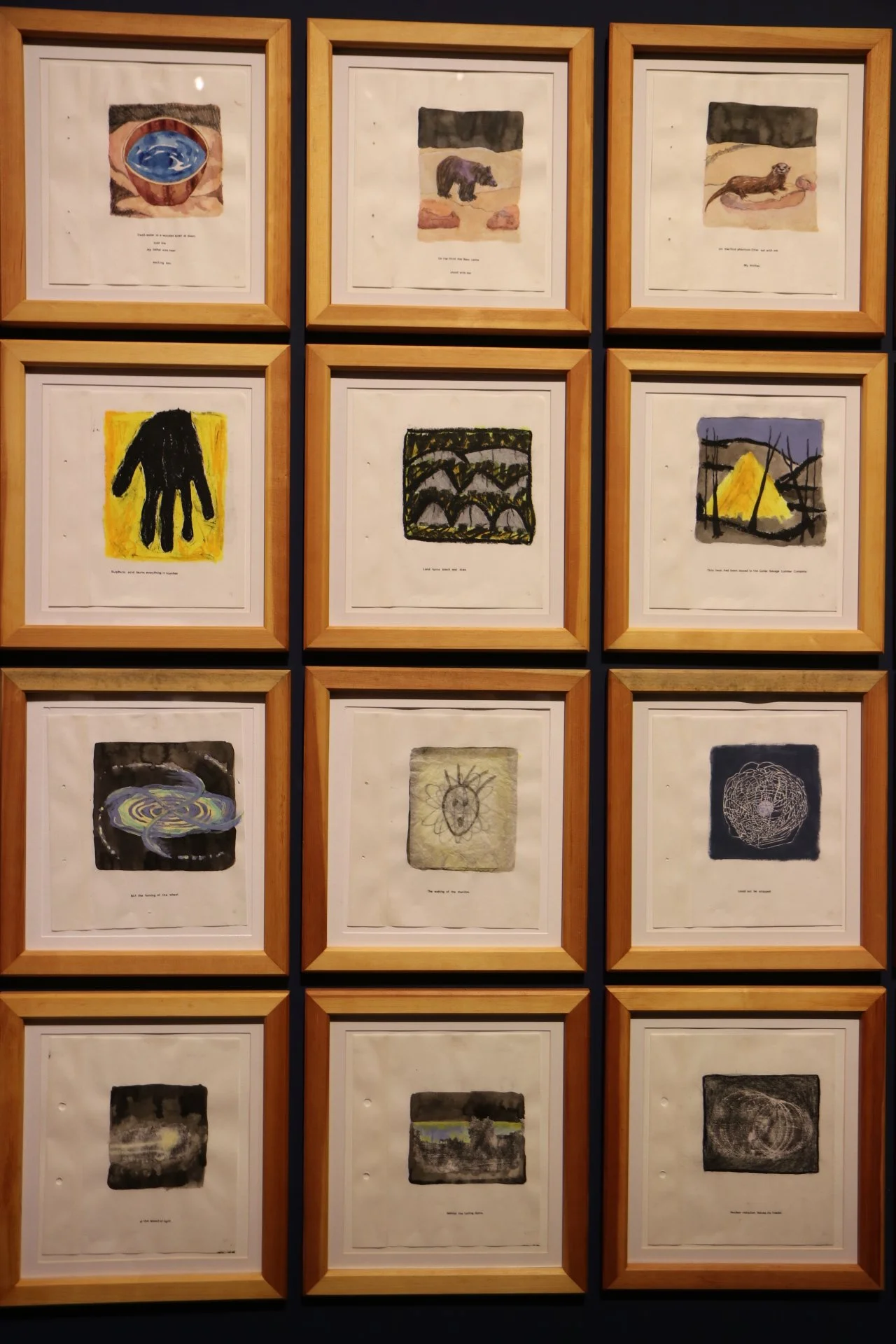
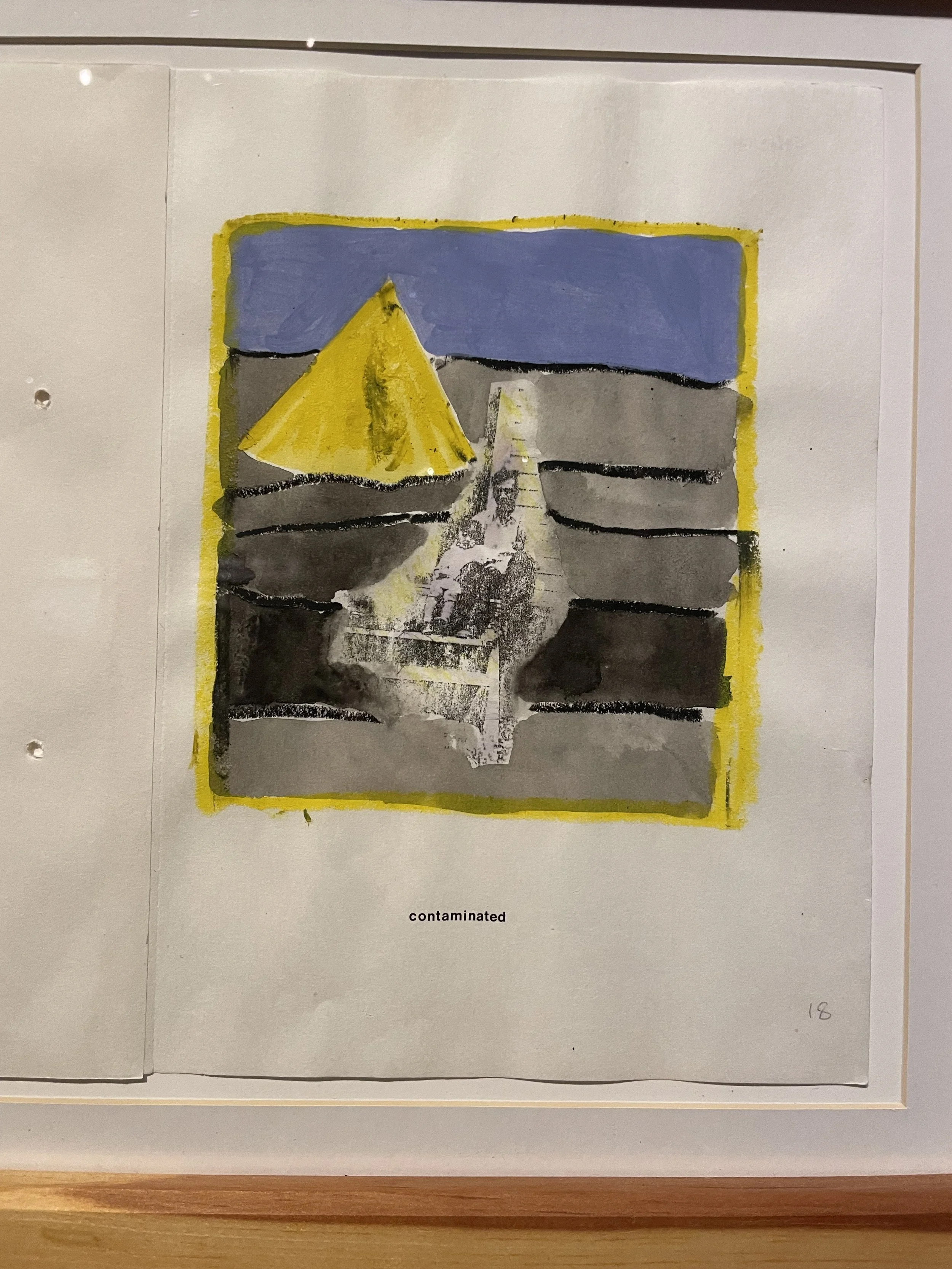
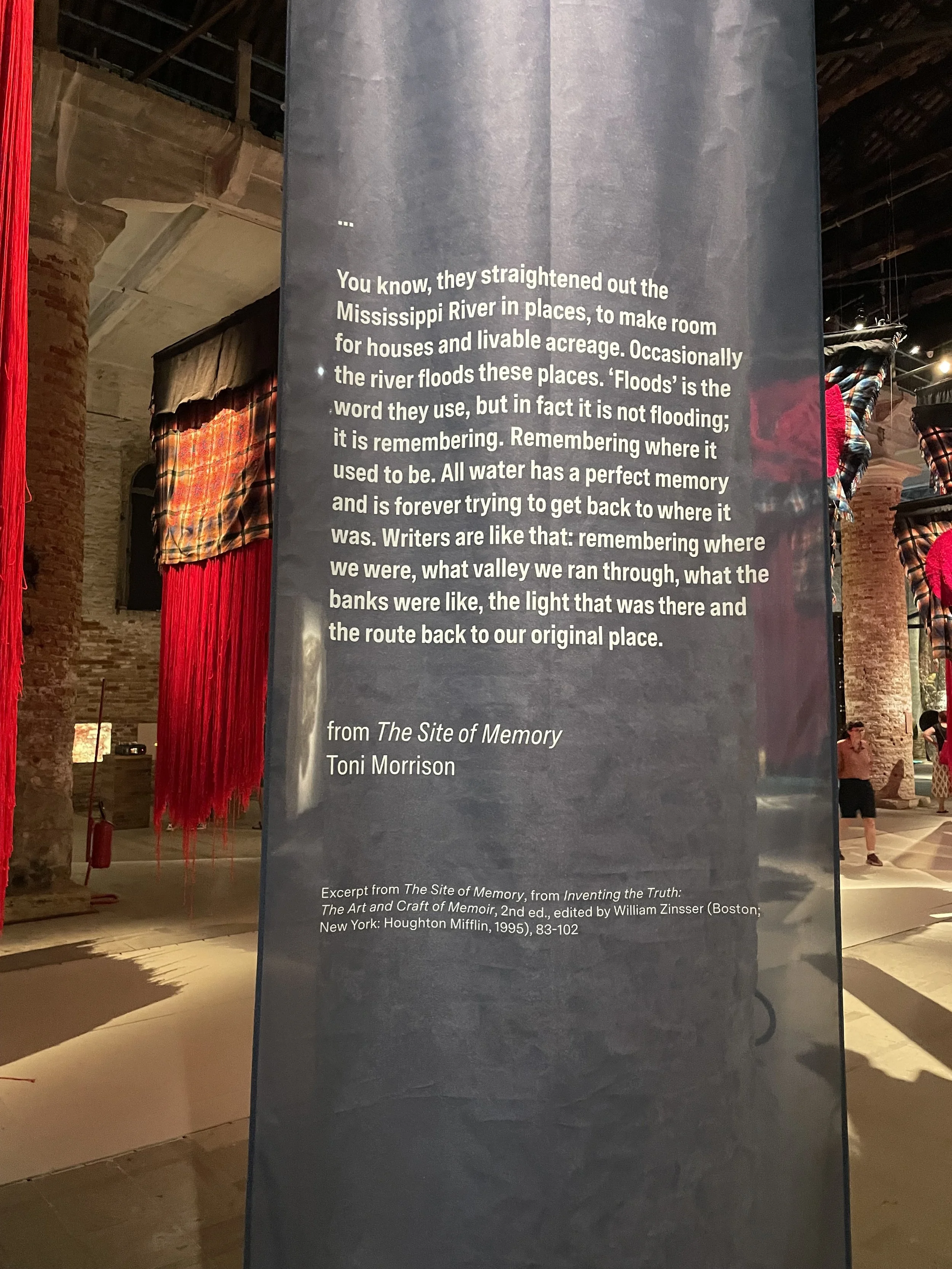
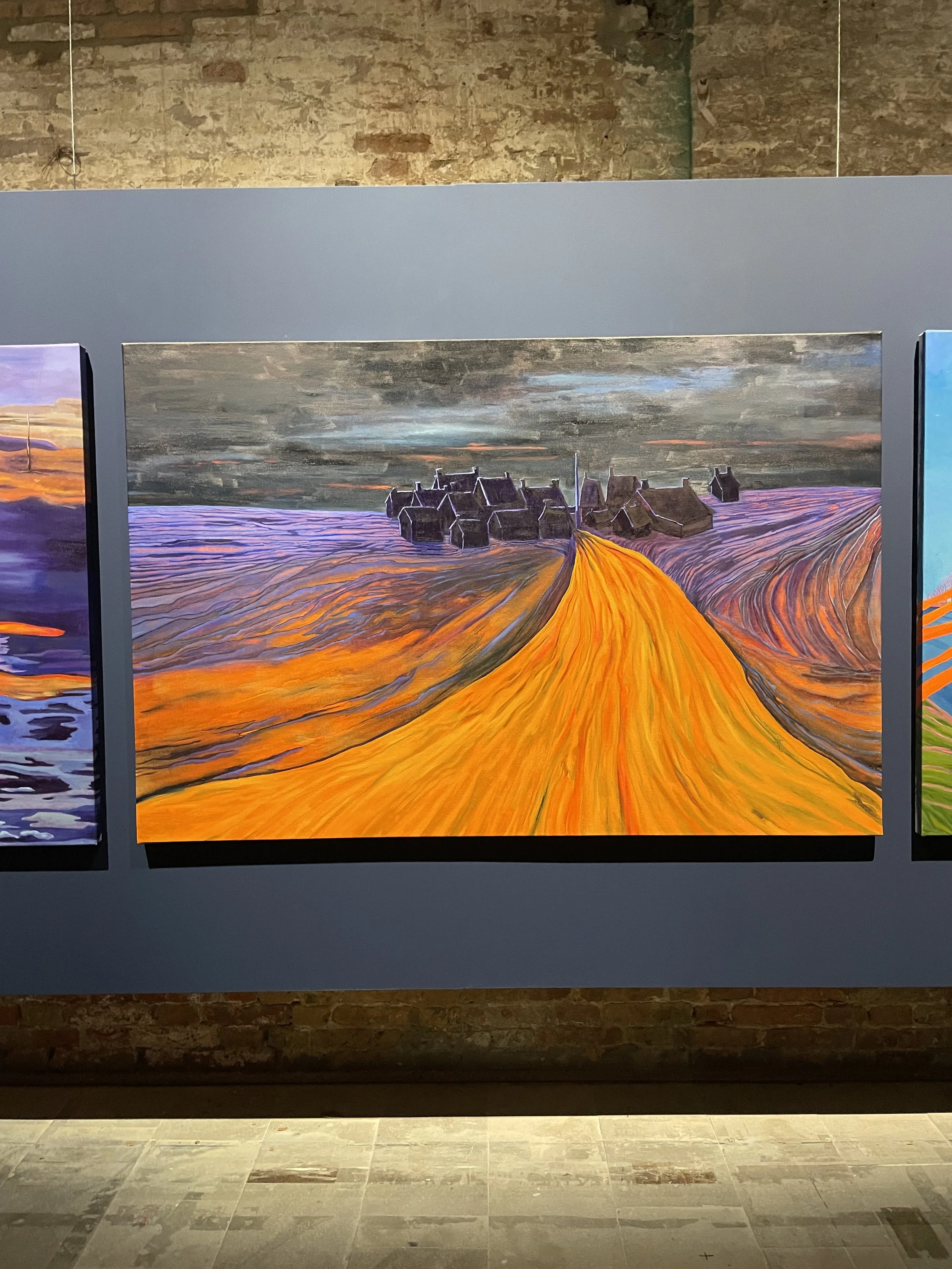
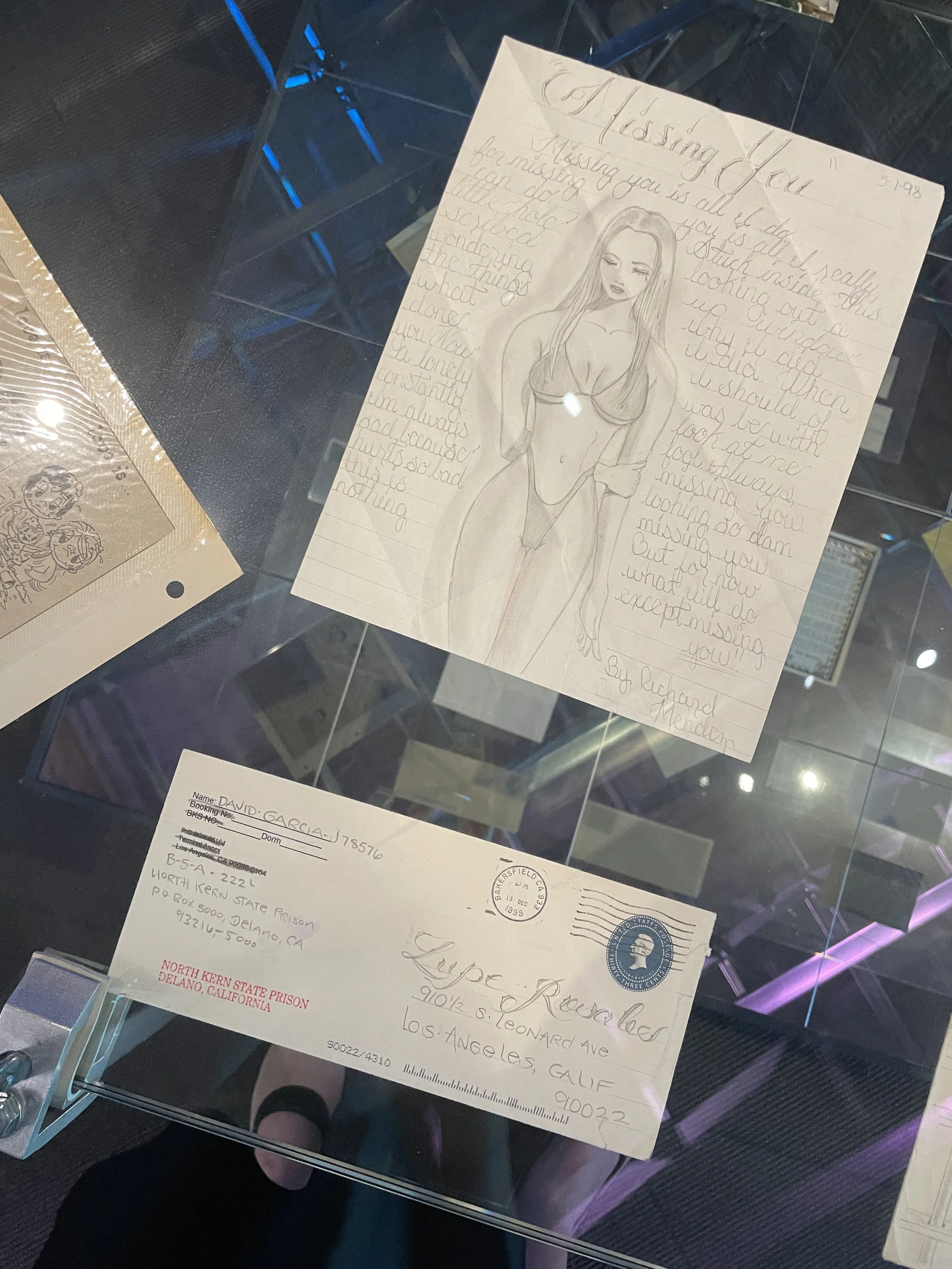
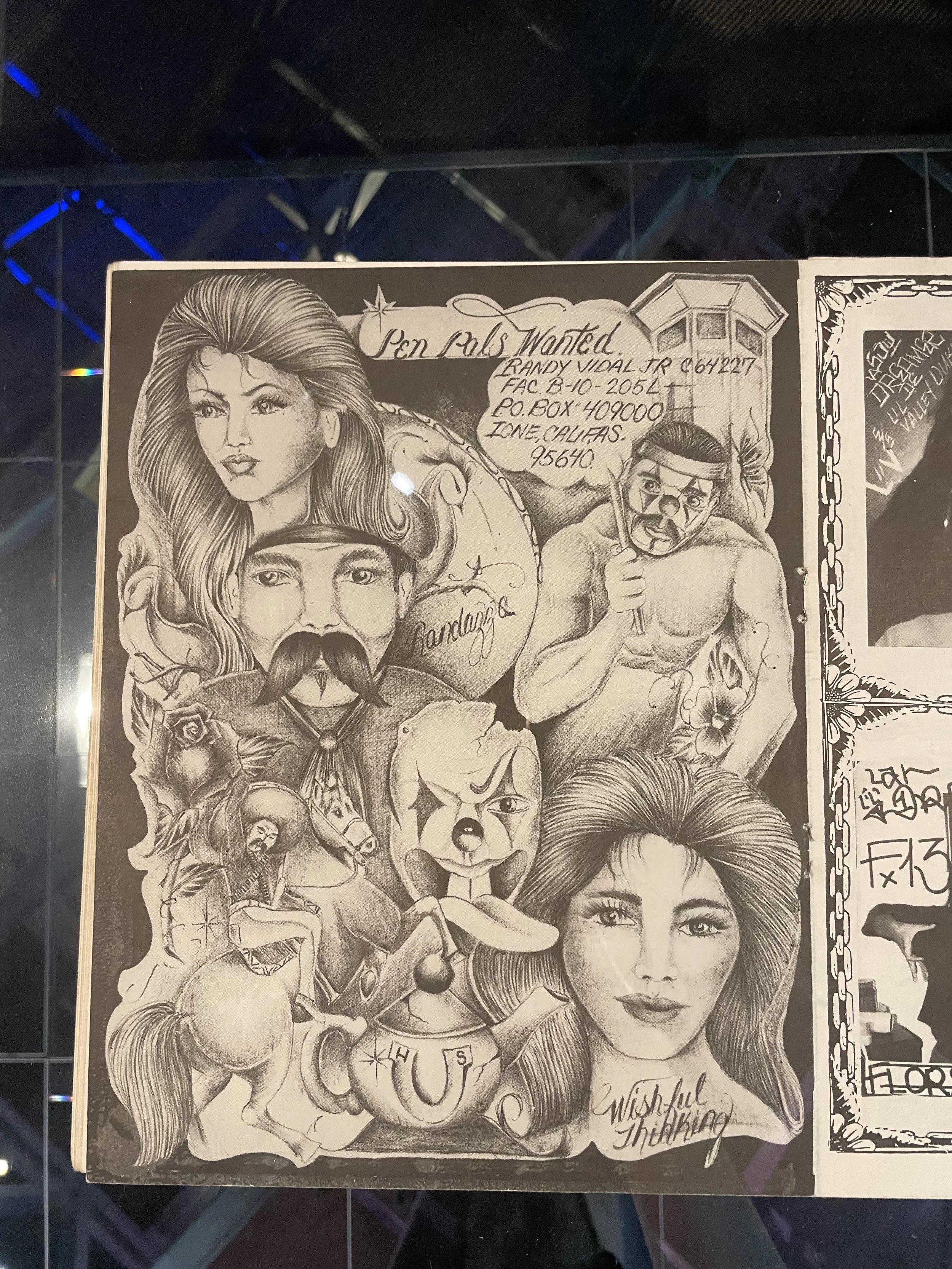
There was a small room with California-Latinx art from the 1990s, which was an aesthetic that Emelia and I recognized well, given that probably half of our classmates in middle school were Latino/a.
Vag Art
For contrast. (See male phallic art above if you missed it.)
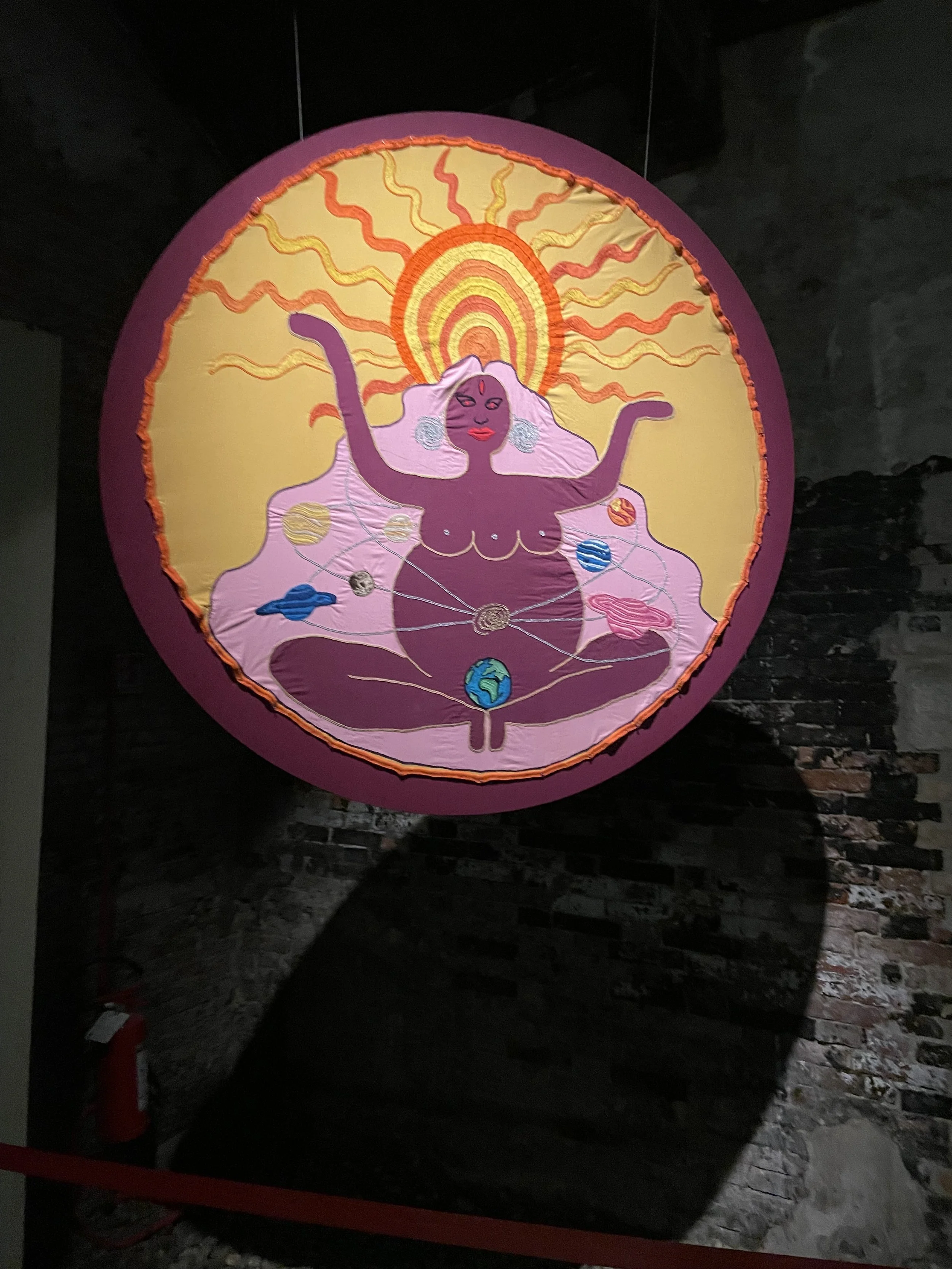
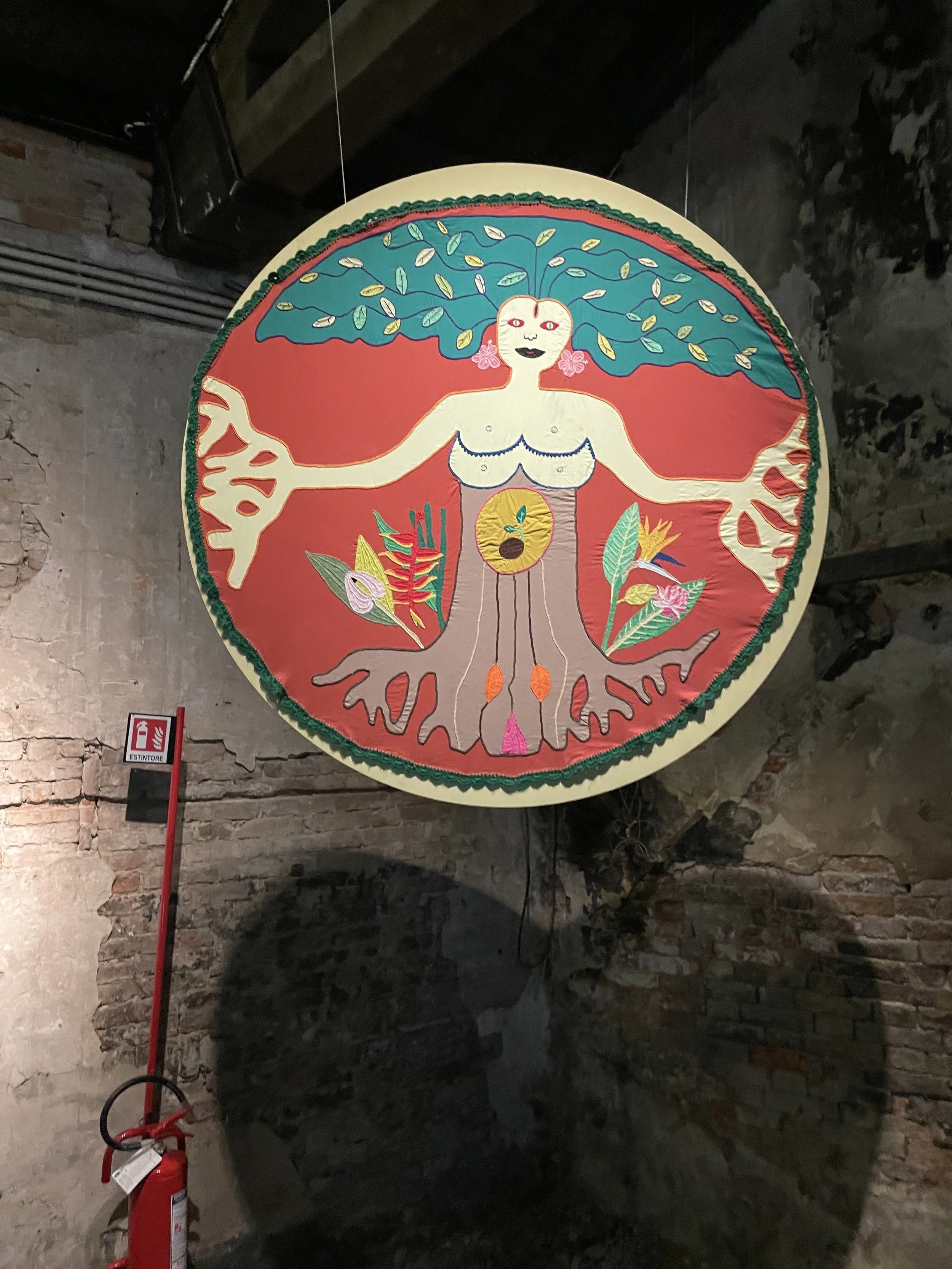
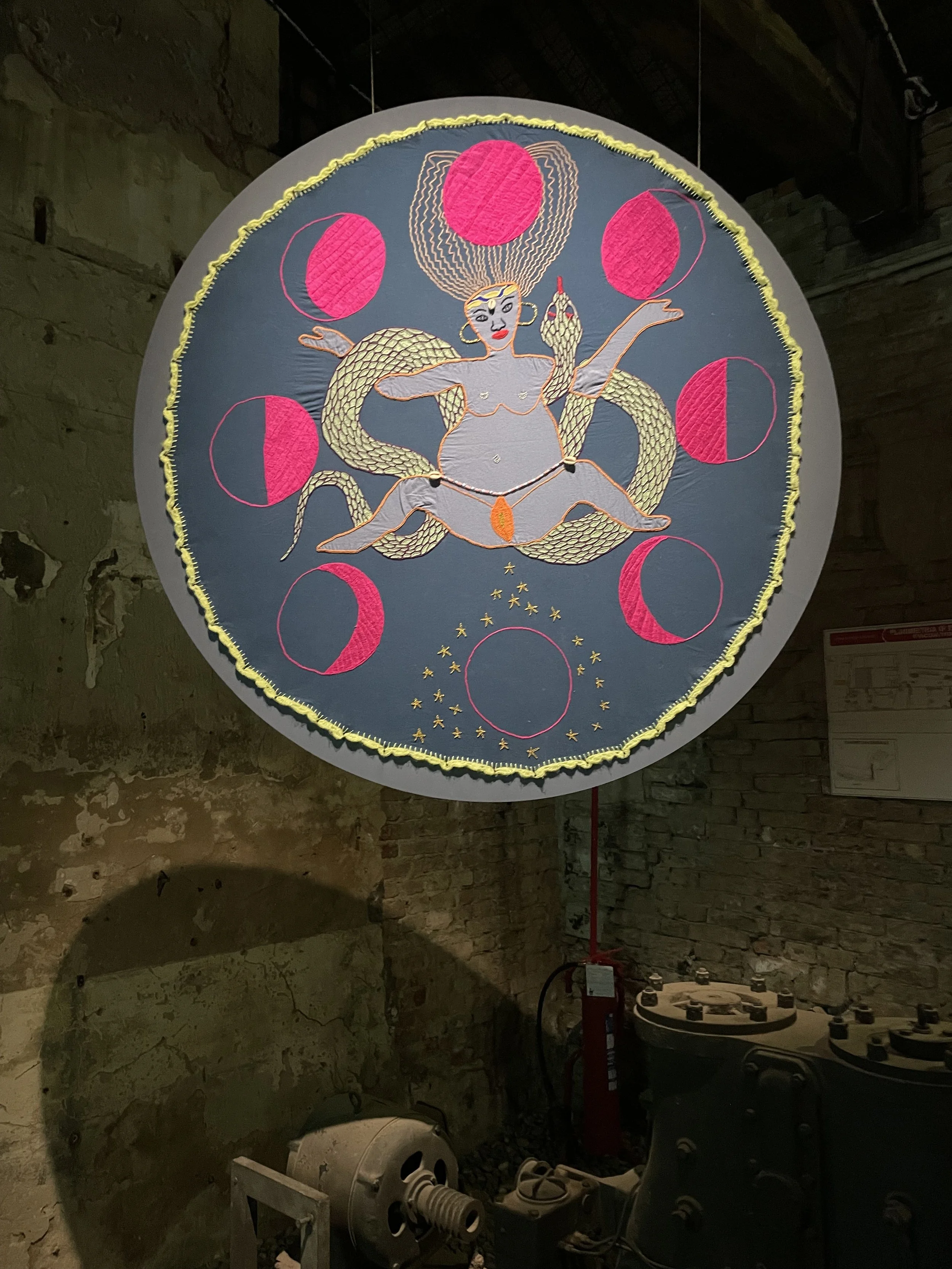
Red Room
This red room I found most compelling. I like art that doesn’t have to explain the feeling it wants you to have, as a lot of the art did, tiringly. “If I have to see just one more description of a tree that stands for transformation…” I said at some point.
On one side of the room were plaques with the names of precious metals and the exploitative means of obtaining those metals, damaging to the health of people and planet. On the other side was a small cube that layered all of the metals mentioned.
Discomfort and outrage were felt.
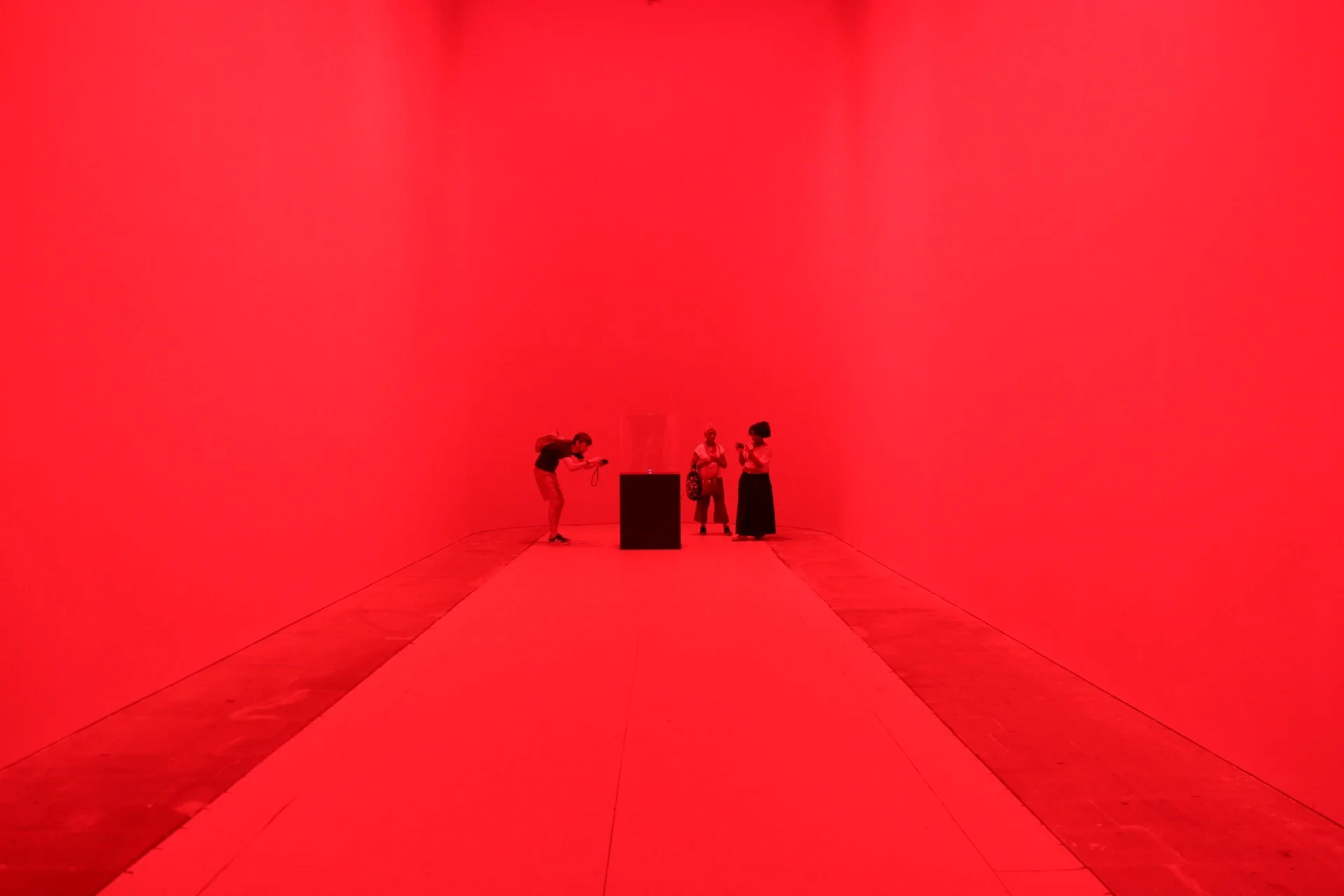
Later, I looked up this artist. Alfredo Jaar of Chile. “Oh, I like this electronic artist called Nicolas Jaar,” my boyfriend said. “I thought he was from Argentina, but maybe he’s also from Chile. I checked.
To our surprise, Alfredo is Nicolas’ father! What a cool family.
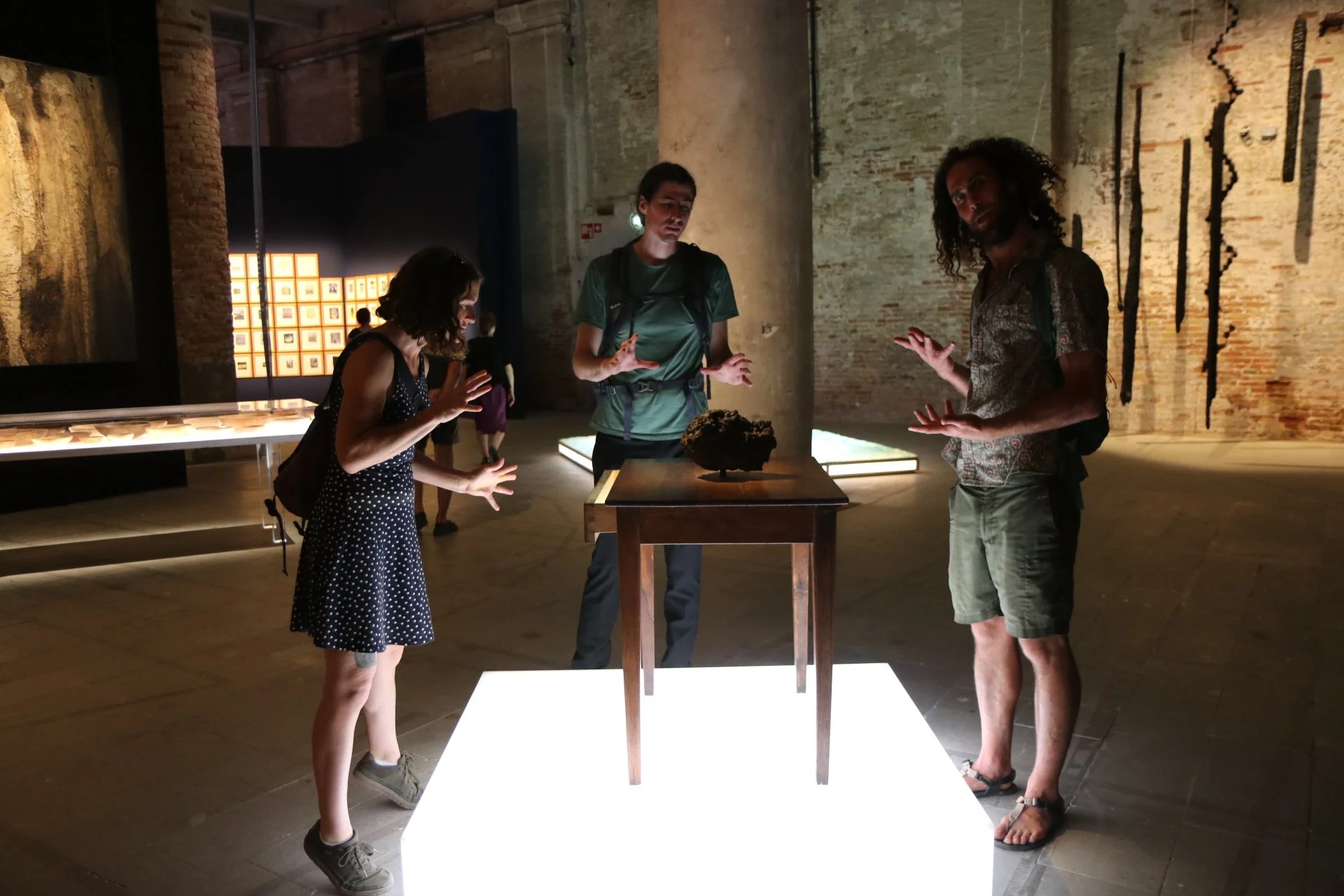
Alien energy, meteor from outerspace.
Morocco
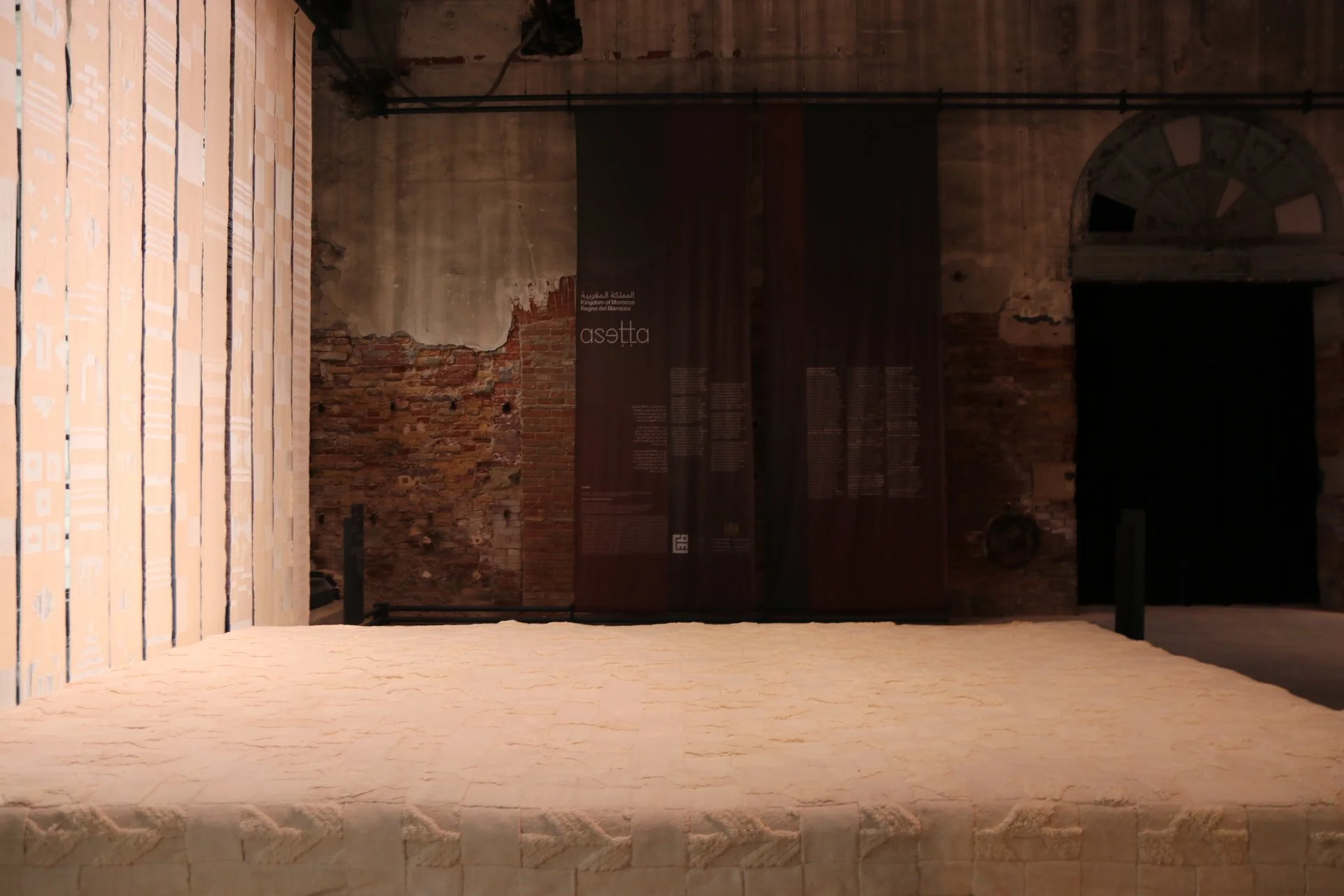
At the end of the arsenale, the country exhibits started again. Morocco had this huge bed-like lounge cushion.
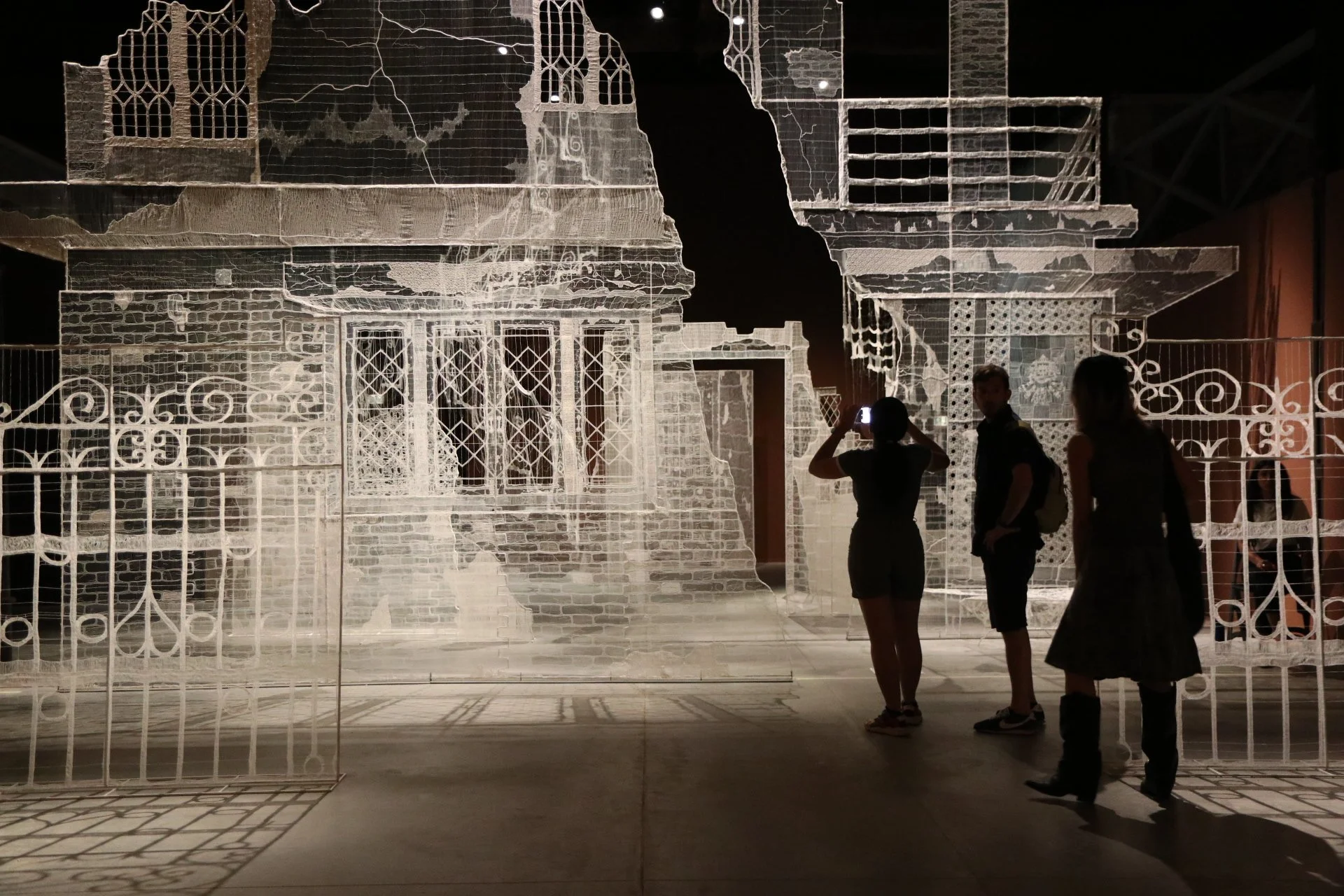
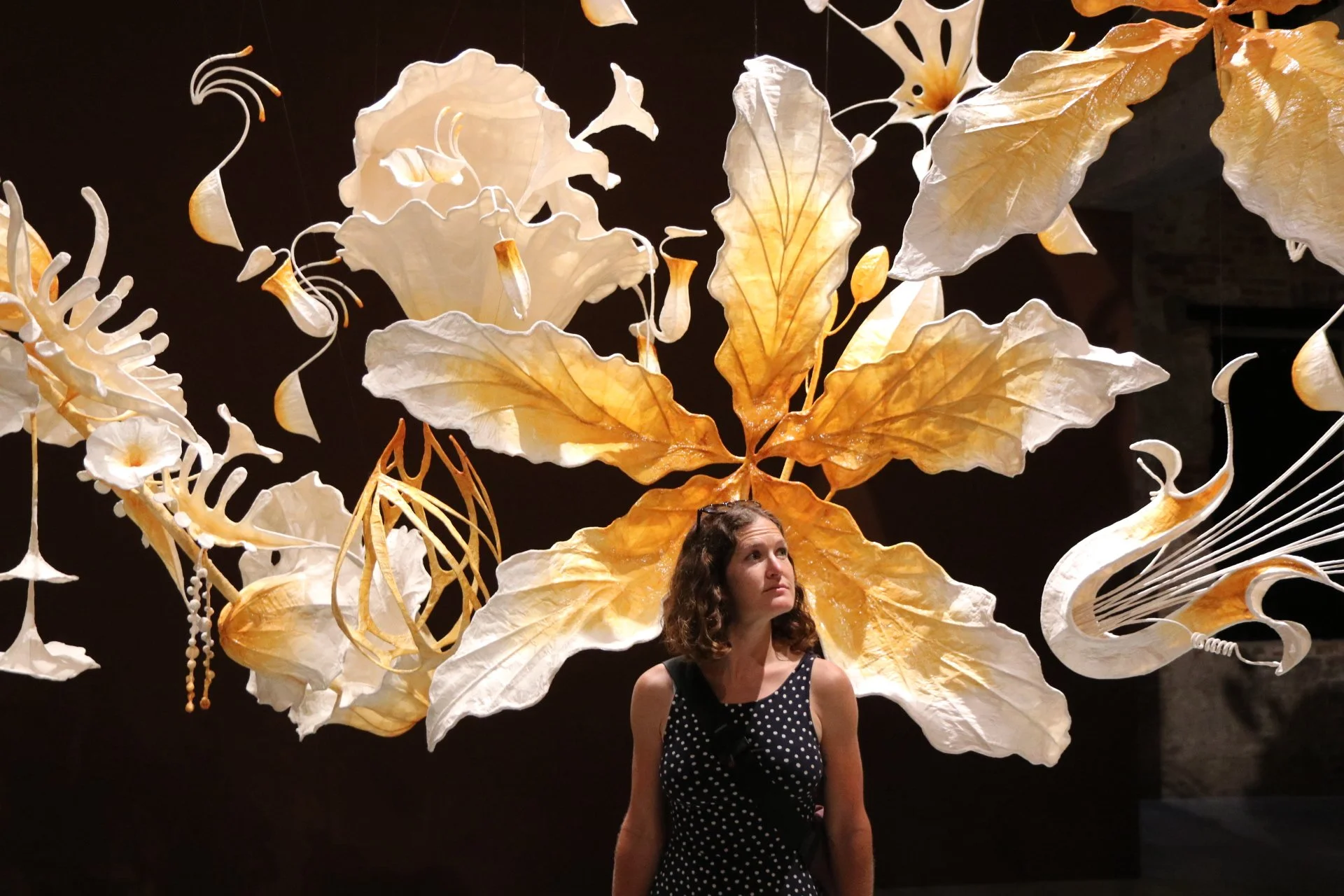
India
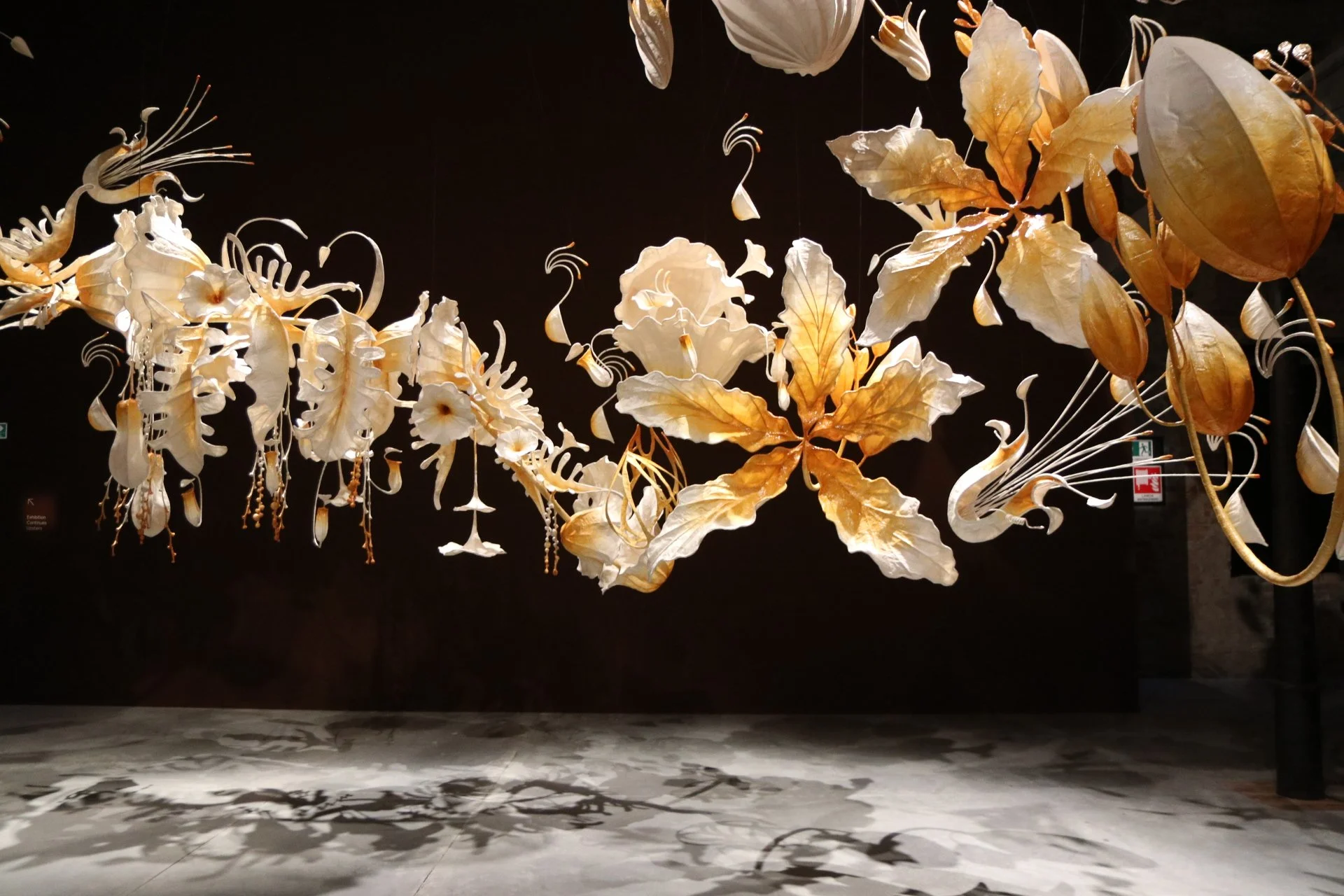
Oman
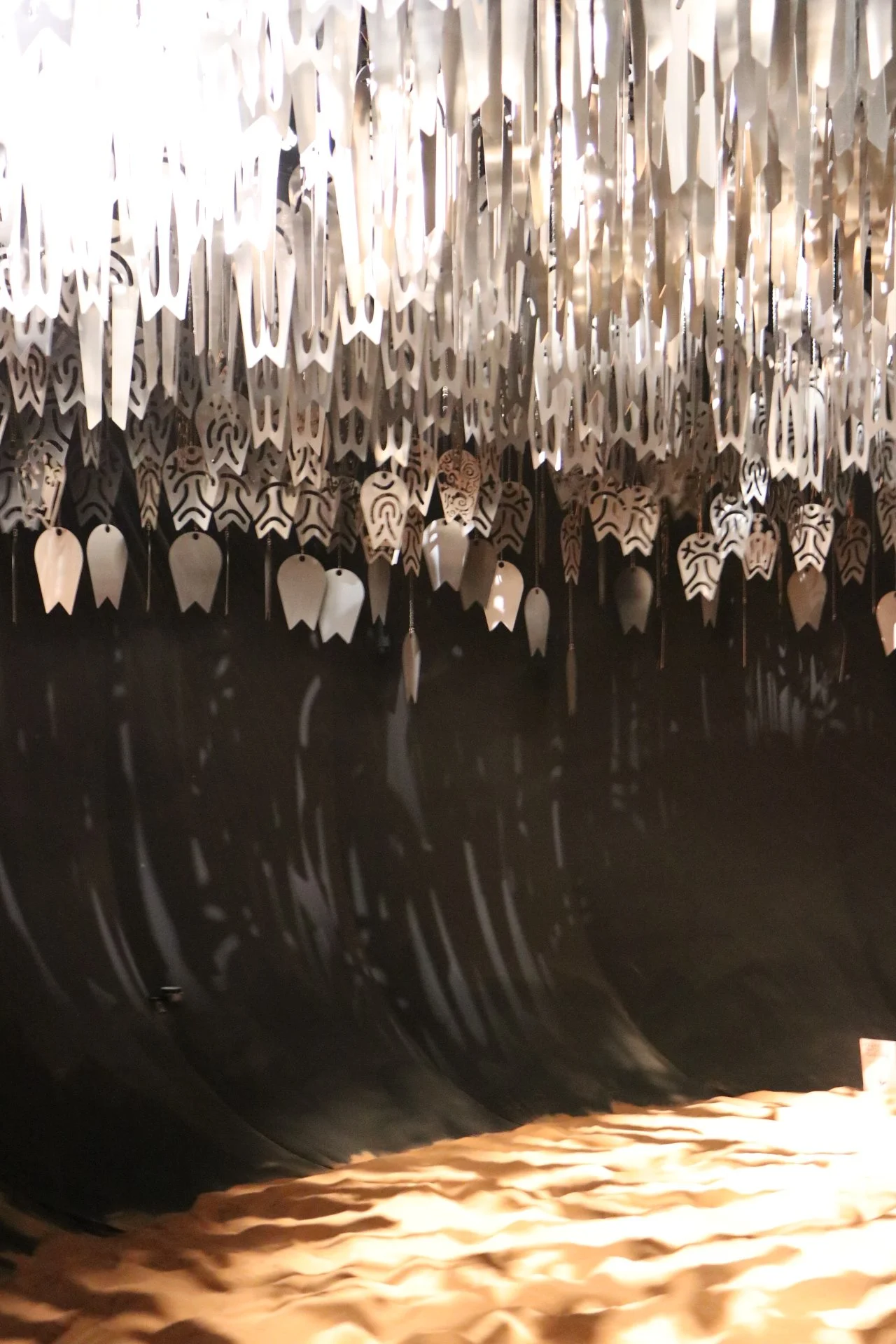
We wanted to walk through the soft-looking sand (sans shoes, as required) but we also didn’t want to have to brush the sand off of our feet, and we were in the final countdown as closing time was fast approaching.
Chile
This was my personal favorite!
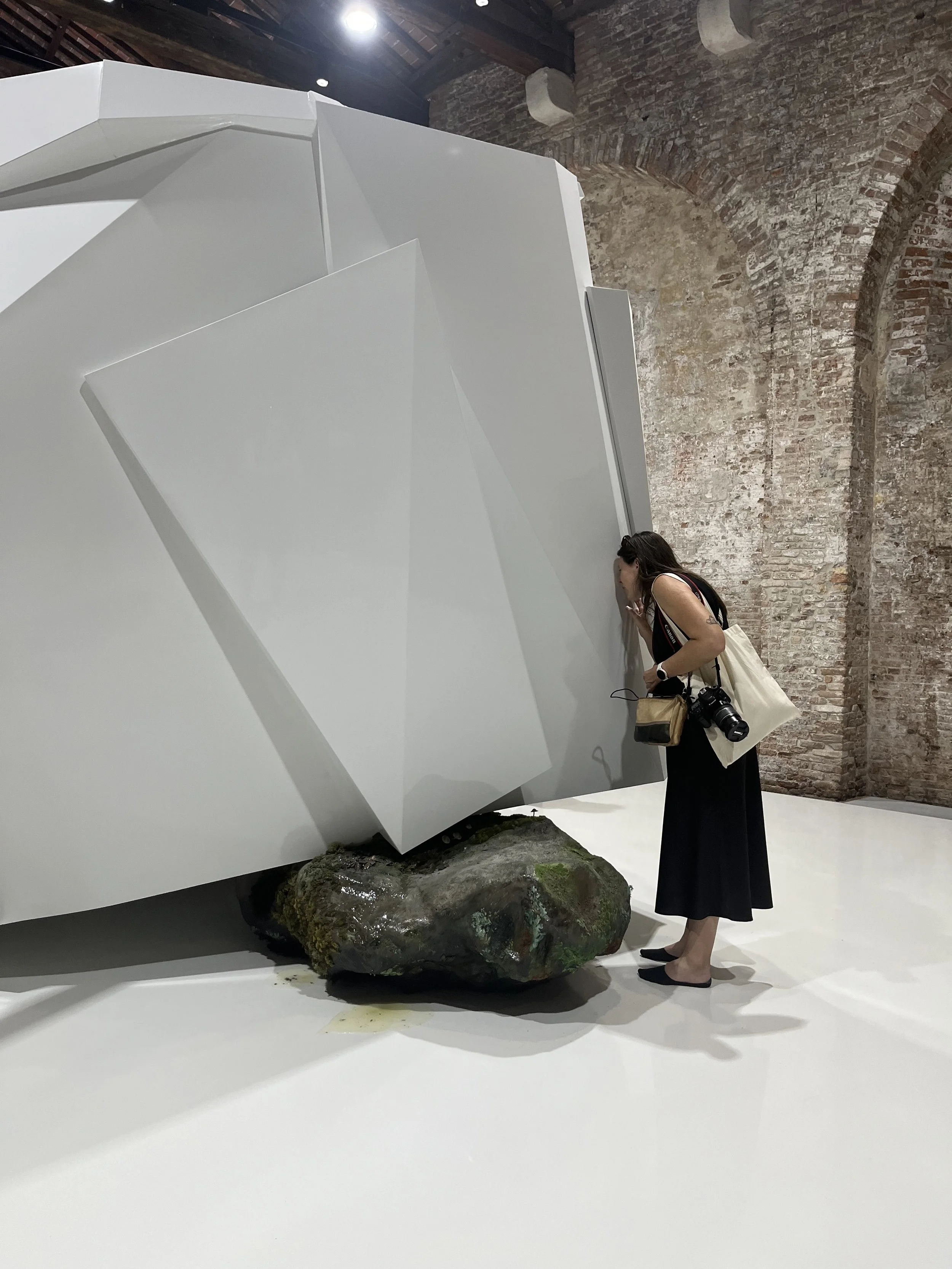
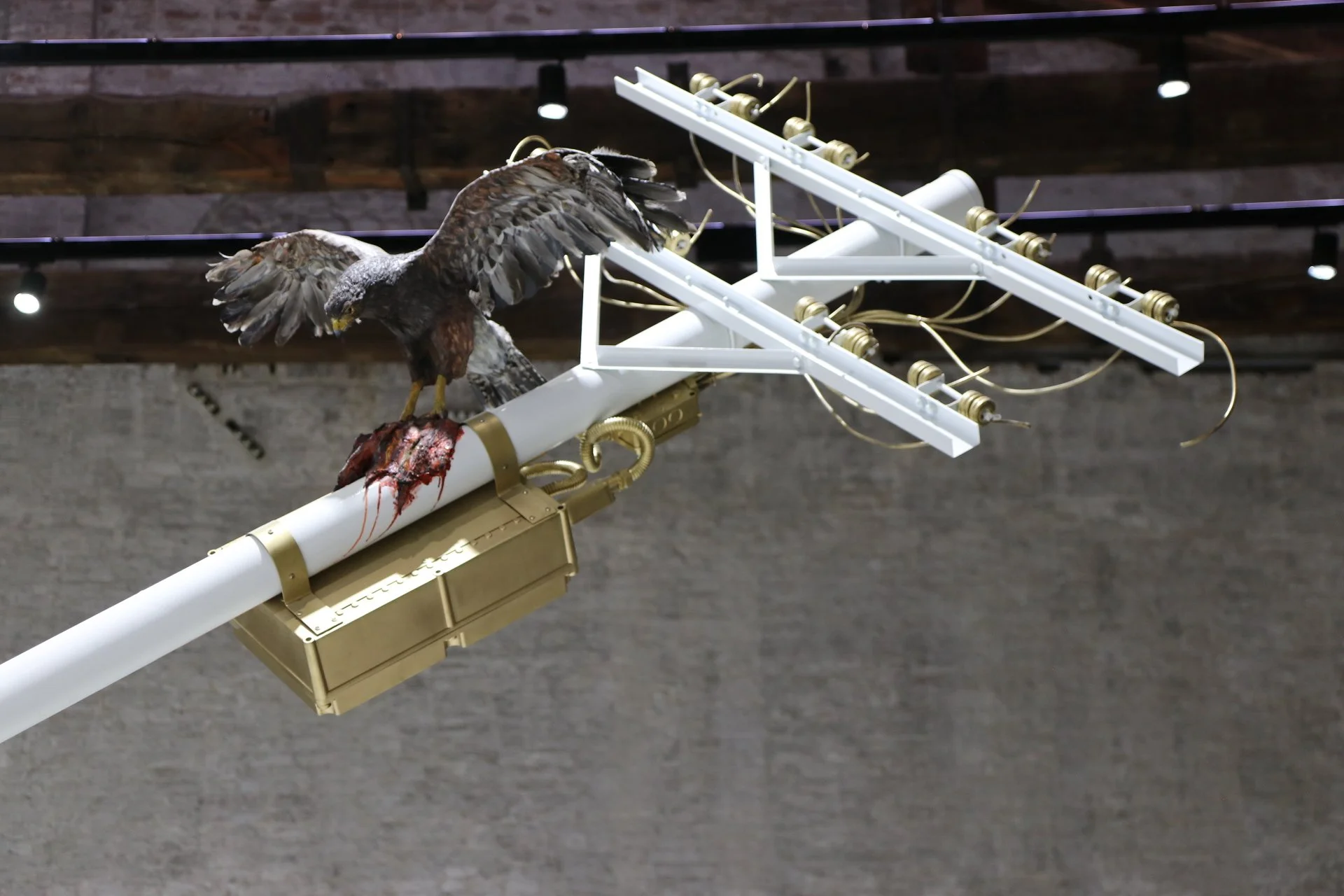
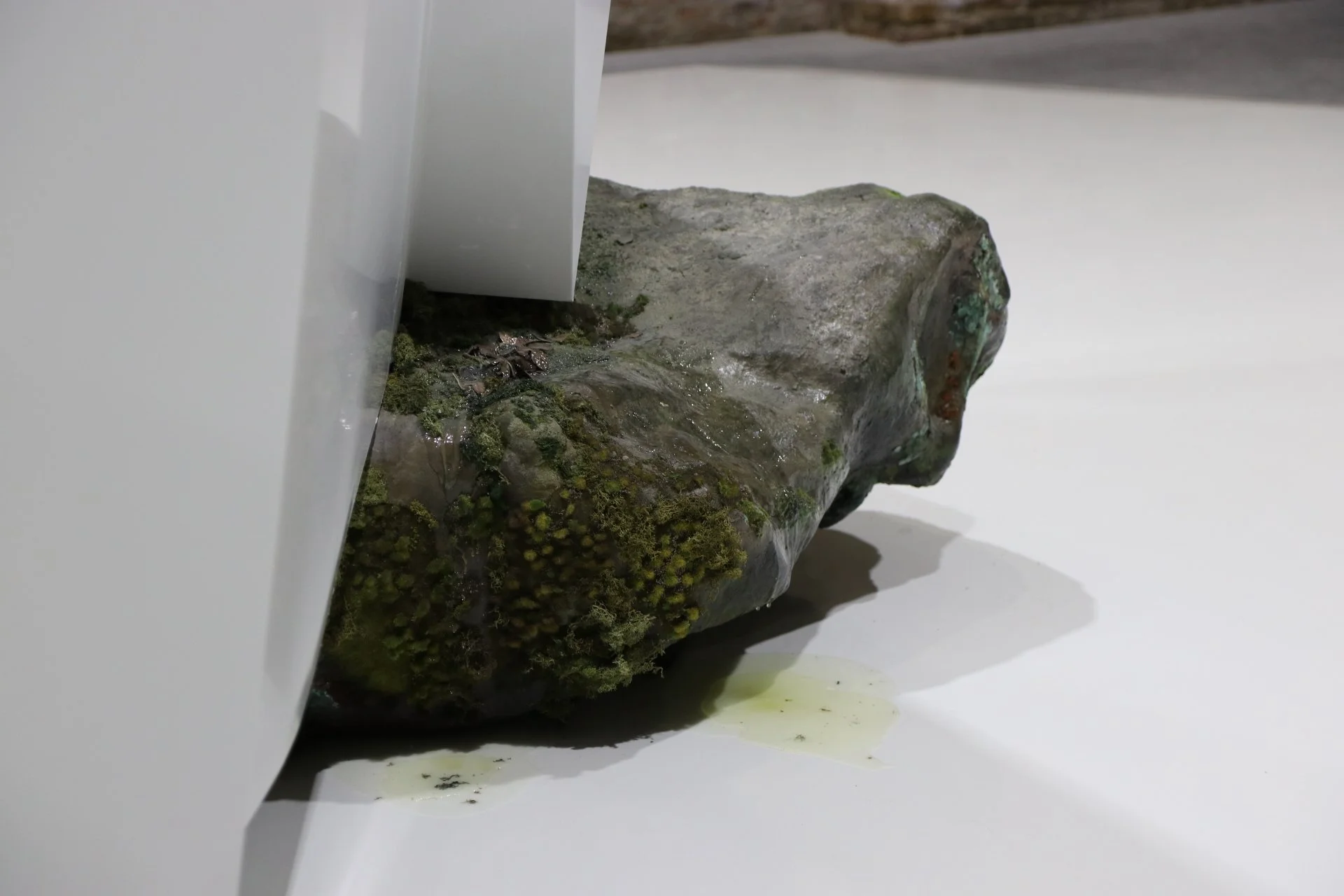
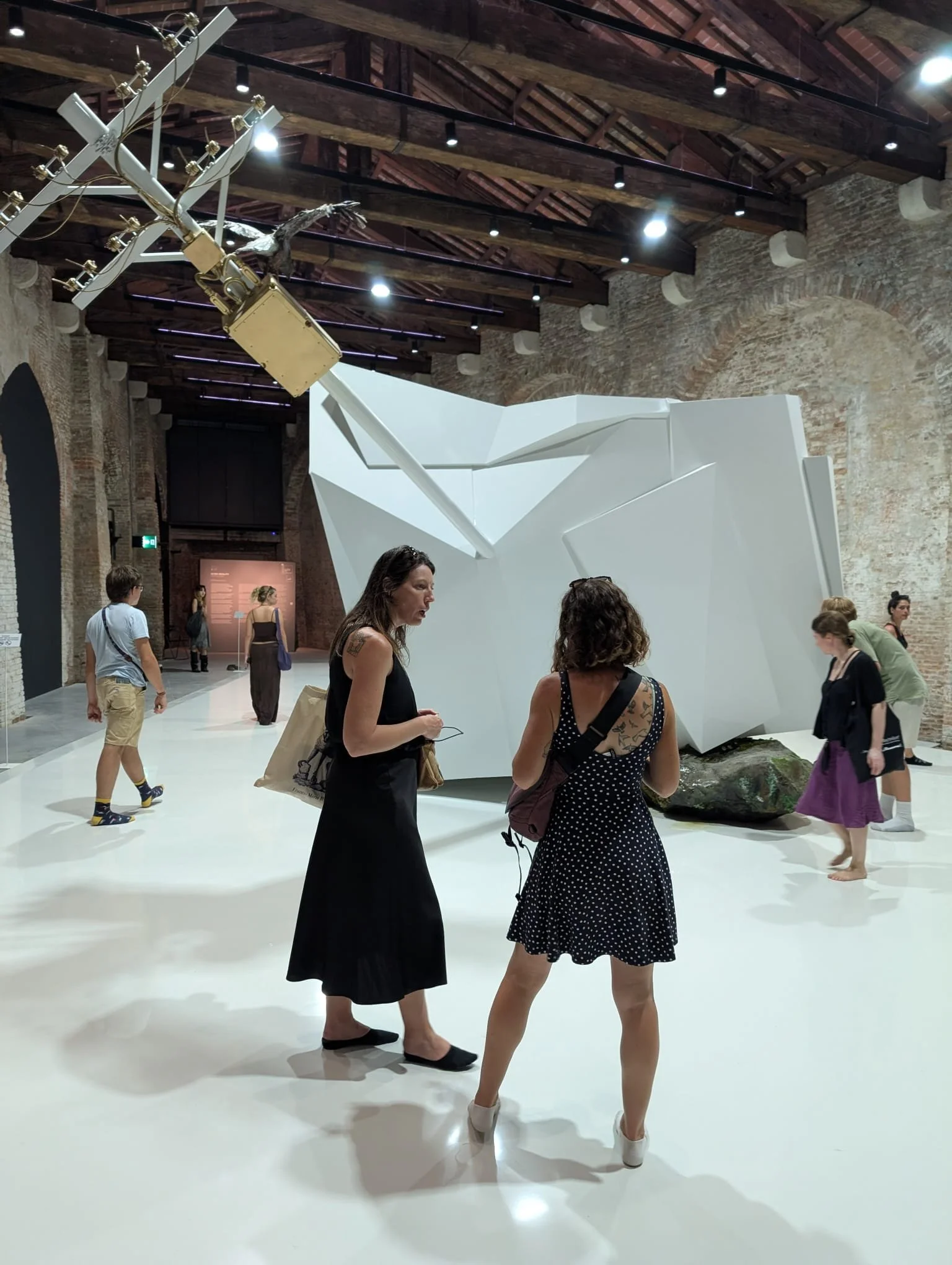
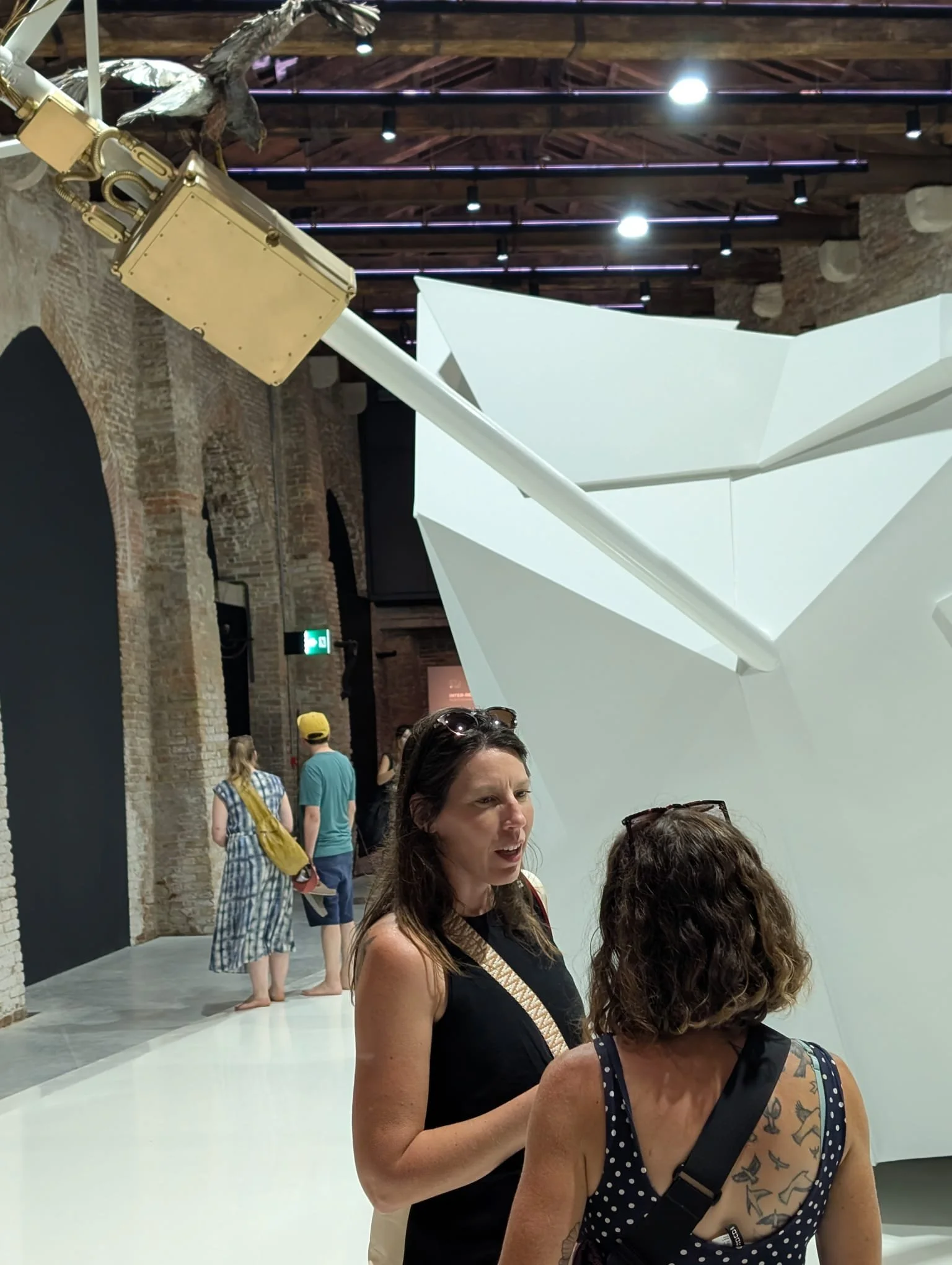
This white geometric shape was plopped down, Wizard of Oz style, on an oozing rock. The shape was impaled by an electrical pole with an eagle fiercely clutching a bloodied prize. The pole’s embellishments were all gold, not unlike Trump’s preferred aesthetic, and that preferred by oligarchs throughout the ages.
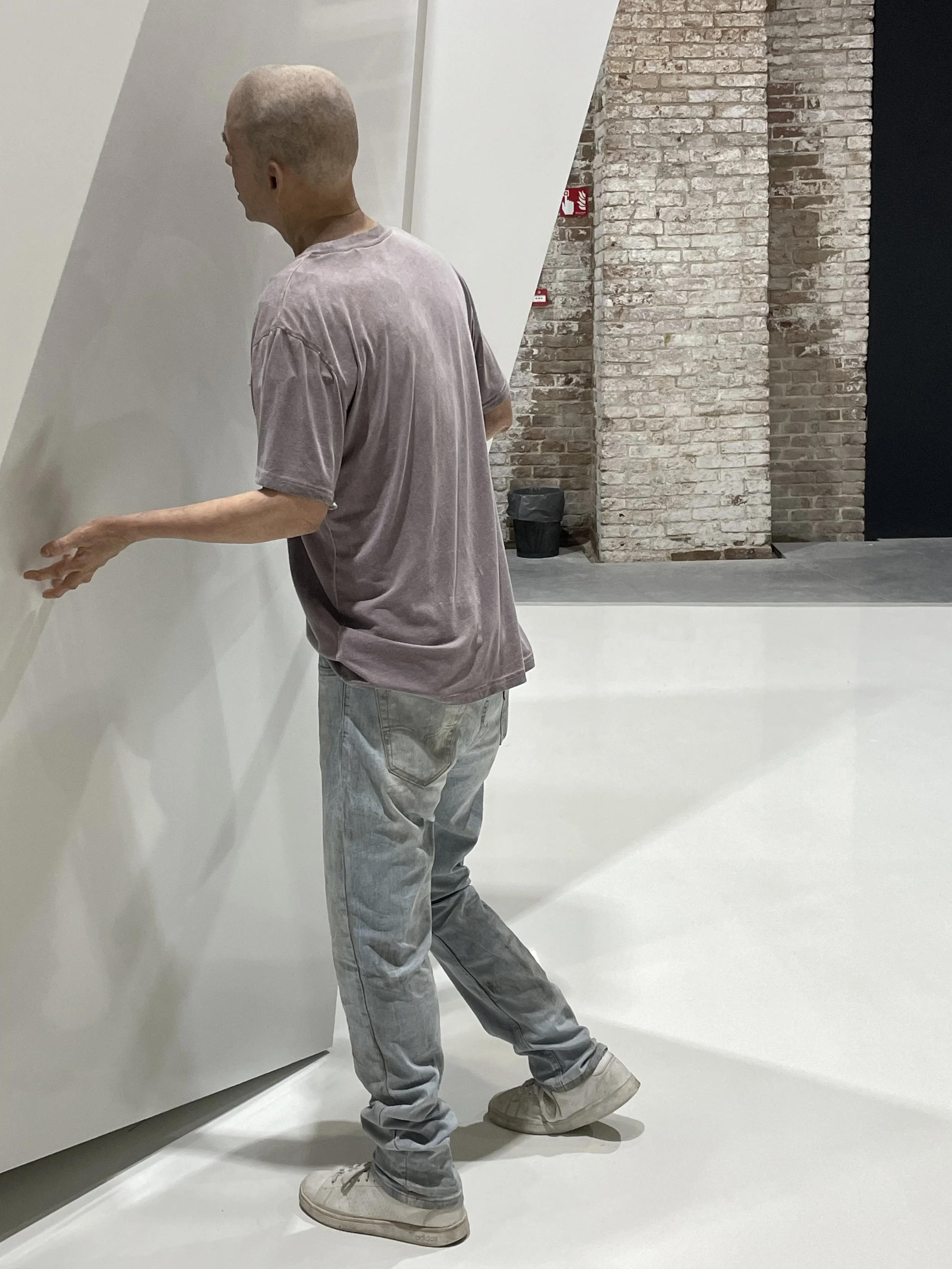
There were peepholes around the shape, and I did not realize that one of the peepers was a mannequin until my boyfriend pointed it out to me! Whoa.
Through the looking holes were scenes not unlike old Italian landscape paintings, but with Trump golfing in one, and the US White House floating away in the clouds in another. A fiery catastrophe haunted another viewpoint scene.
It’s hard to escape the way that the greed of capitalism, and US capitalism at the forefront, is harming us and causing the nonstop onslaught of horrific events, from poisoned water systems to species extinction to genocide.
So, I really wanted to see more exhibits like this one, speaking to the current political climate.
I felt surprised that both of my favorite exhibits were by Chilean artists, coincidentally. But maybe I just don’t know enough about Chilean artists! Maybe they have a legacy of great political art. Do you know if this is the case?
Italy
With just 3 minutes to spare, we raced into Italy’s room and rushed around. My Italian boyfriend was disappointed in their exhibit this year. “One year, they recreated a whole factory!” he shared. I guess not every year can be the most inspired year?
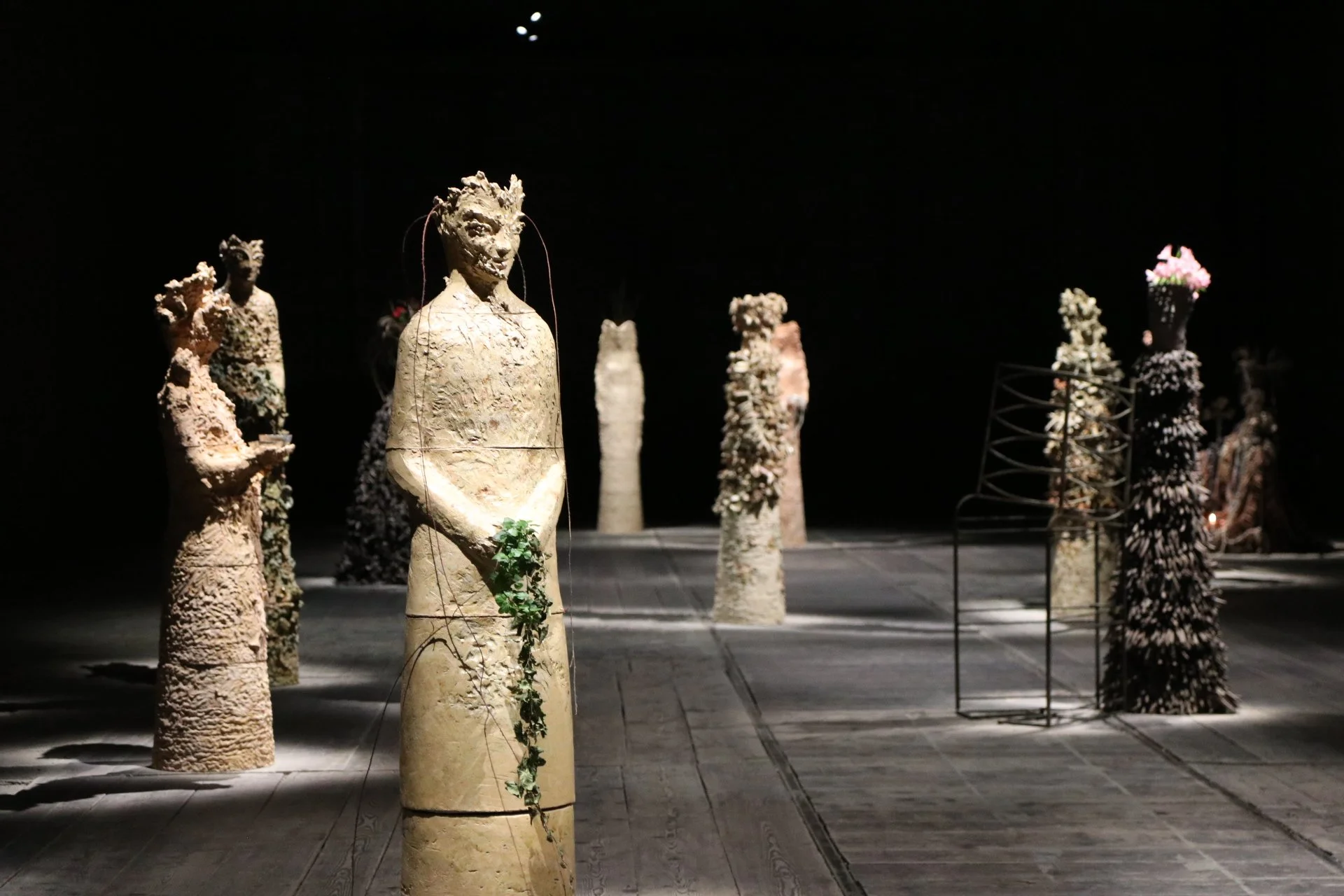
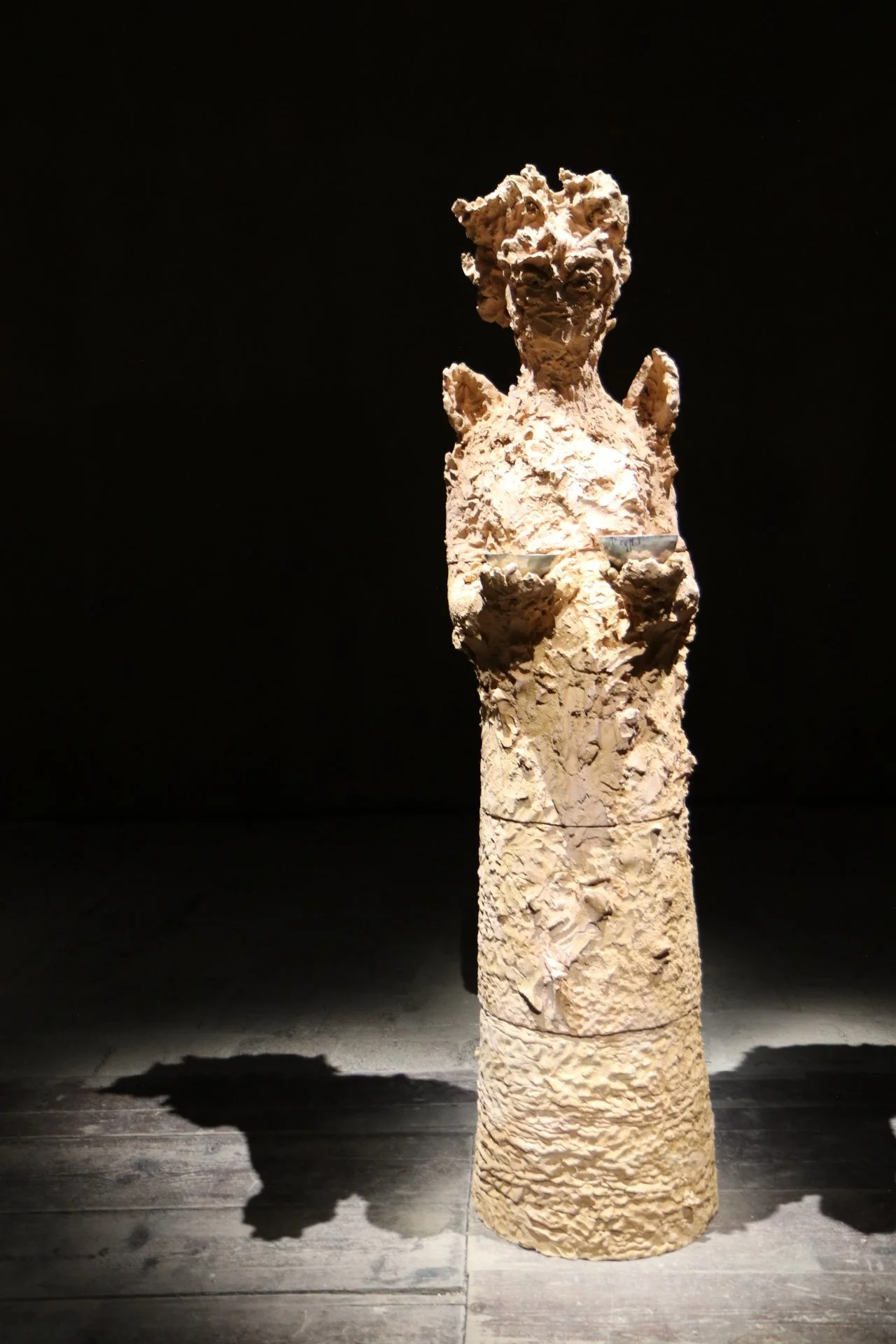
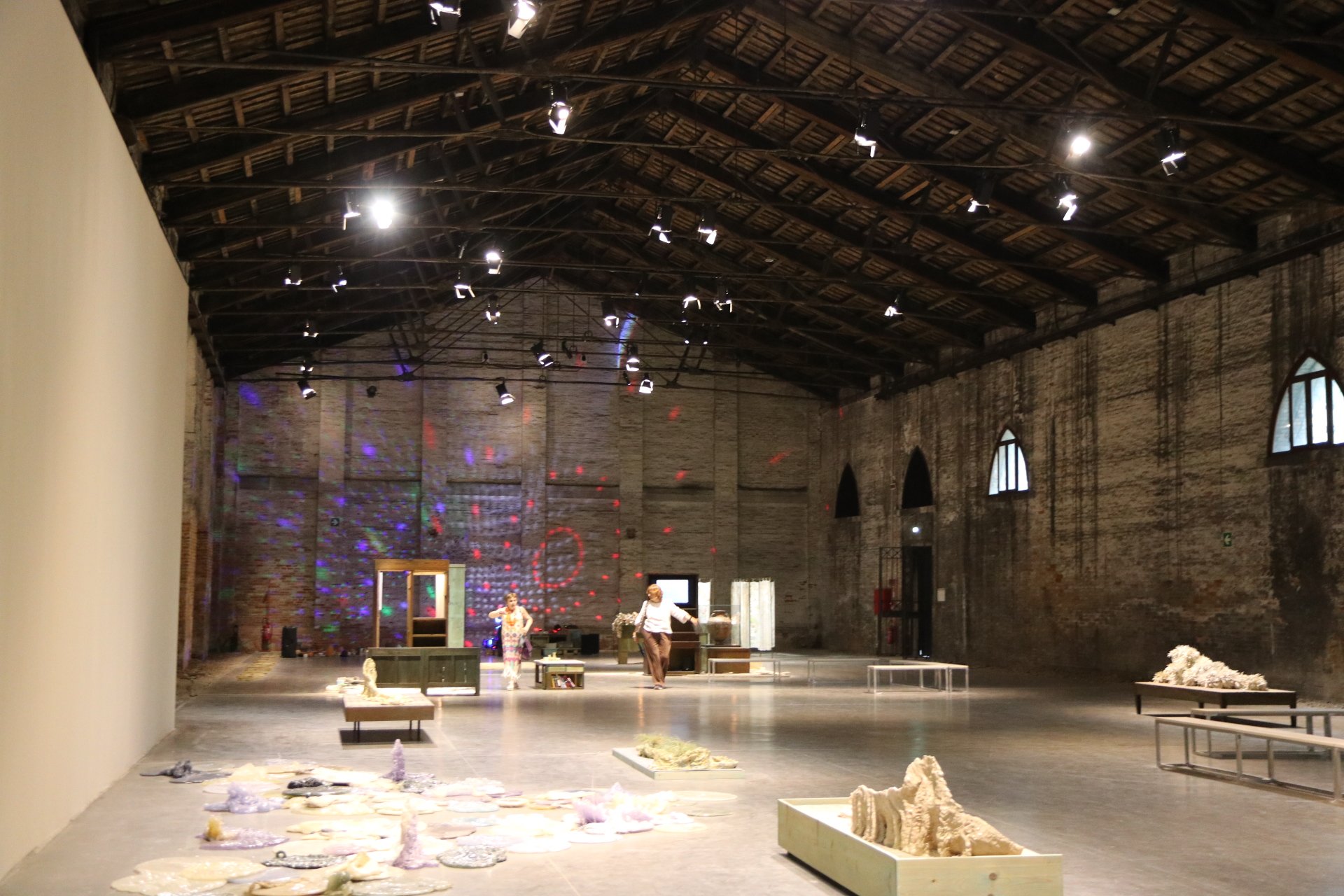
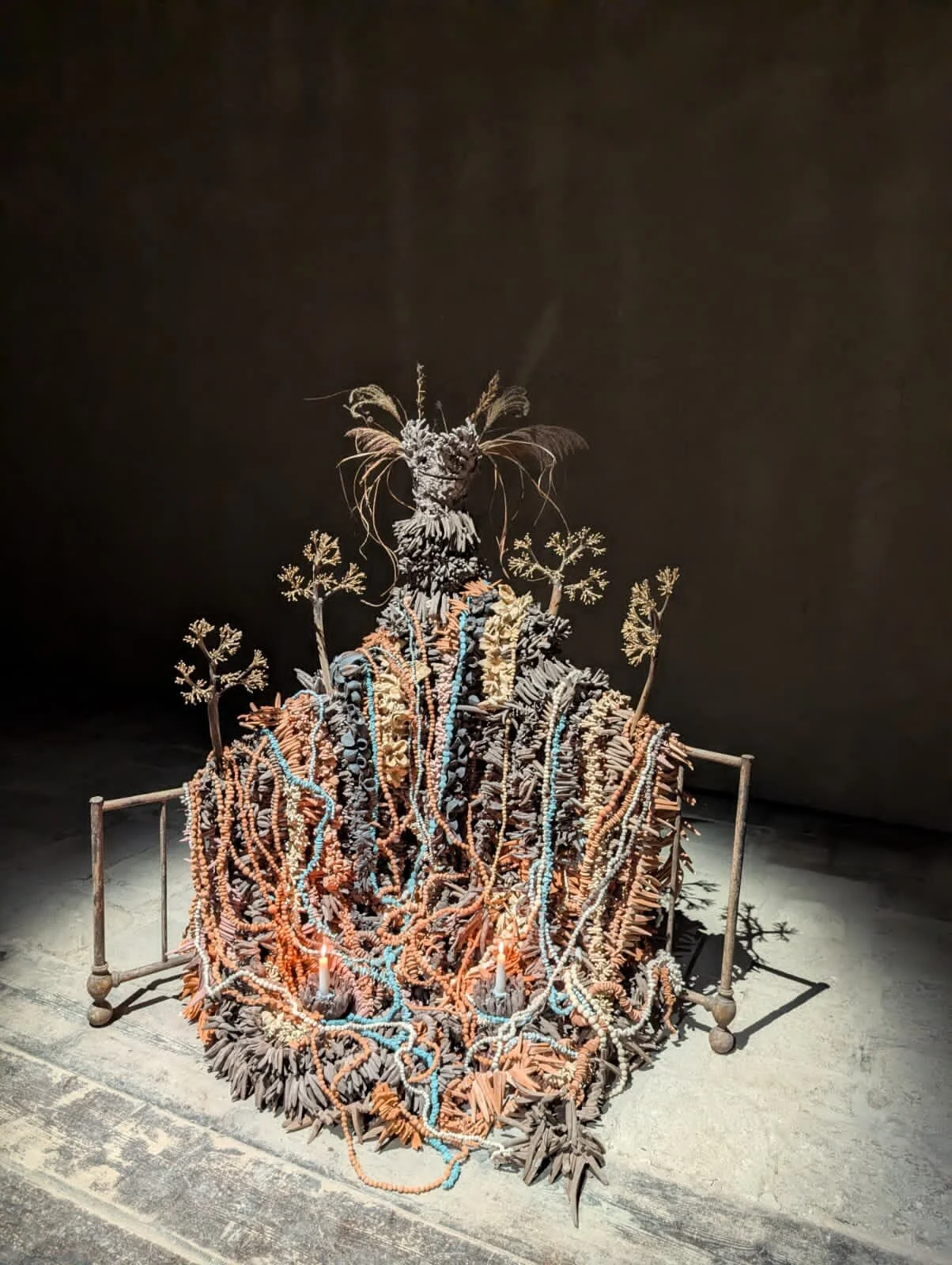
Still, there were some beautiful scenes.
Azerbaijan
There were a couple of extra exhibits that were outside of the official Biennale halls. We stumbled into a few of them as we were wandering.
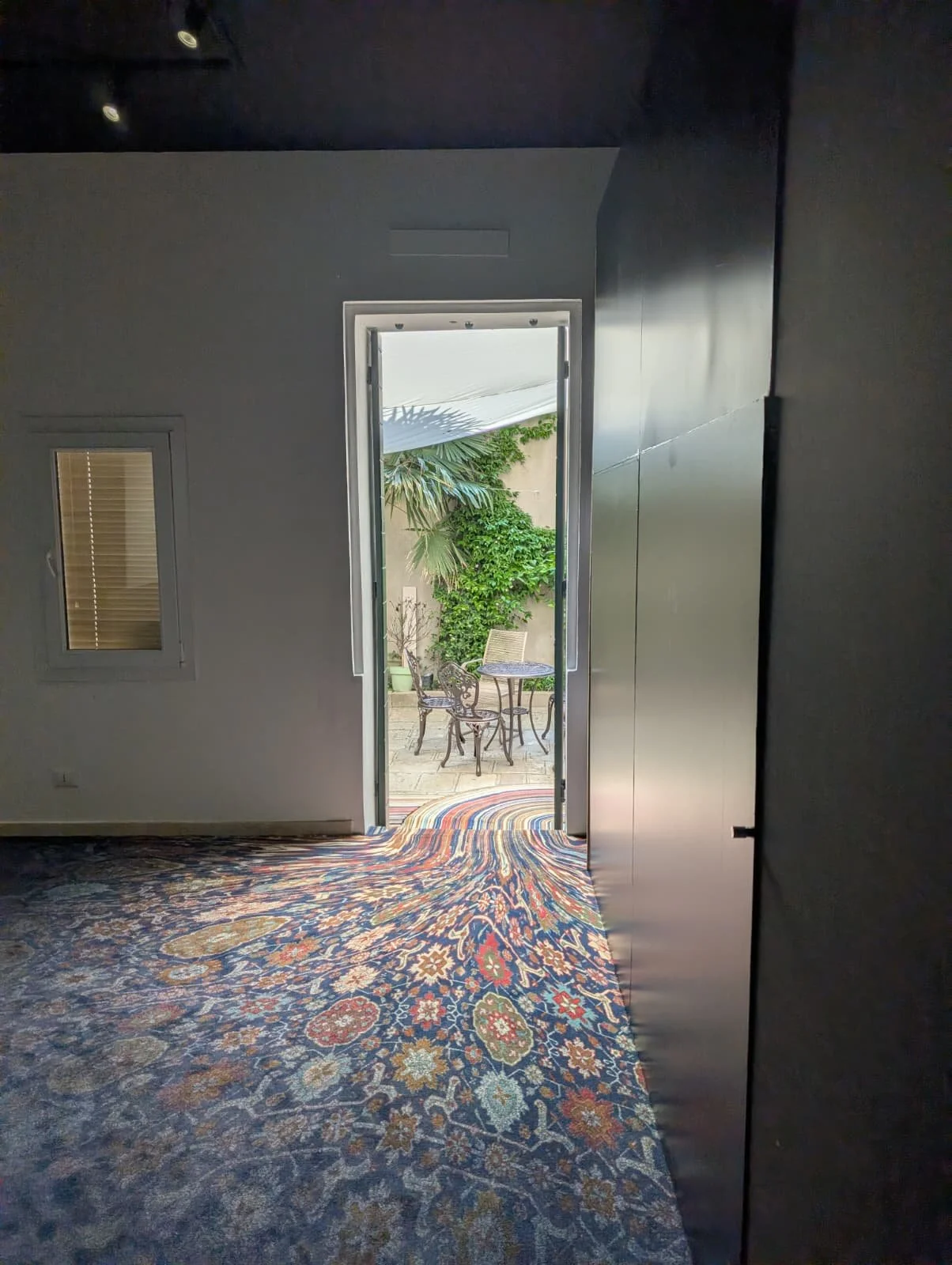
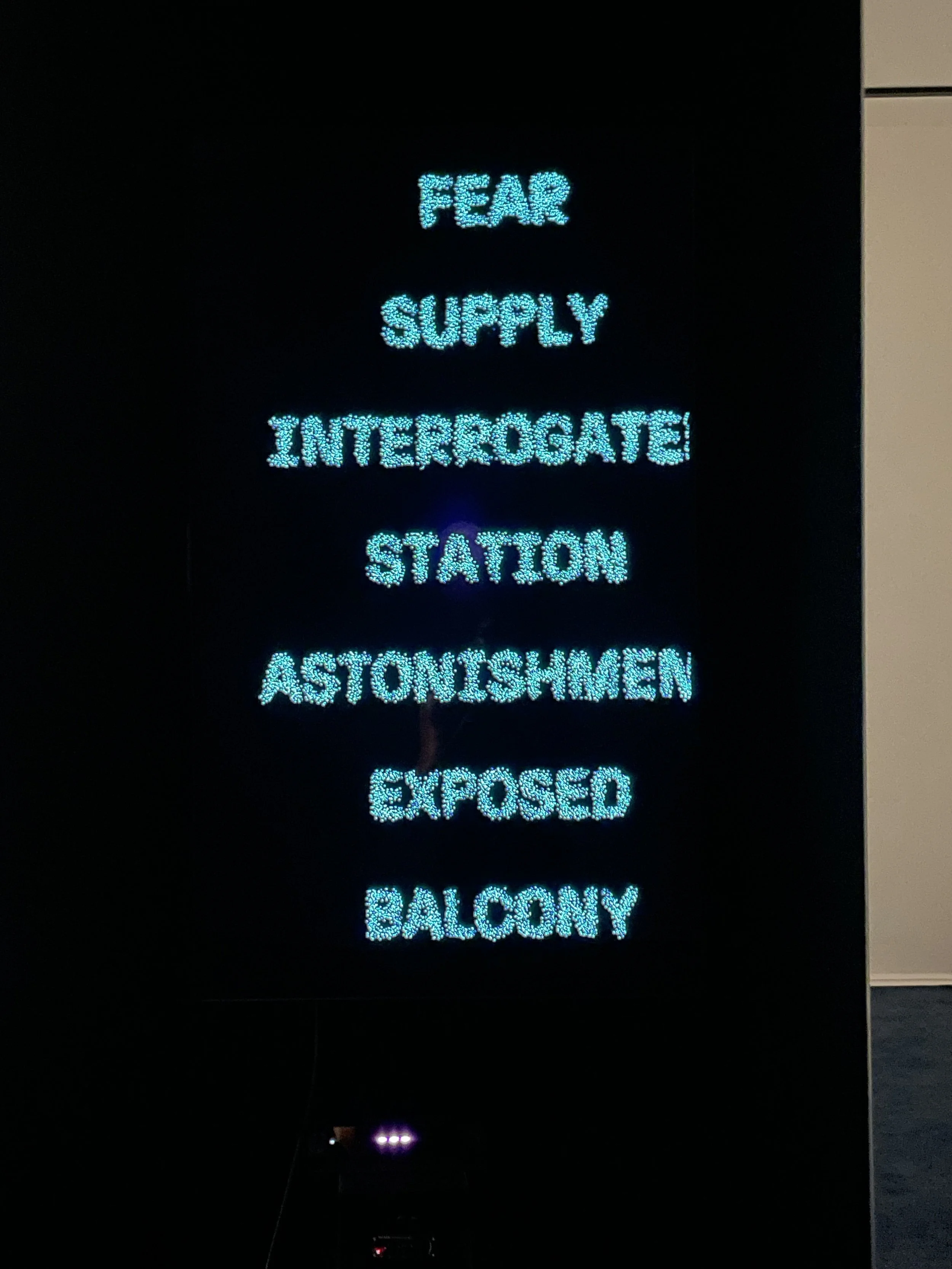
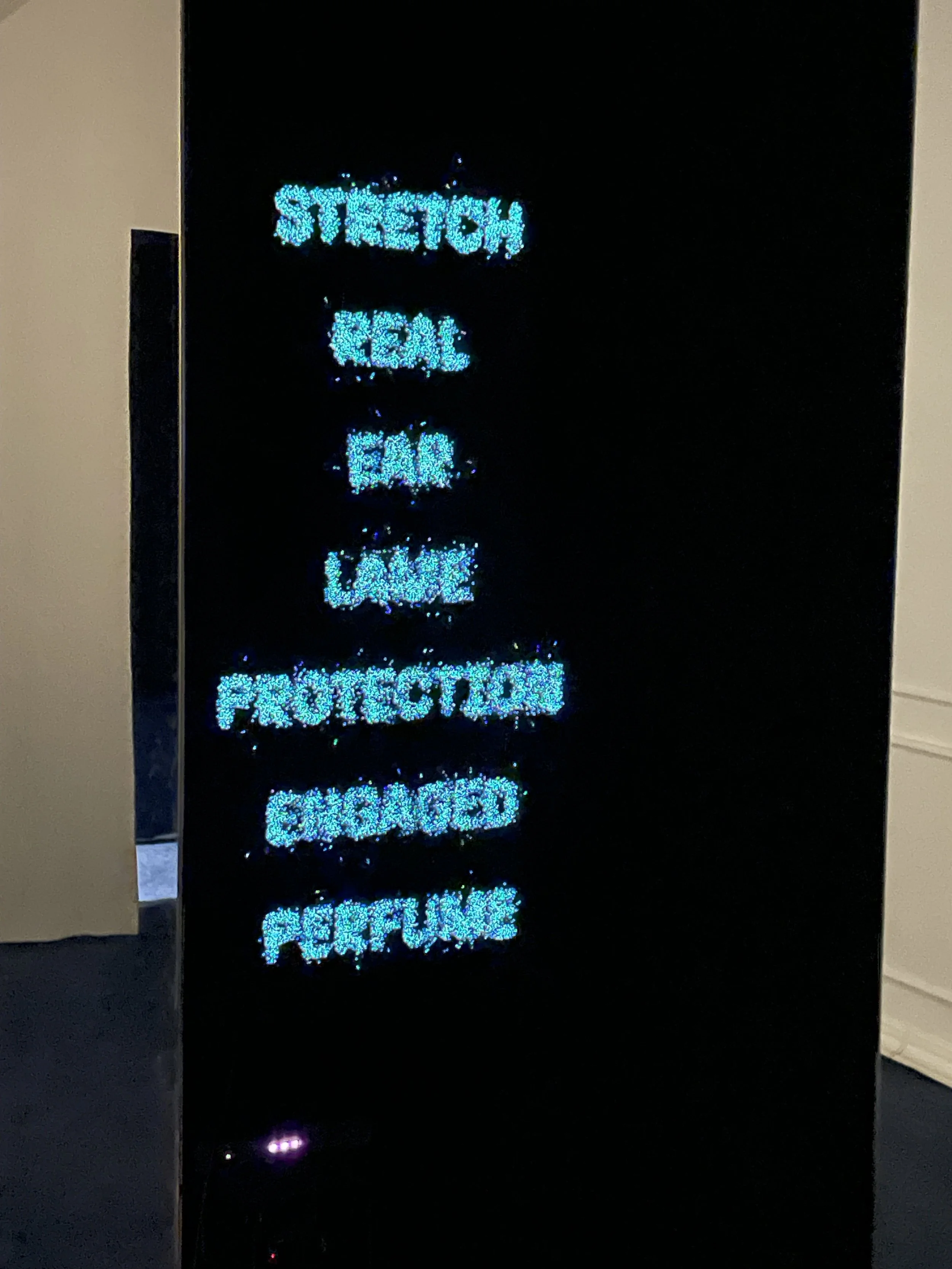
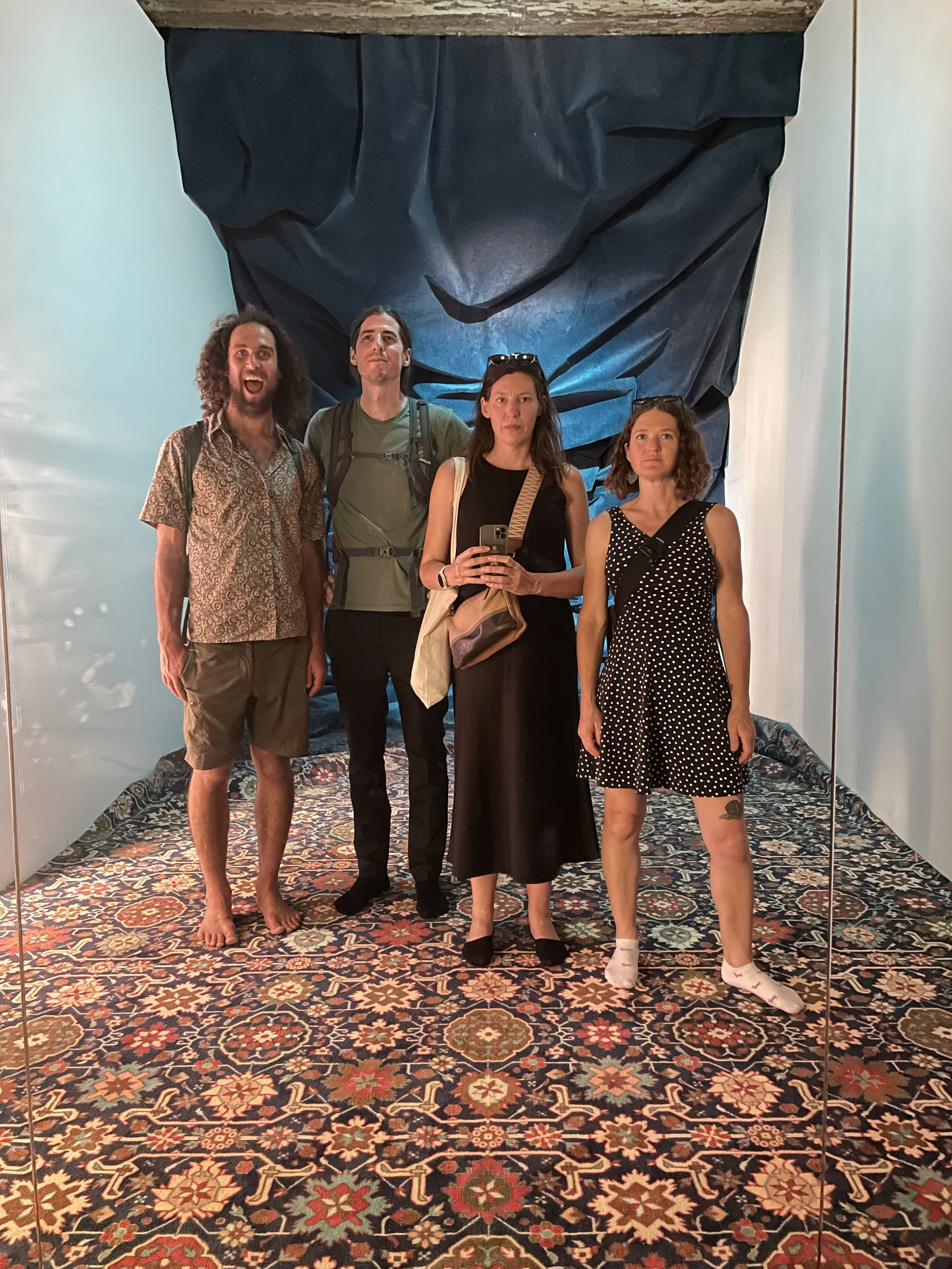
Who knew that Azerbaijan would have such an exciting one? Not only did they have melting carpets but also a quantum computing box with an interactive element: sit in front of the box, move around, and have the quantum computer analyze your essence. Then, on the screen appeared words that matched the person’s essence.
We each tried it! One of us was FEAR and one of us was EAR. Okay.
Day 2: Greater Venice
After lunch and an espresso, we headed over to an outside exhibit: Marina Abramovic at Gallerie dell’Accademia
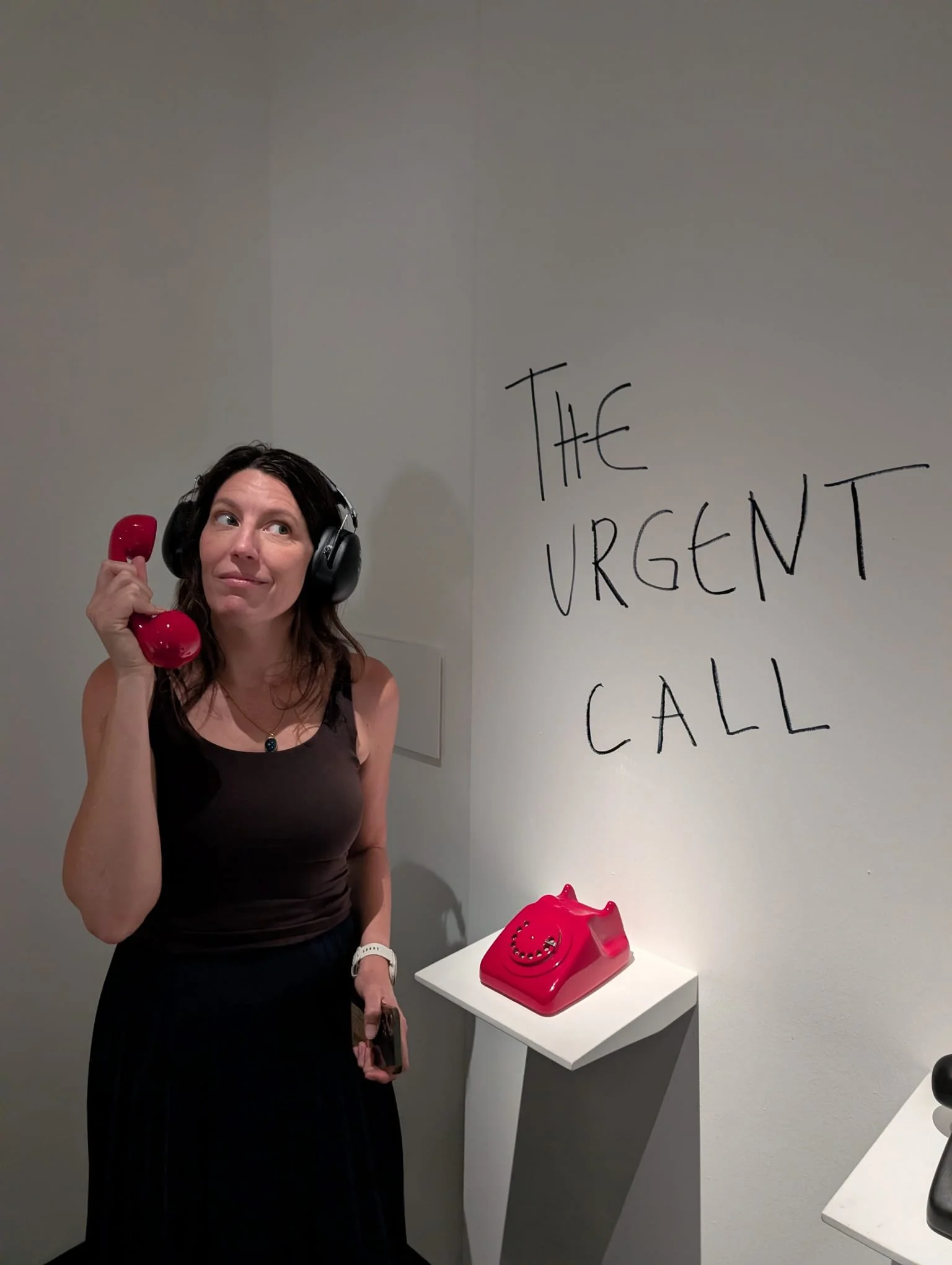
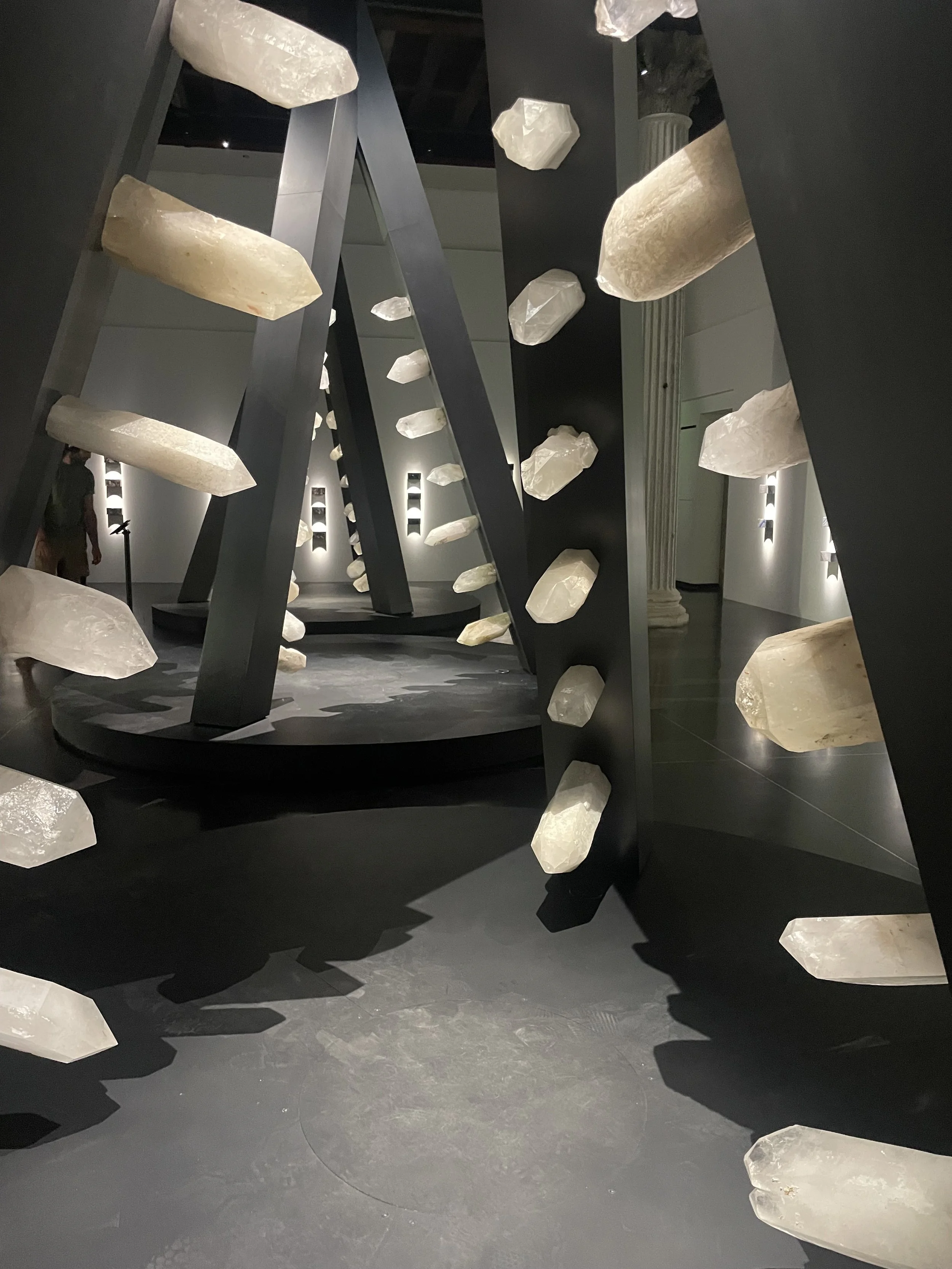
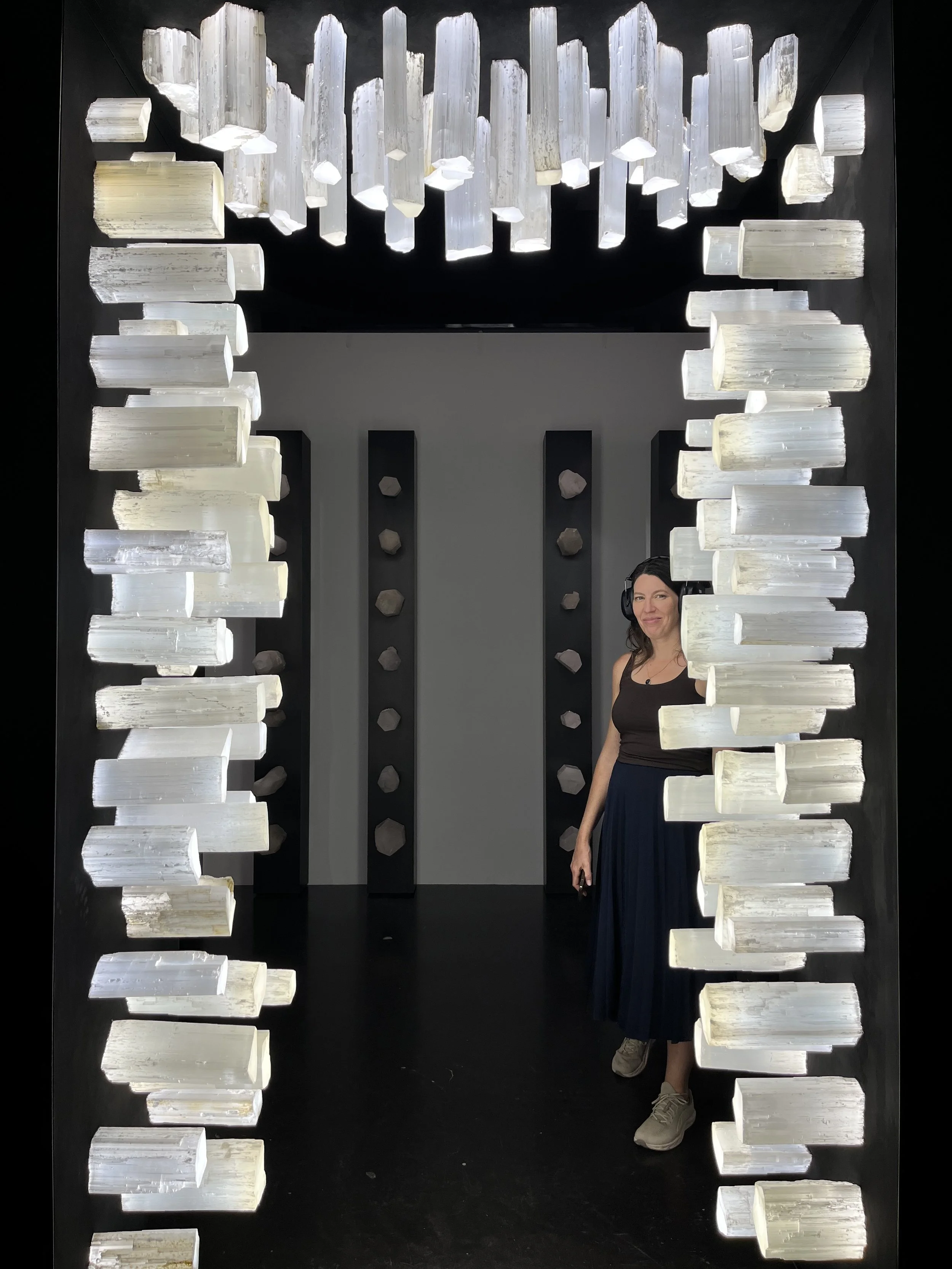
“Internationally renowned artist Marina Abramović will make history in 2026 as the first living female artist to be honored with a major exhibition at the Gallerie dell’Accademia in Venice. Transforming Energy, presented on the occasion of the 61st Venice Biennale, will be open from May 6, 2026, and remain on view until October 18, 2026.
The exhibition marks the artist’s 80th birthday and establishes a profound dialogue between her pioneering performance art and the Renaissance masterpieces that have shaped Venice’s cultural identity. Curated by Shai Baitel, Artistic Director of the Modern Art Museum (MAM) Shanghai, in close collaboration with the artist, the exhibition unfolds both in the permanent collection galleries and in the temporary exhibition spaces—an absolute first in the institution’s history—placing Abramović’s work at the very heart of Venetian heritage.”
We had a blast interacting with all of the crystals among the museum’s regular Renaissance art. We went all-in with the idea that we could find inner peace through the crystals’ energy, though usually we’d be skeptical. We did it just for fun. It worked. We had fun. €20 ticket.
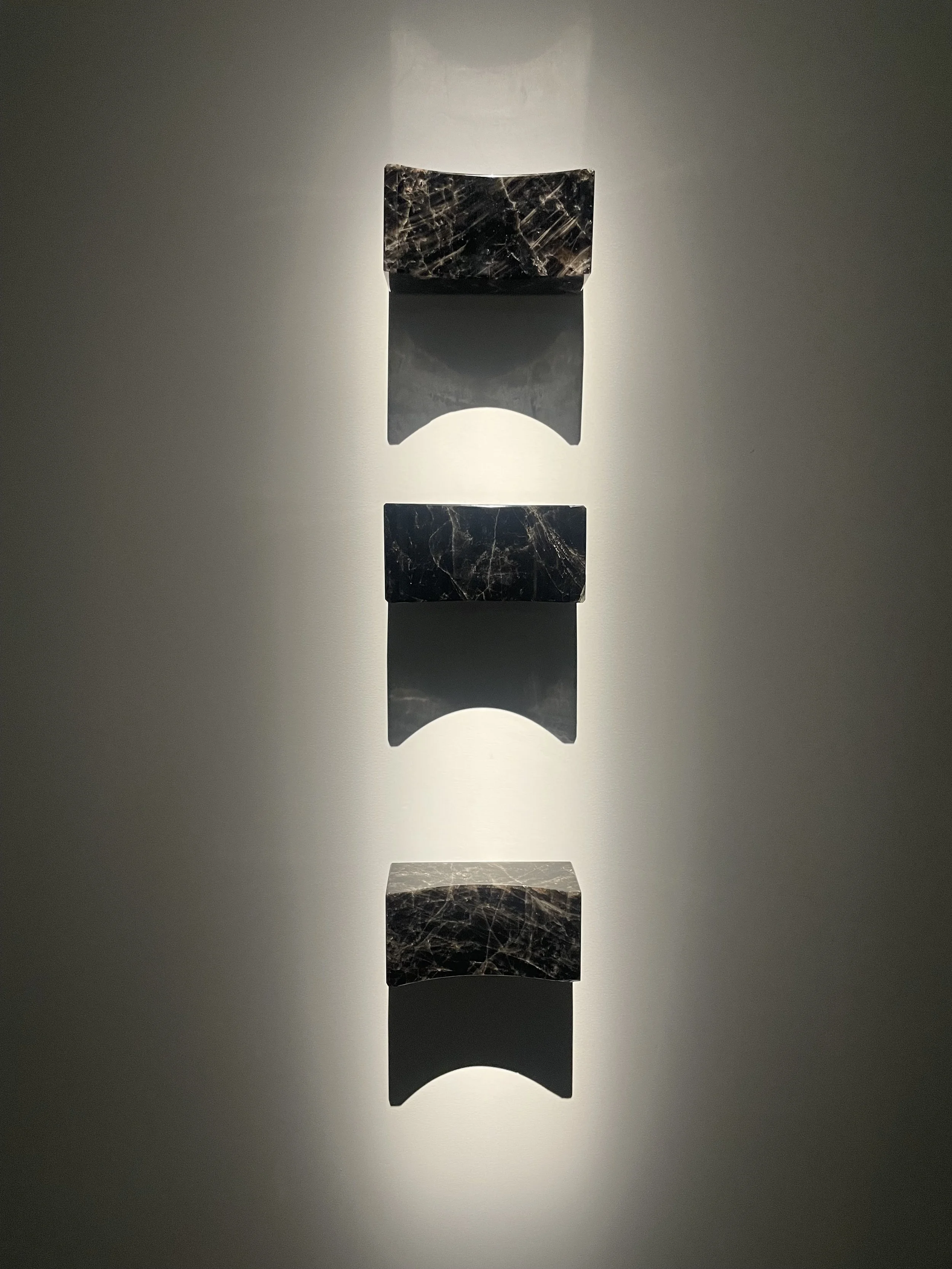
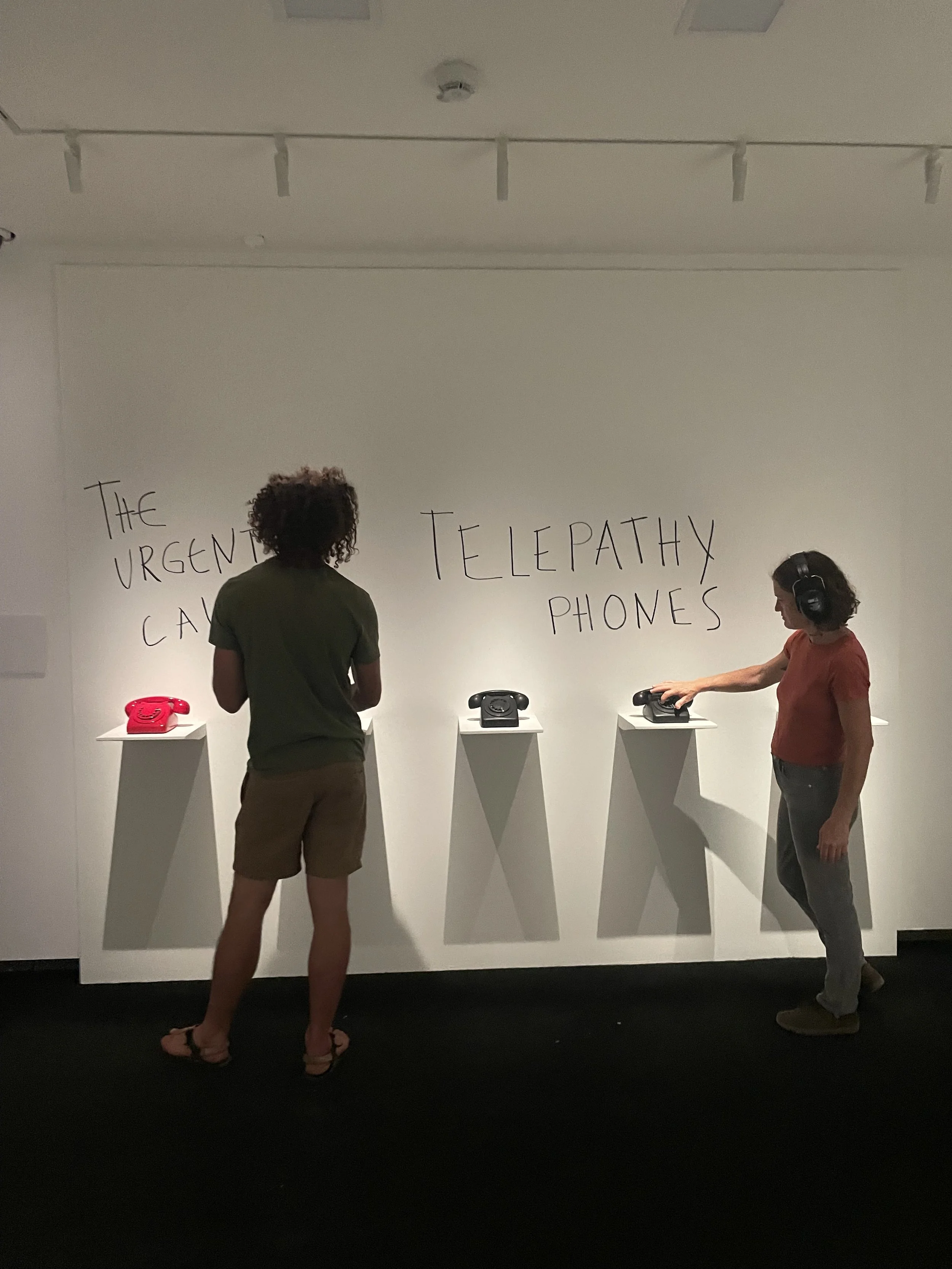
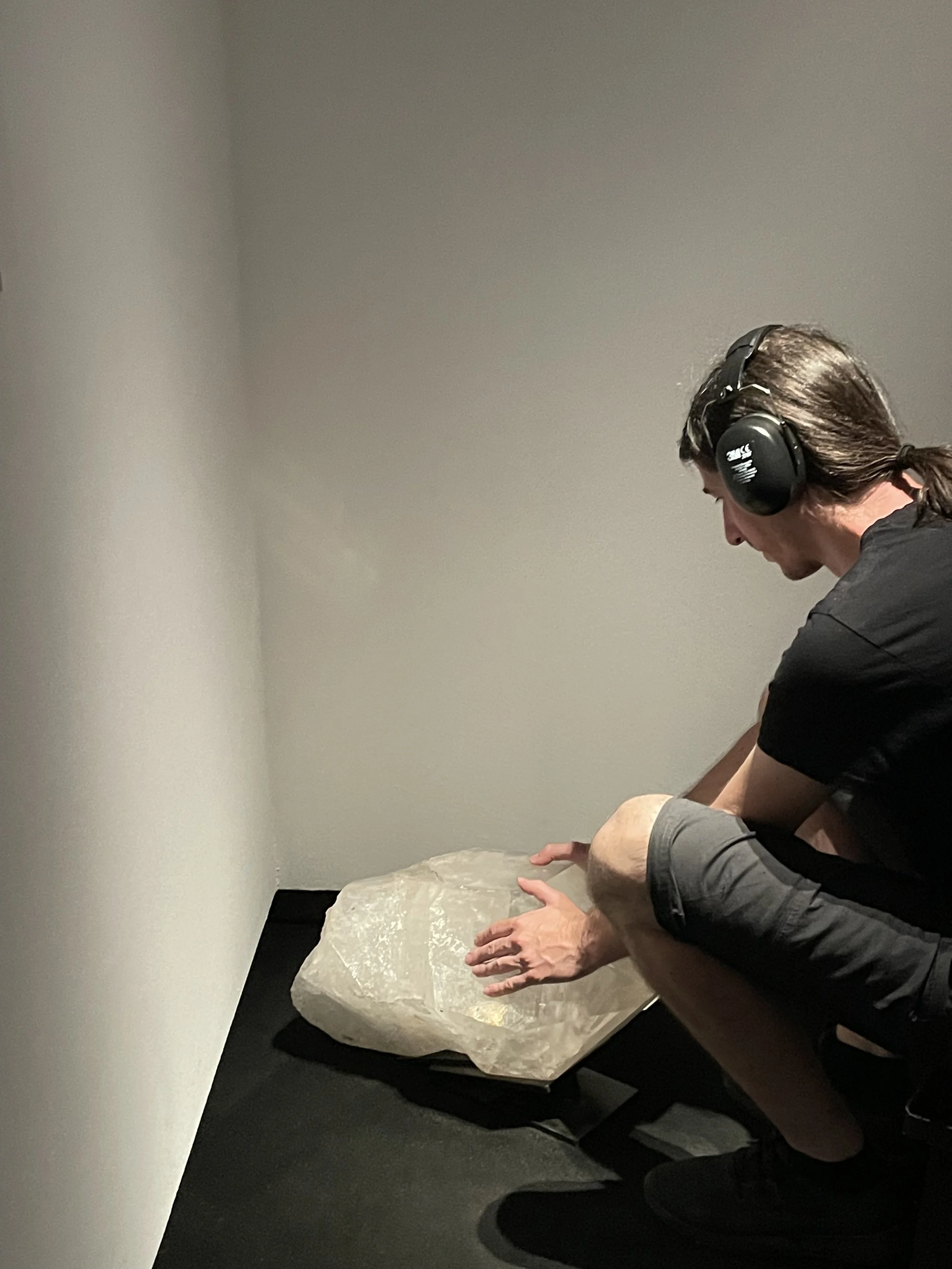
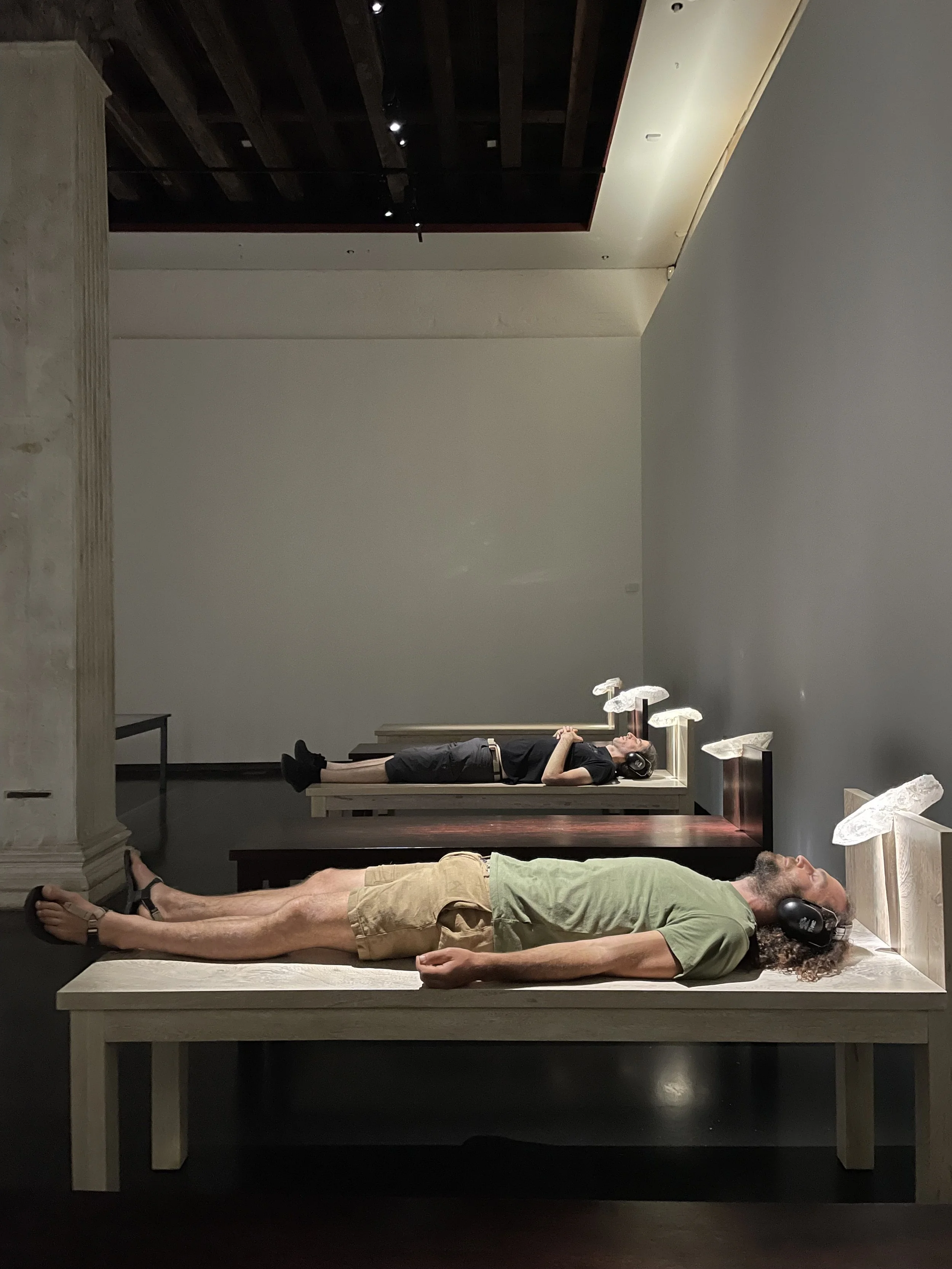
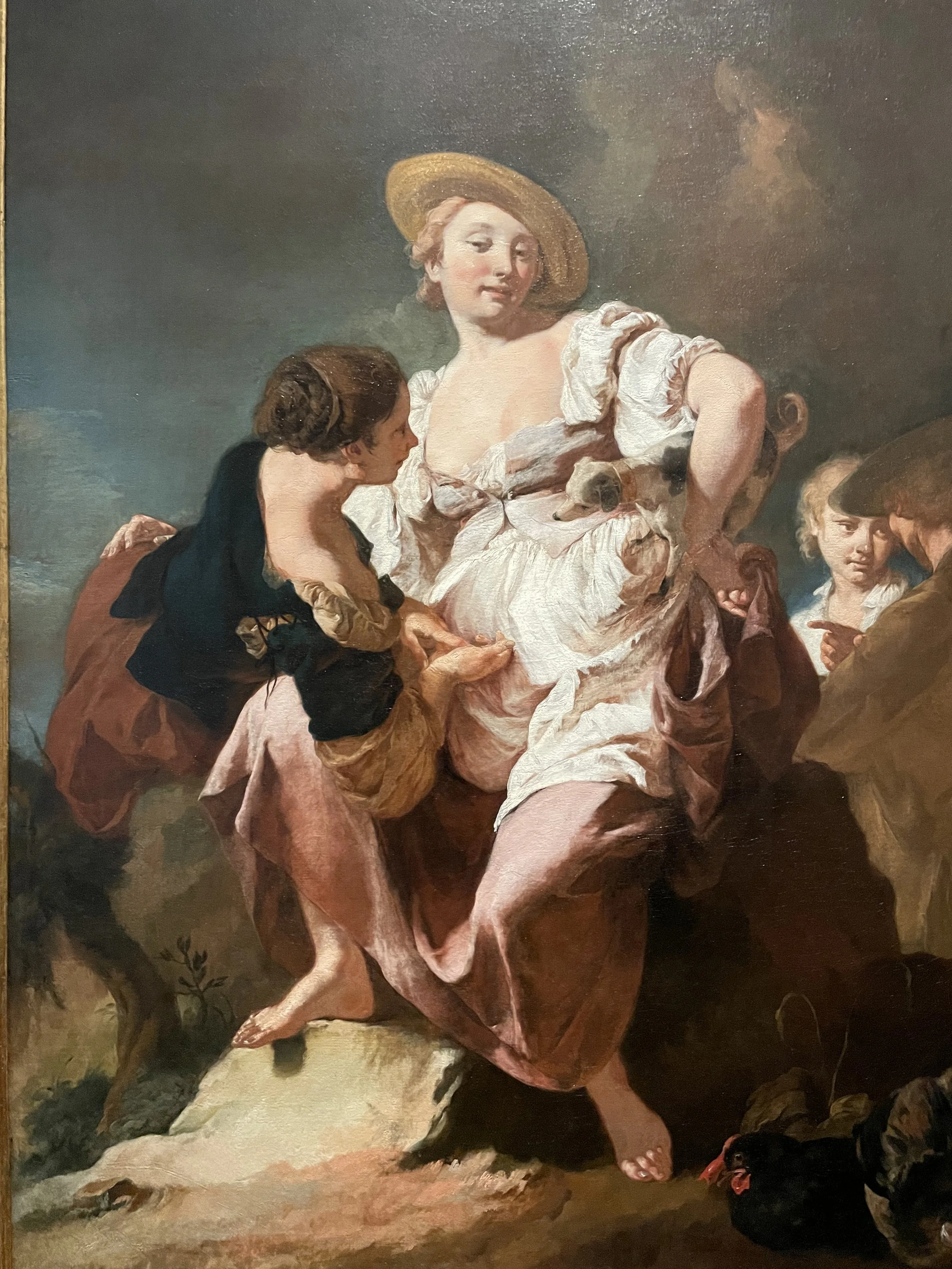
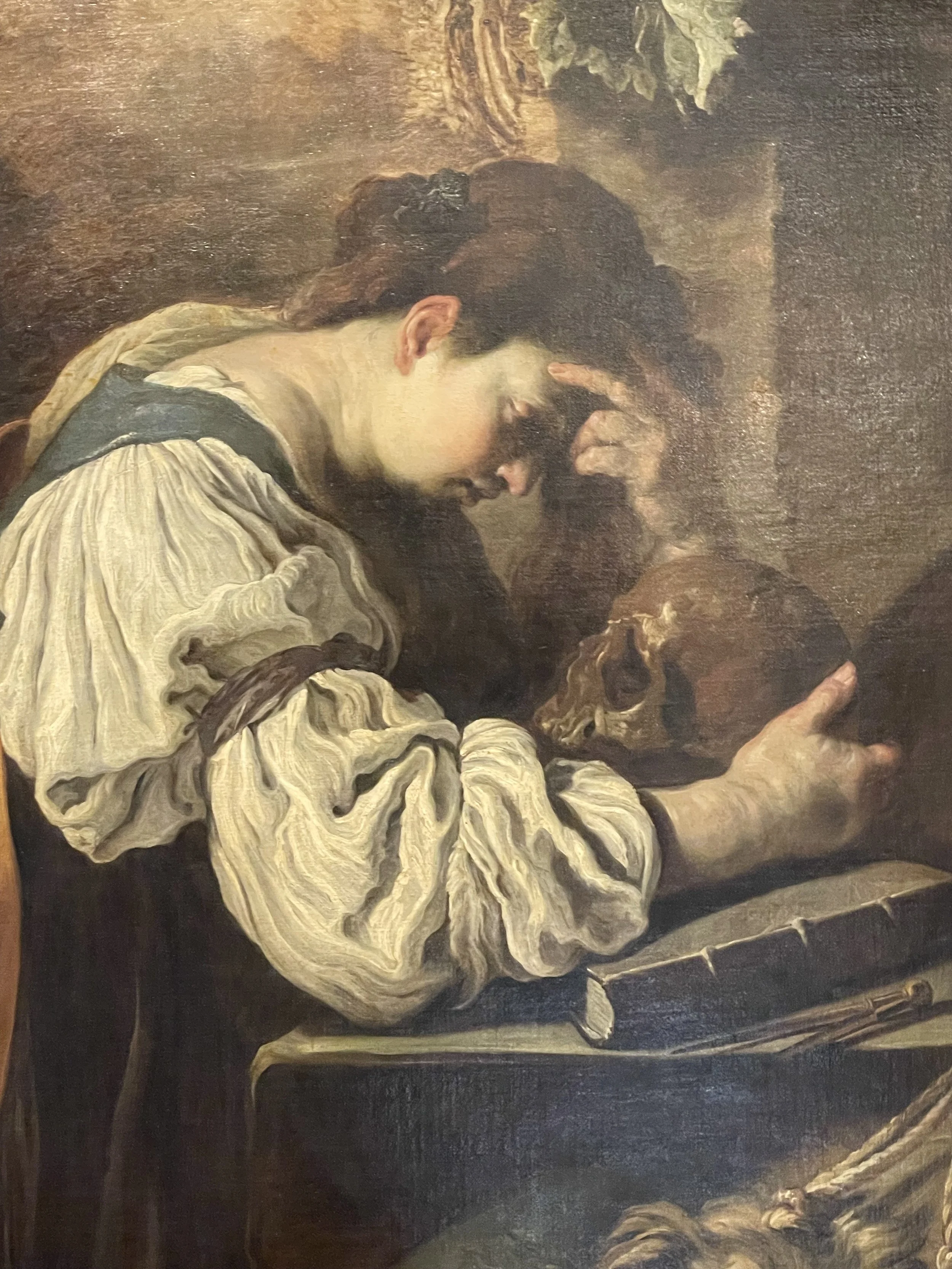
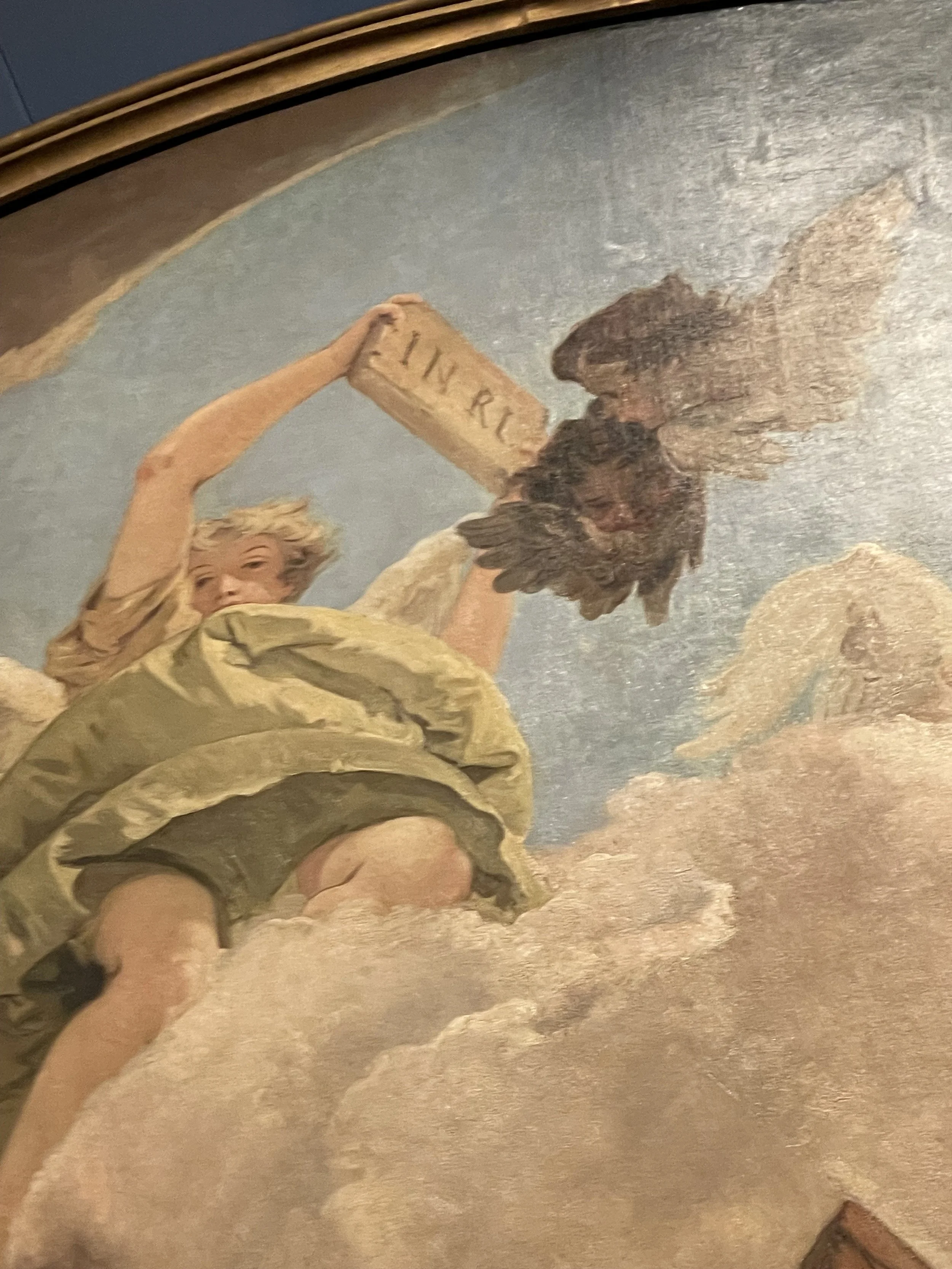
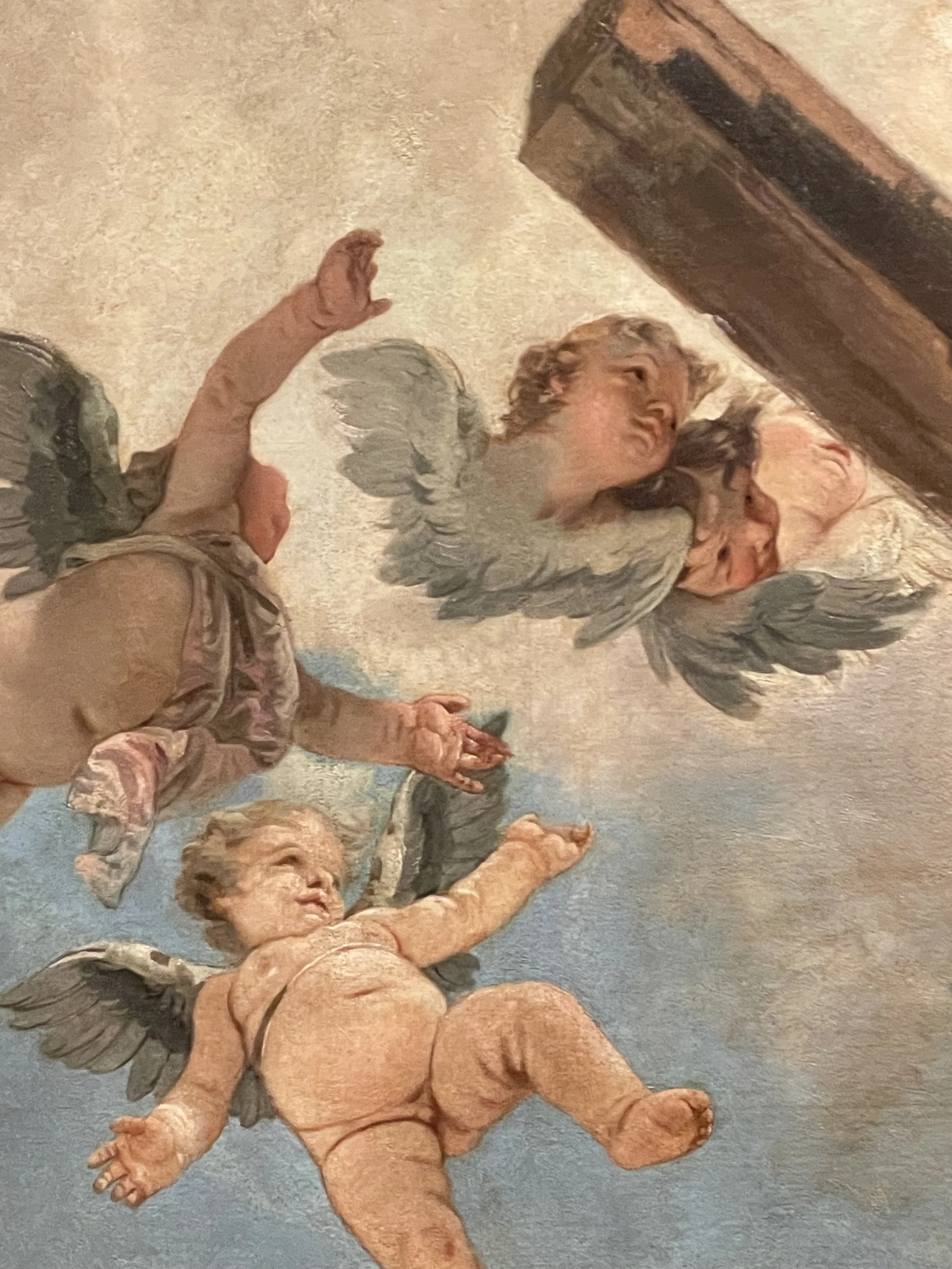
The regular collection at the Gallerie dell’Accademia
Lot’s of floating angel baby heads for some reason.
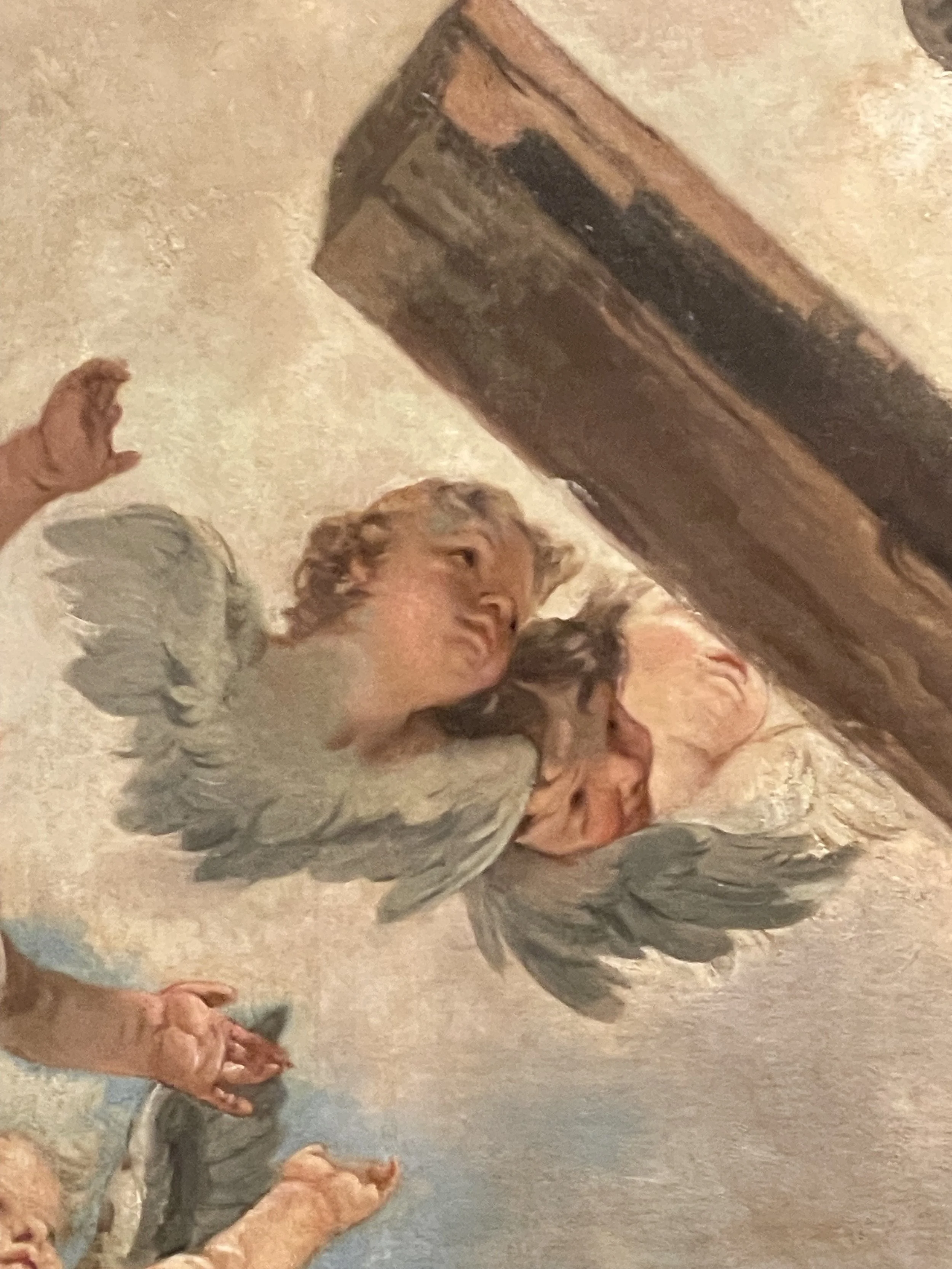
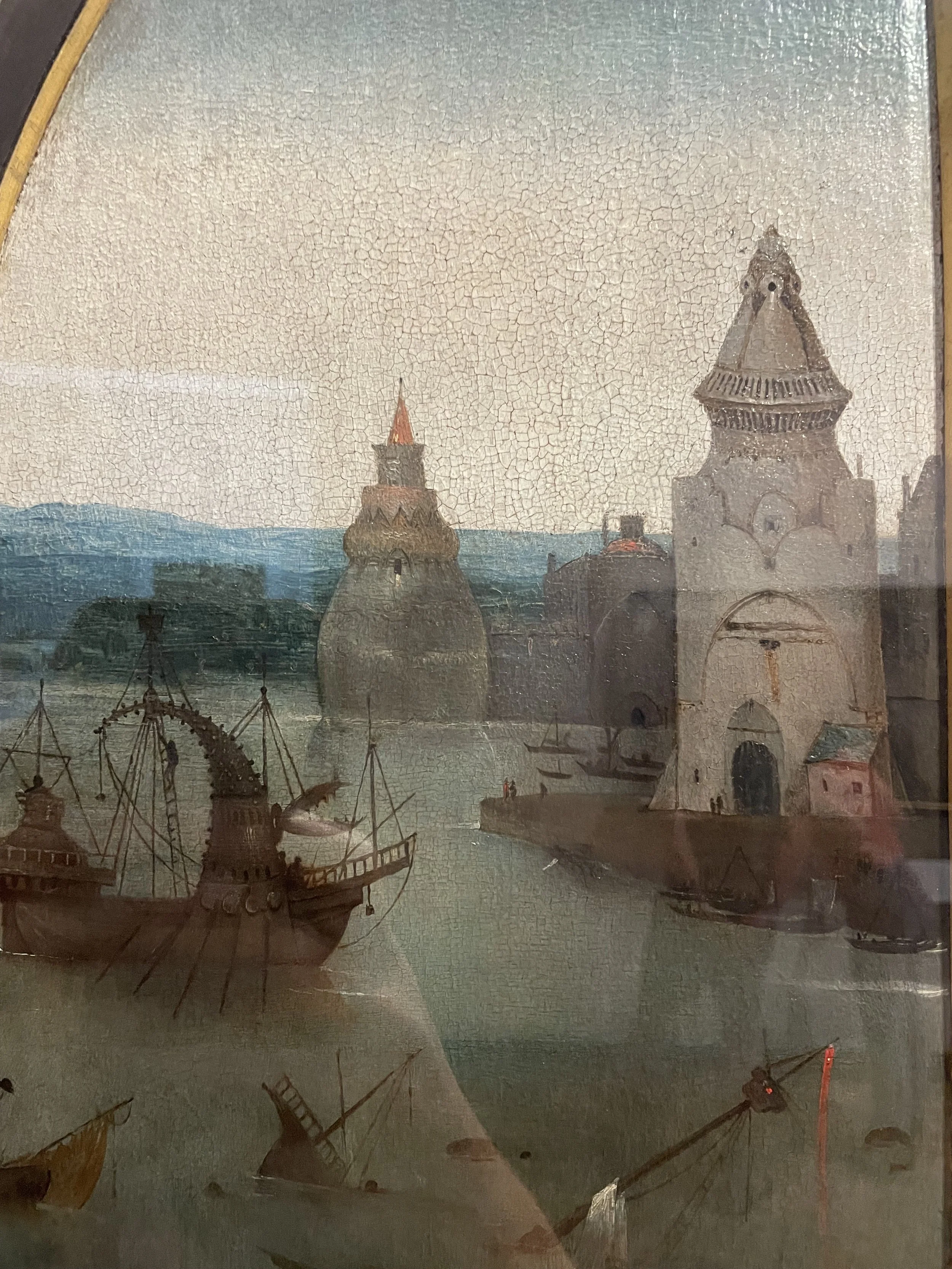
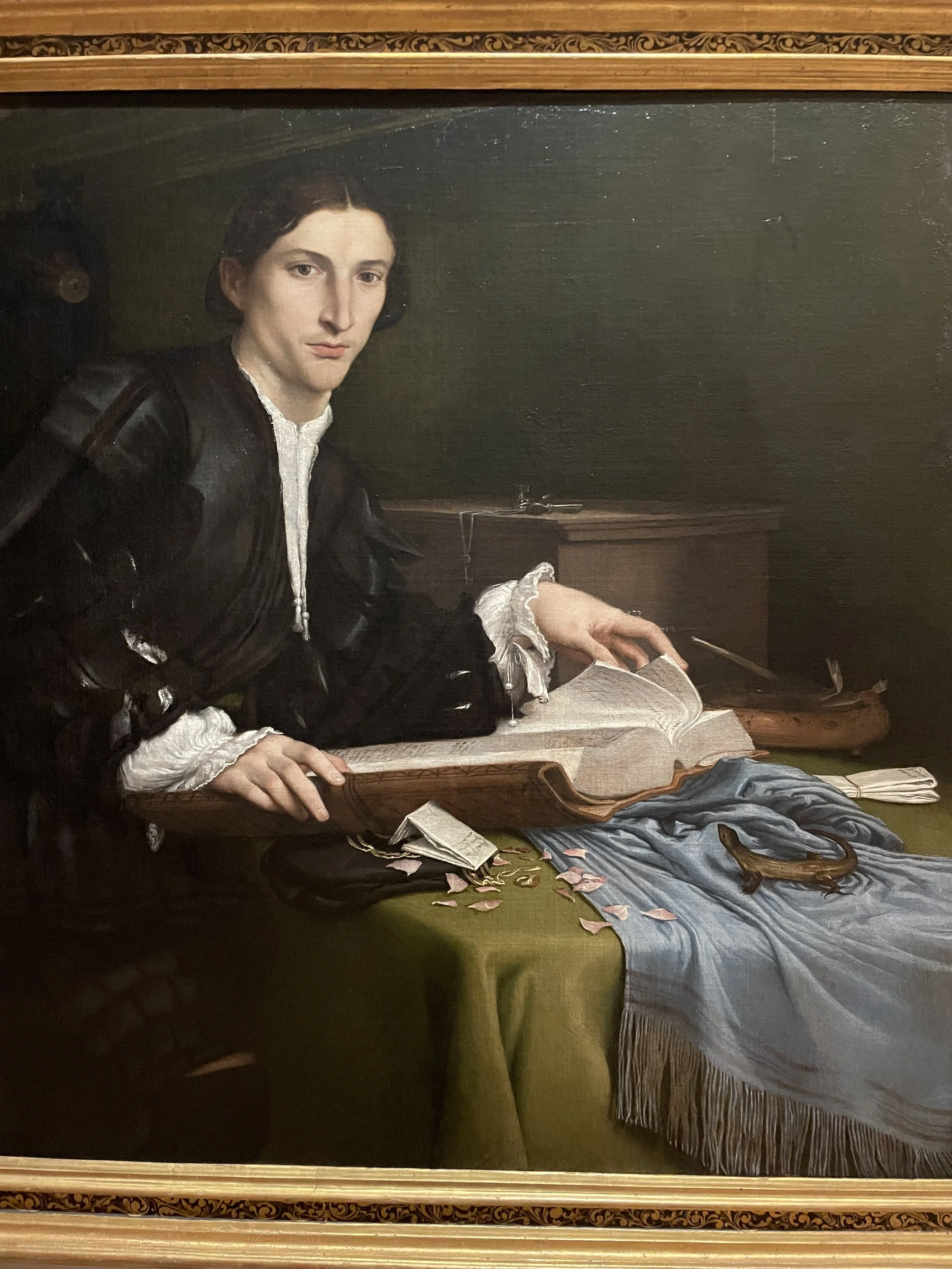
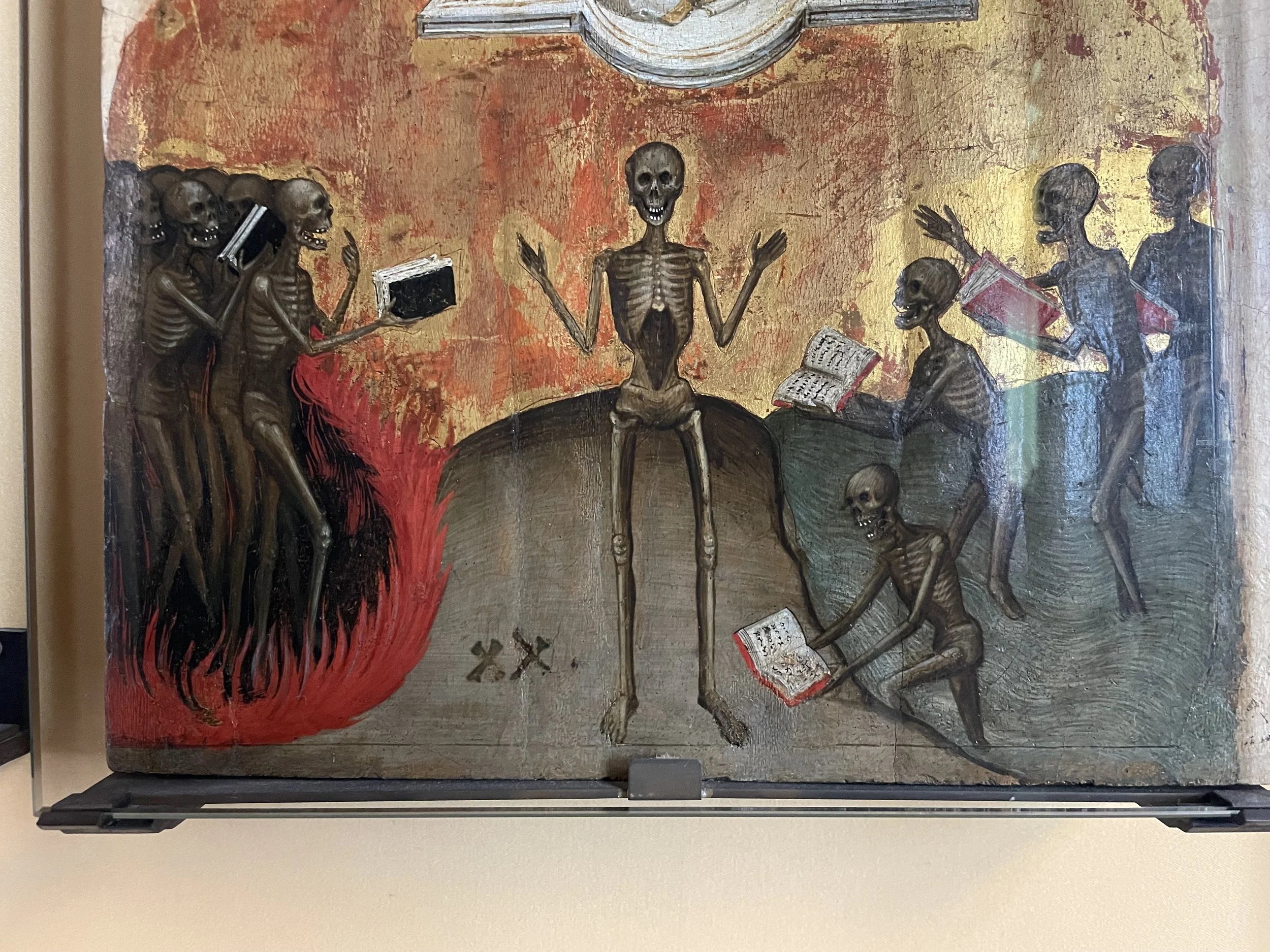
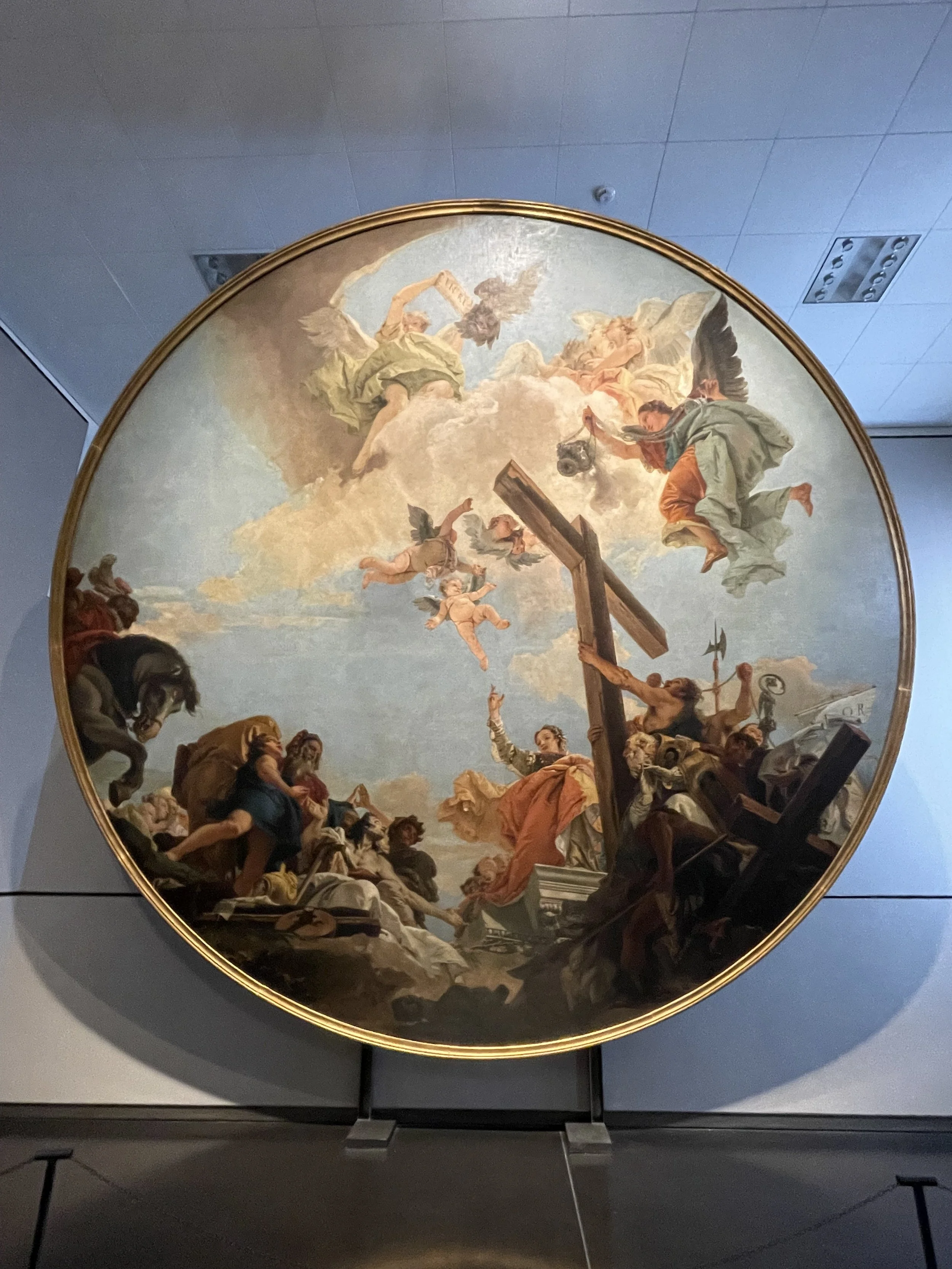
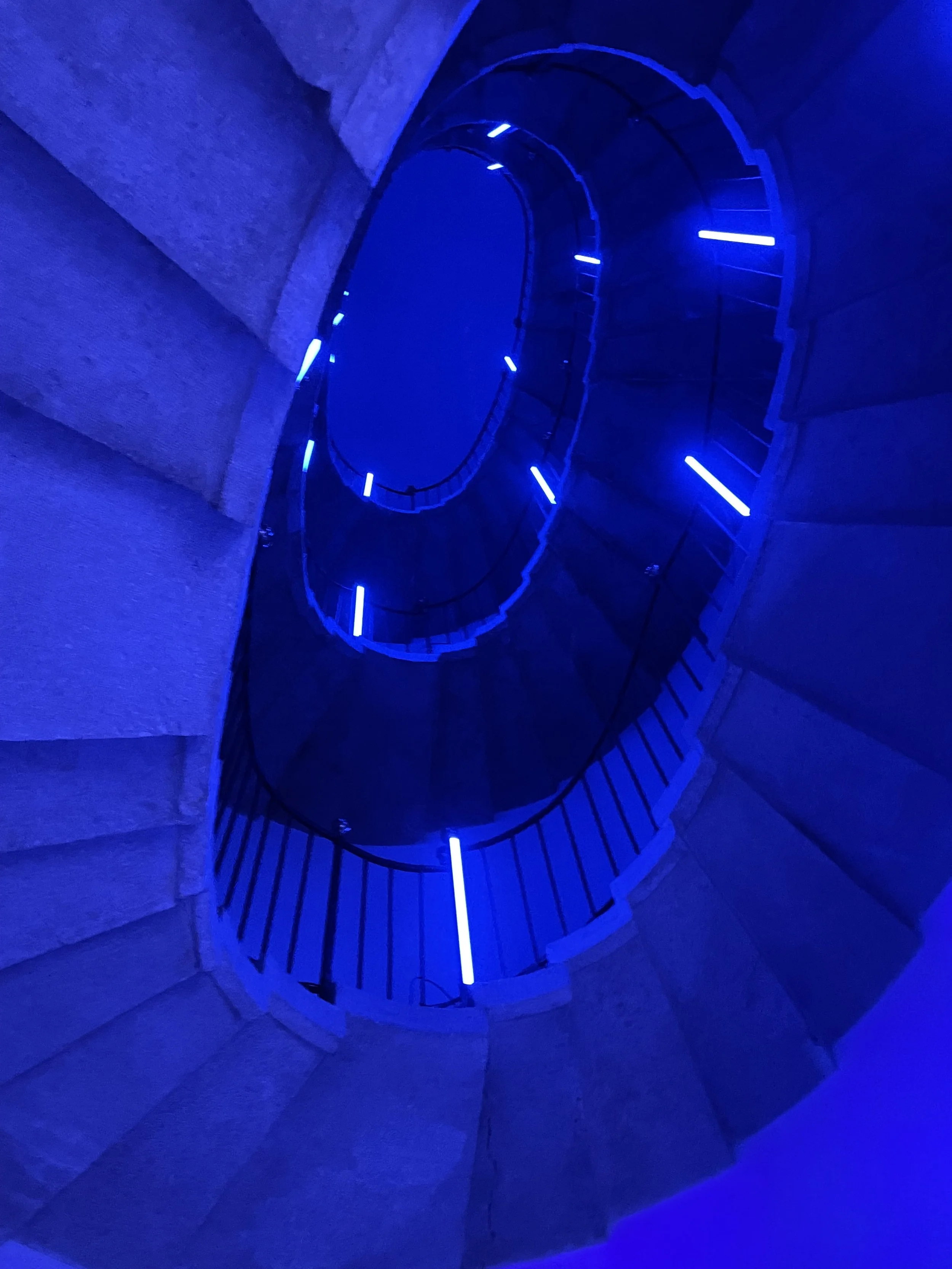
Canicula at Ospedaletto di Venezia
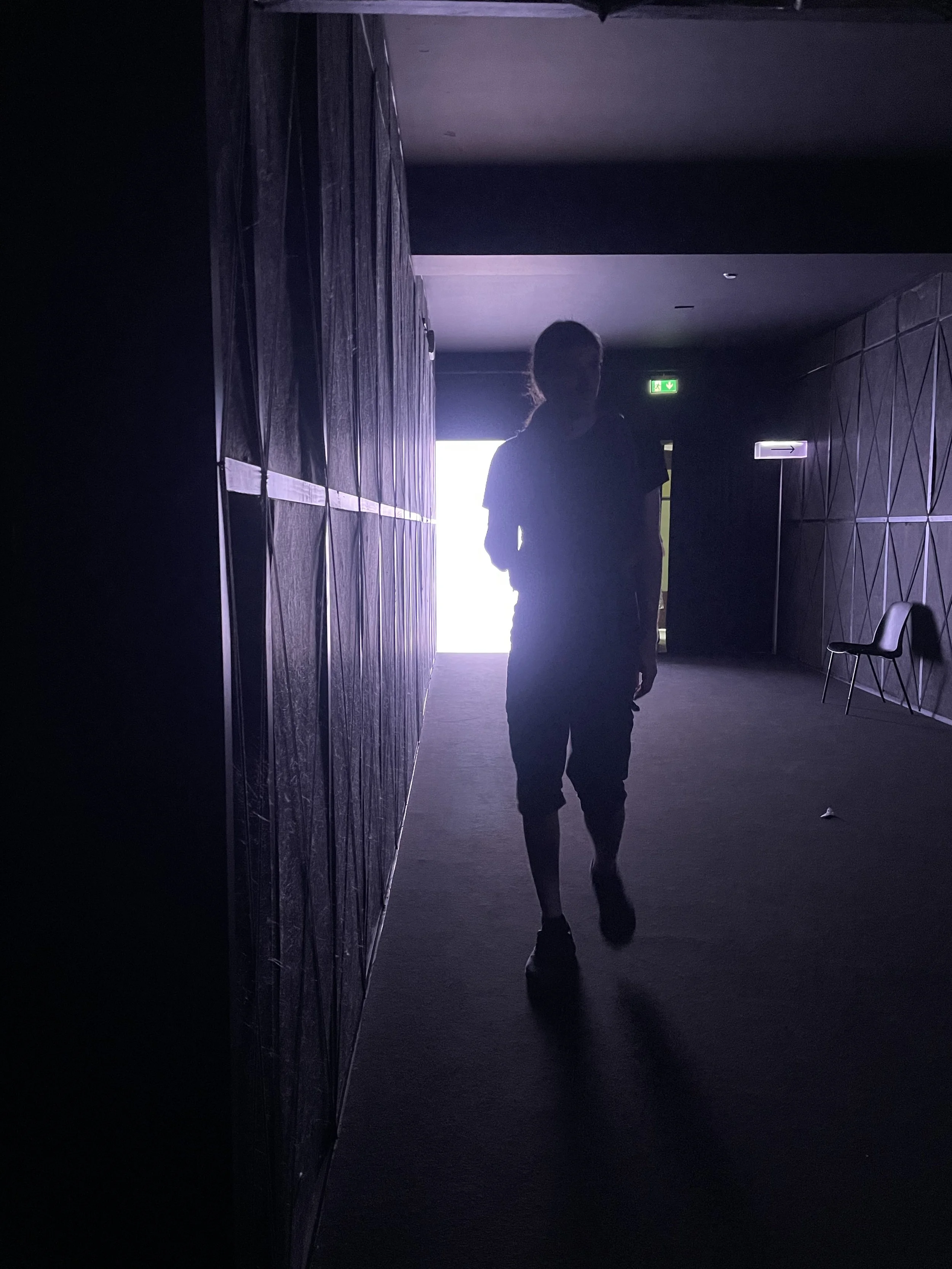
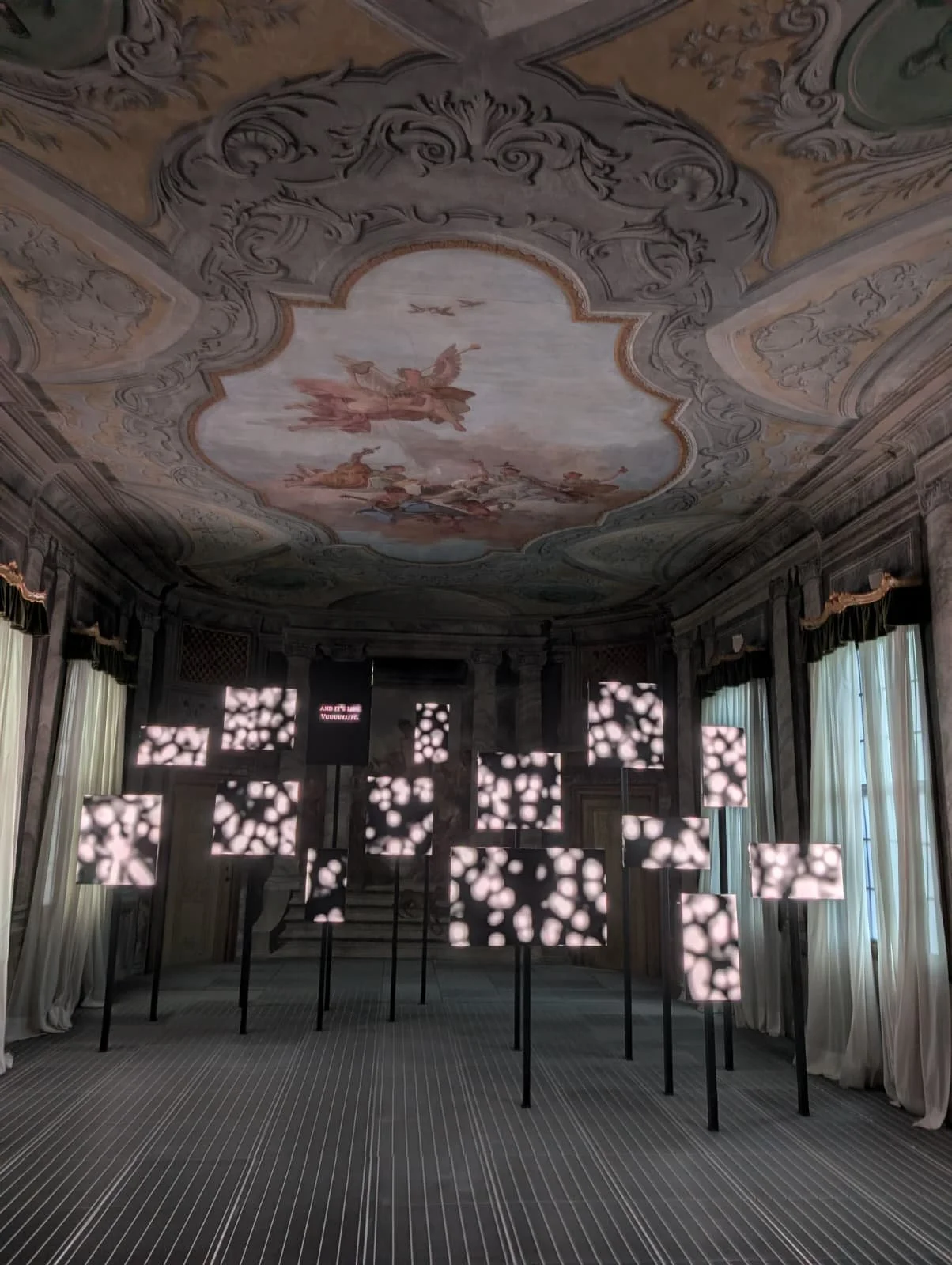
This was a cathedral and hospital that were transformed into a haunted house of sorts. We wandered through spooky, darkened hallways, searched for the next numbered neon sign, from One to Eight. In each room was 1 or more large screens with a video playing. Only one room out of the octet featured pleasant videos.
Read more about this exhibit here. We loved that it was free!
We raced across Venice to make it before it closed, which was an adventure in and of itself. We actually loved weaving through people as a game among the hyper-crowded streets of Venice.
At the end of the haunted tour, we got dumped out into a sunny courtyard—but then were shooed away as they closed promptly at 6.
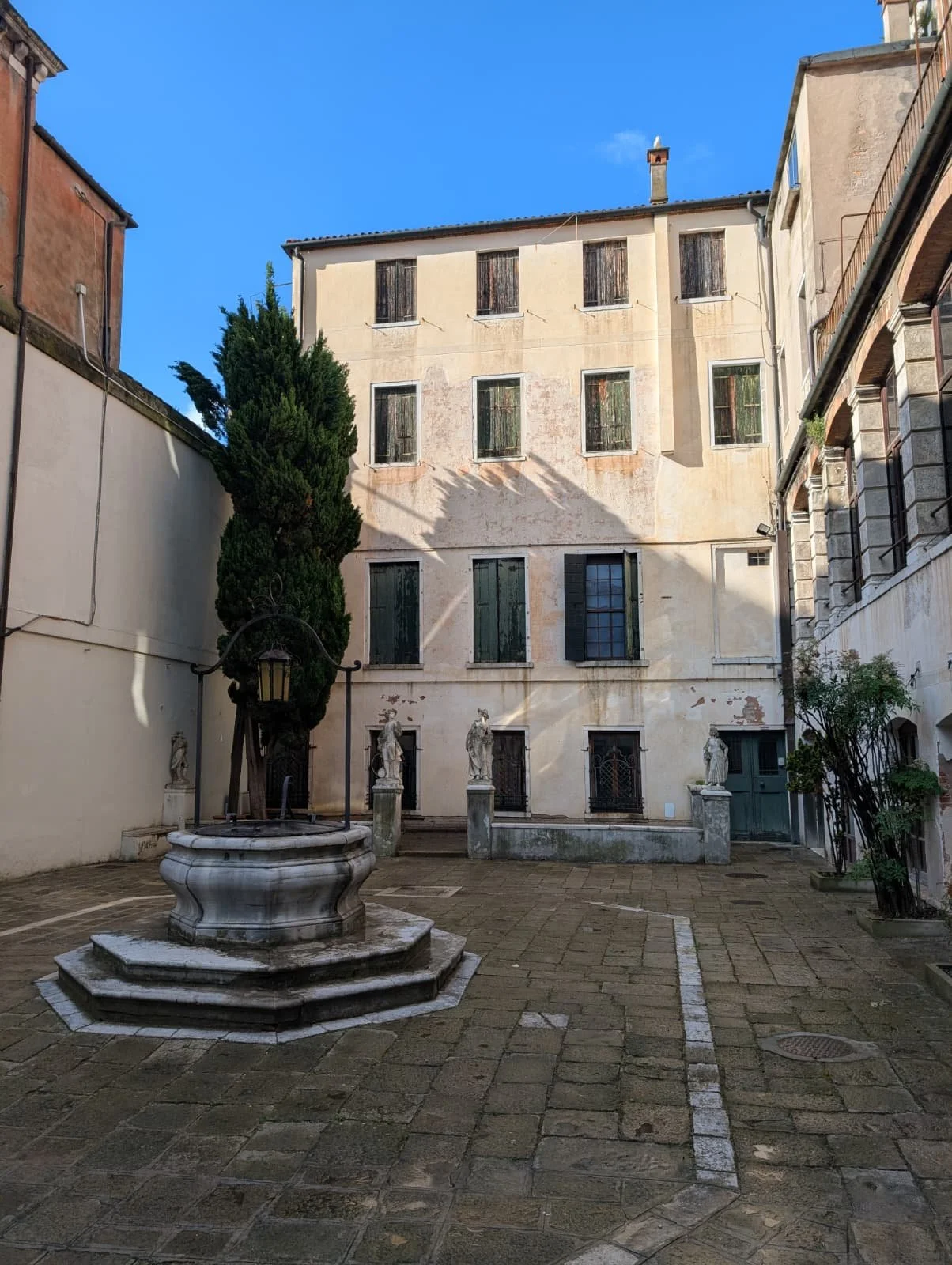
Aperativo Happy Hour
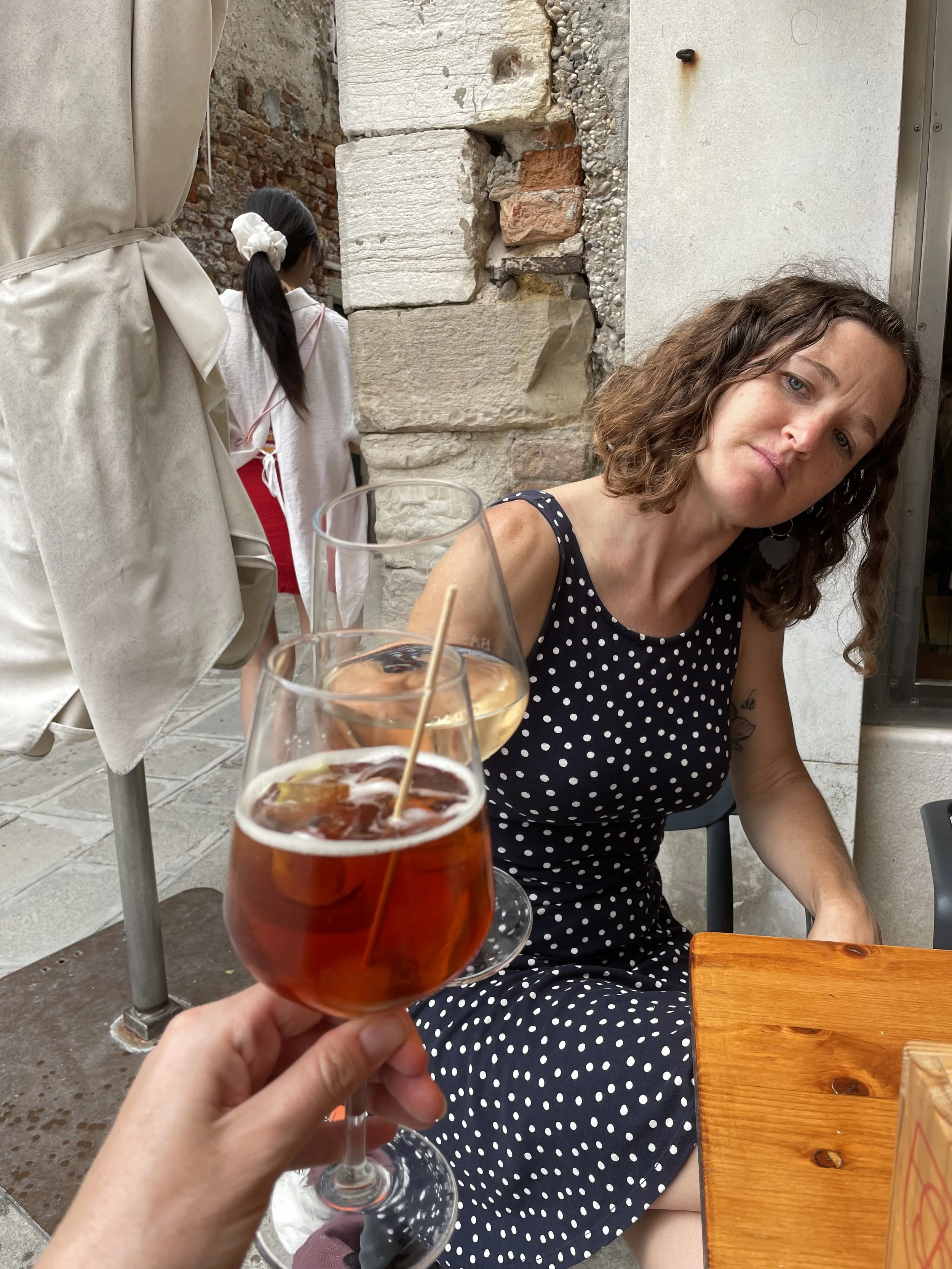
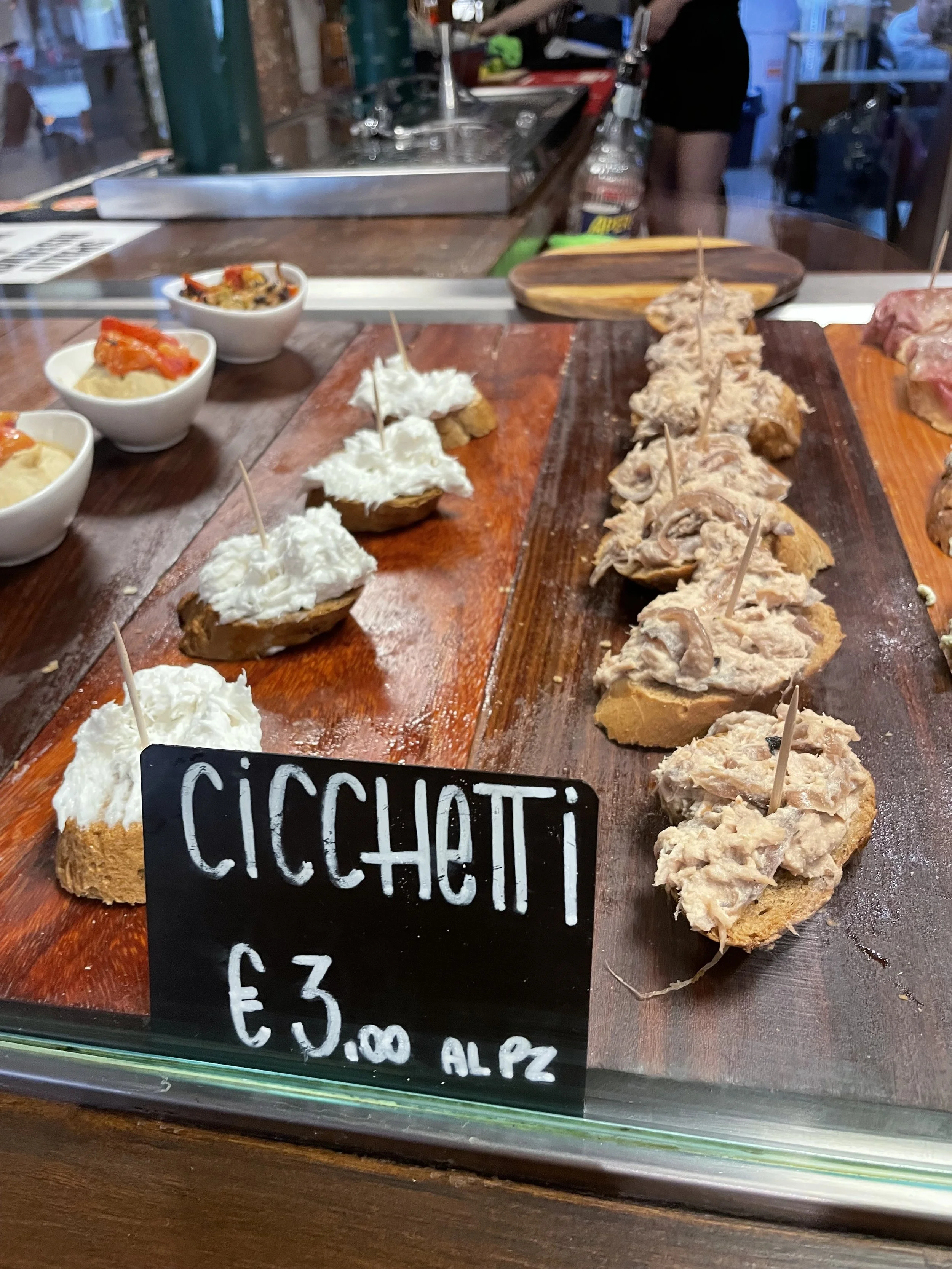
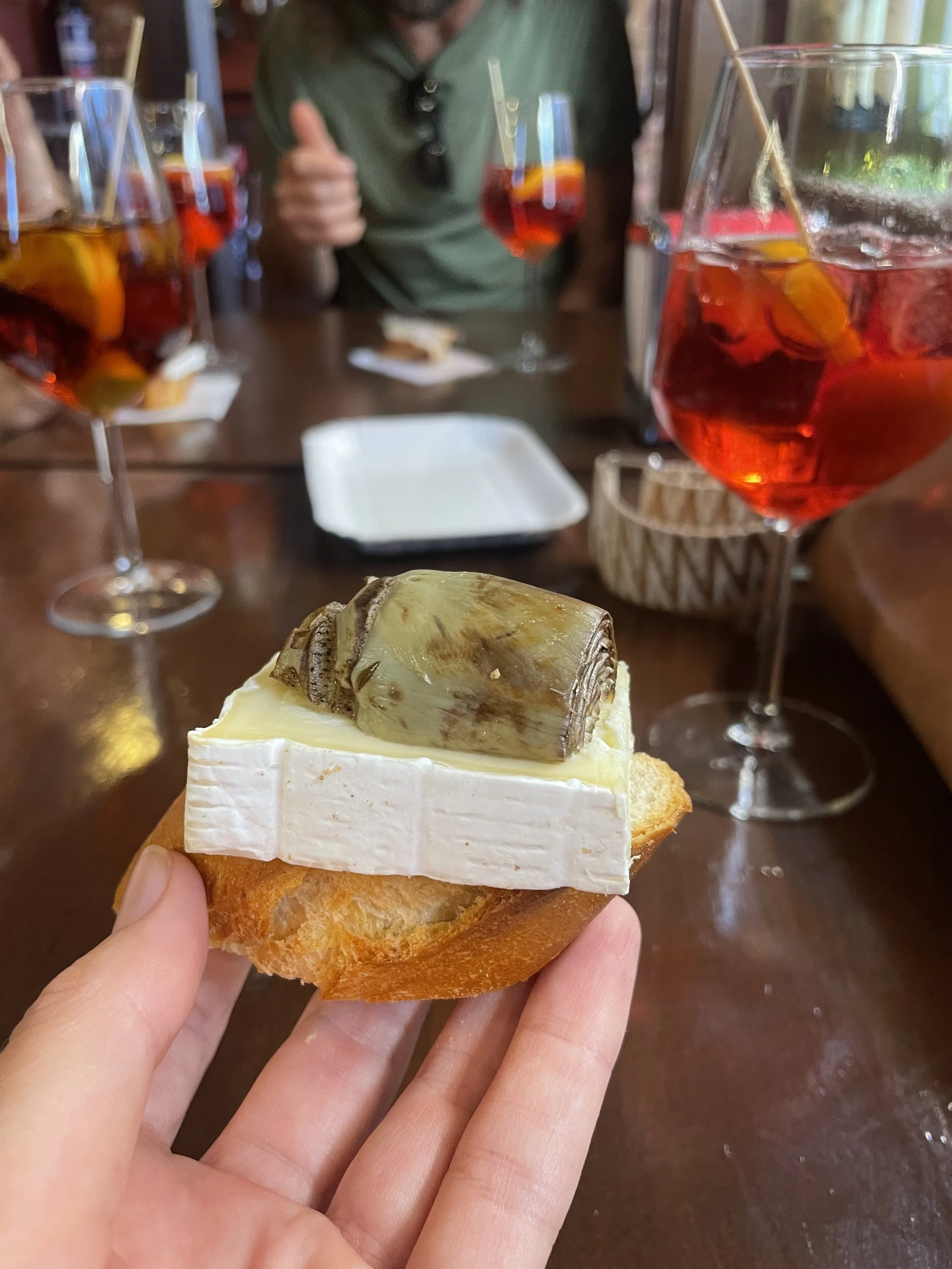
We had several hours to kill before our 8 PM dinner reservation, so we popped into a cute bar around the corner and enjoyed spritz (fizzy cocktails) and cicchetti (slices of bread with various toppings).
This spot had great drinks, fresh toast, and friendly service. Drinks were 4-5 euros each.
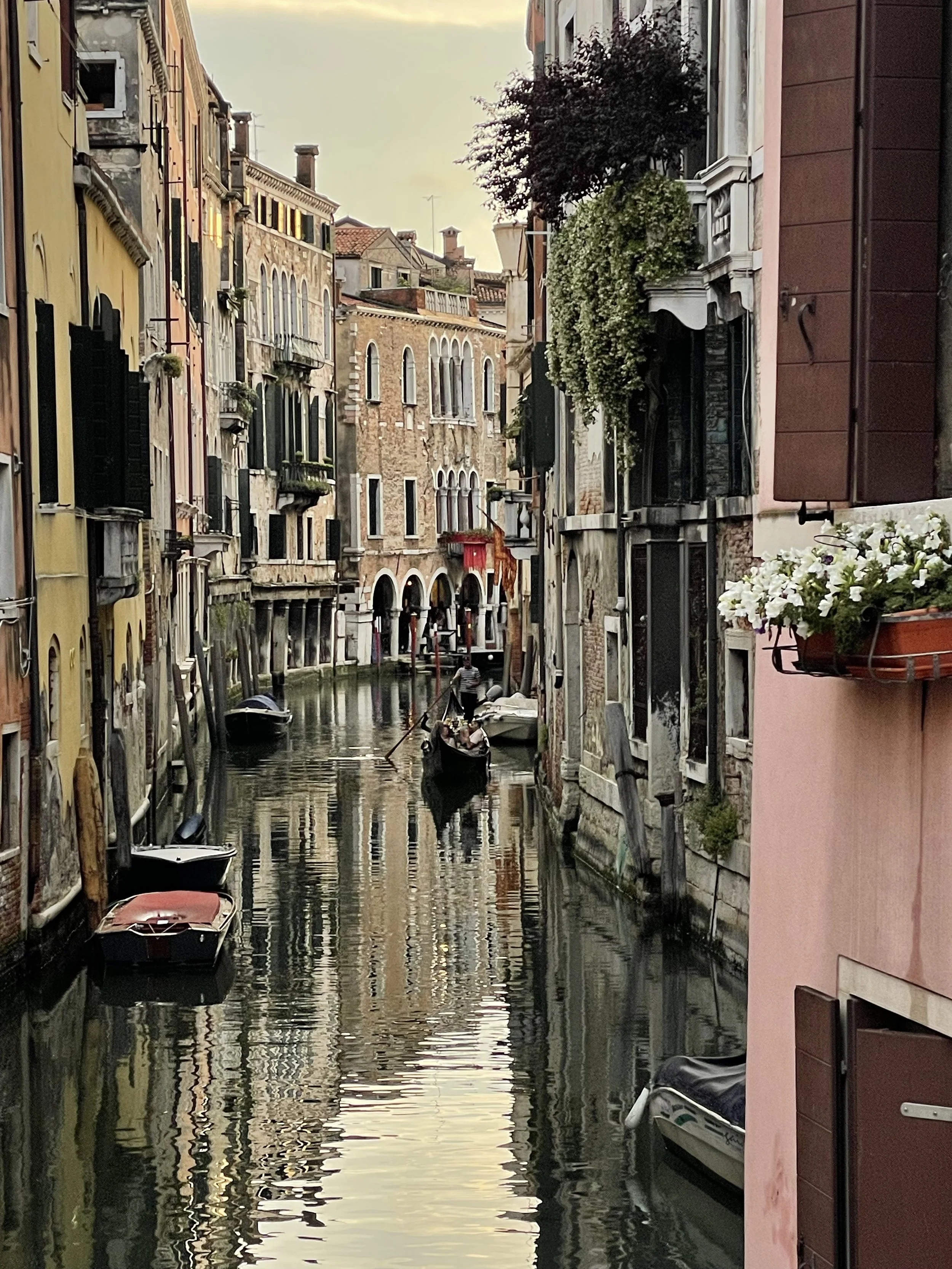
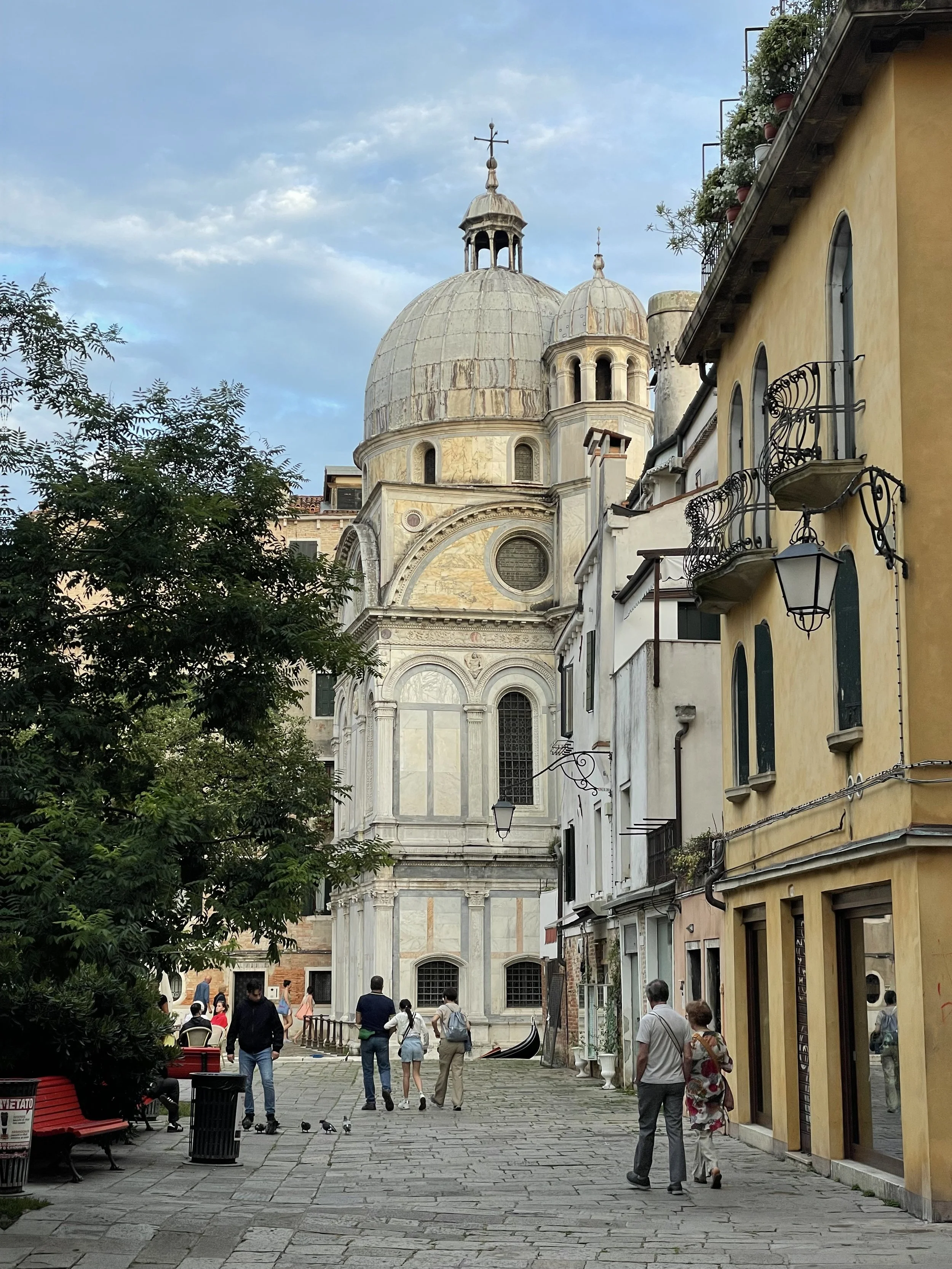
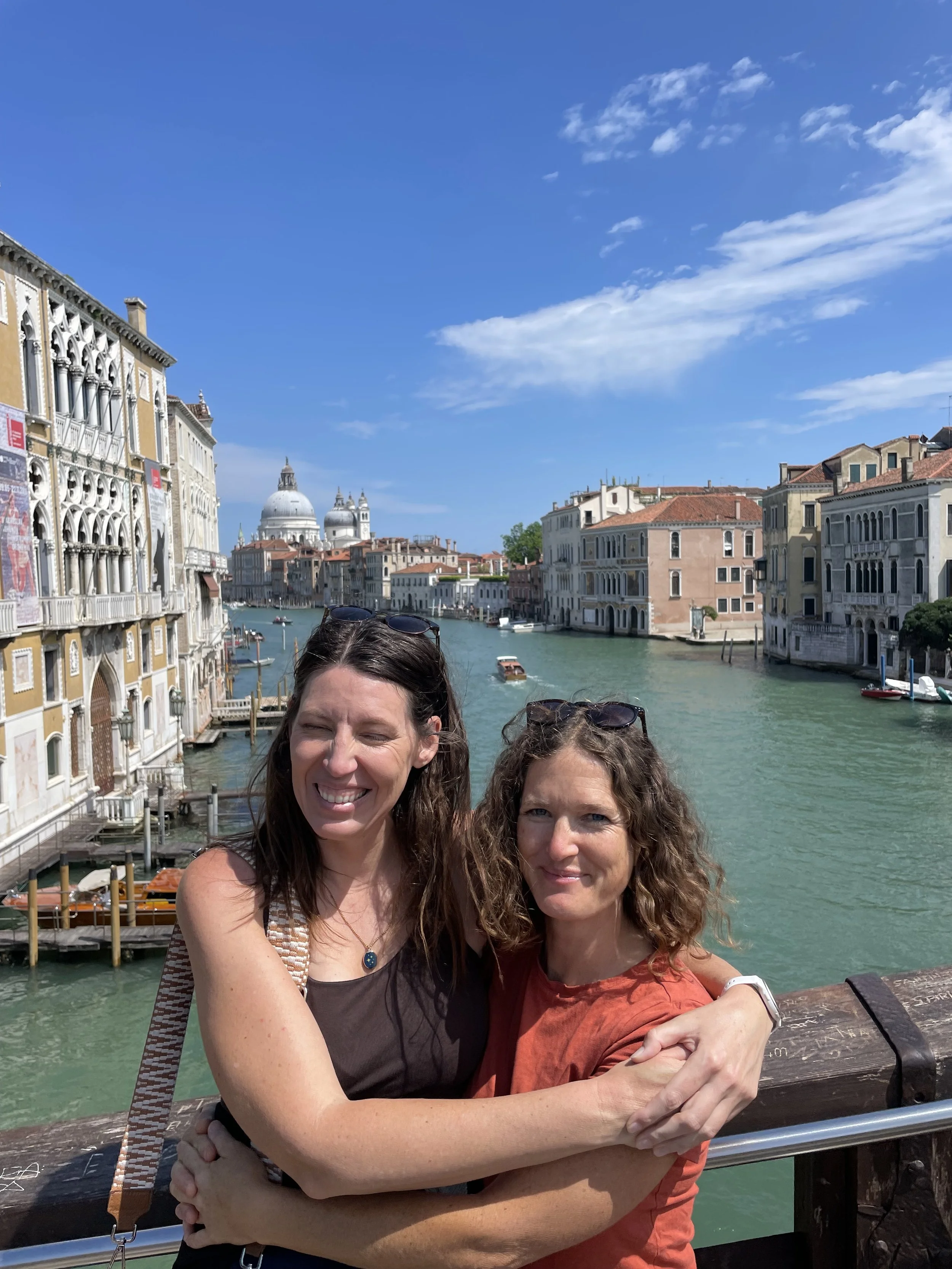
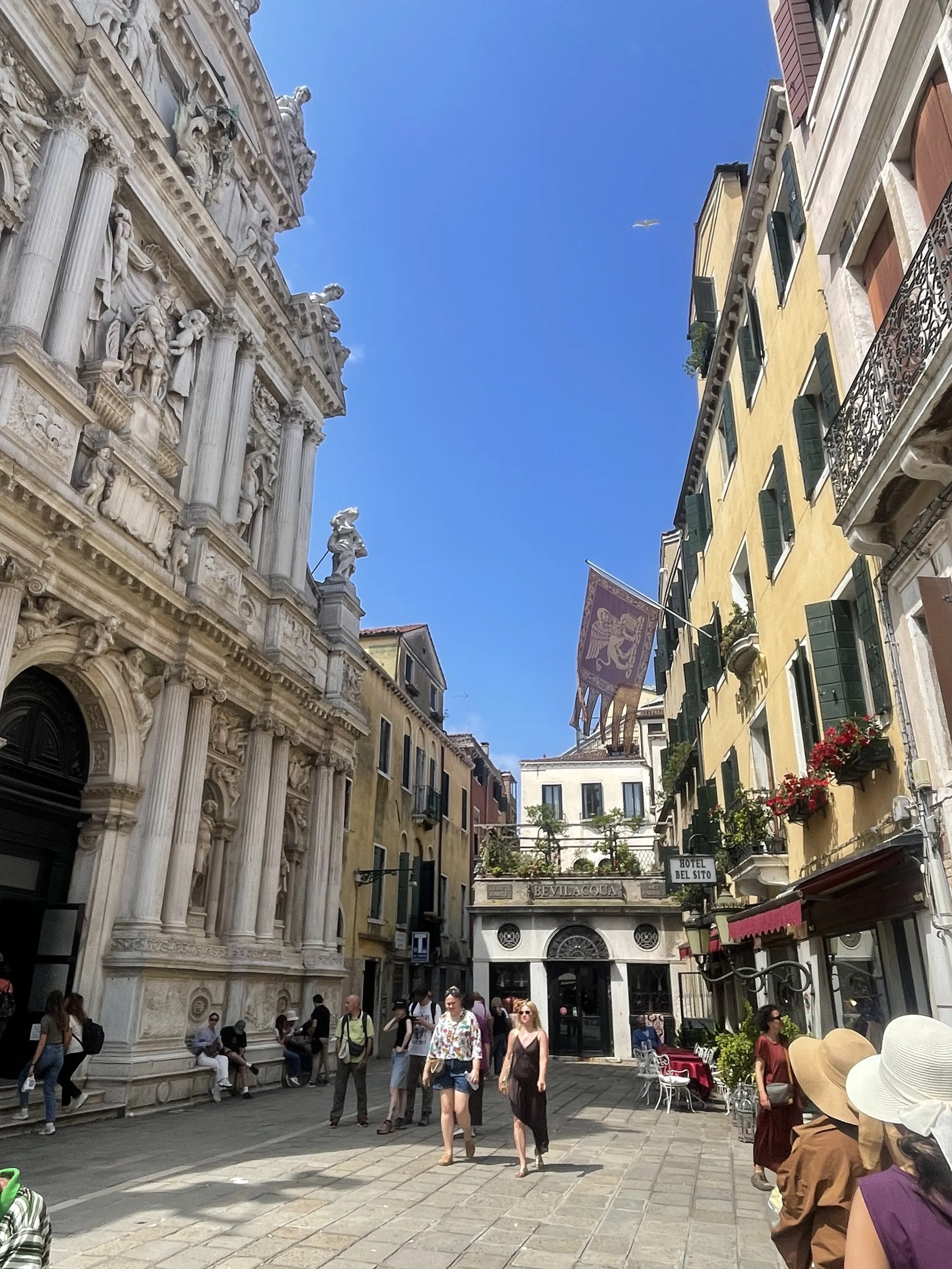
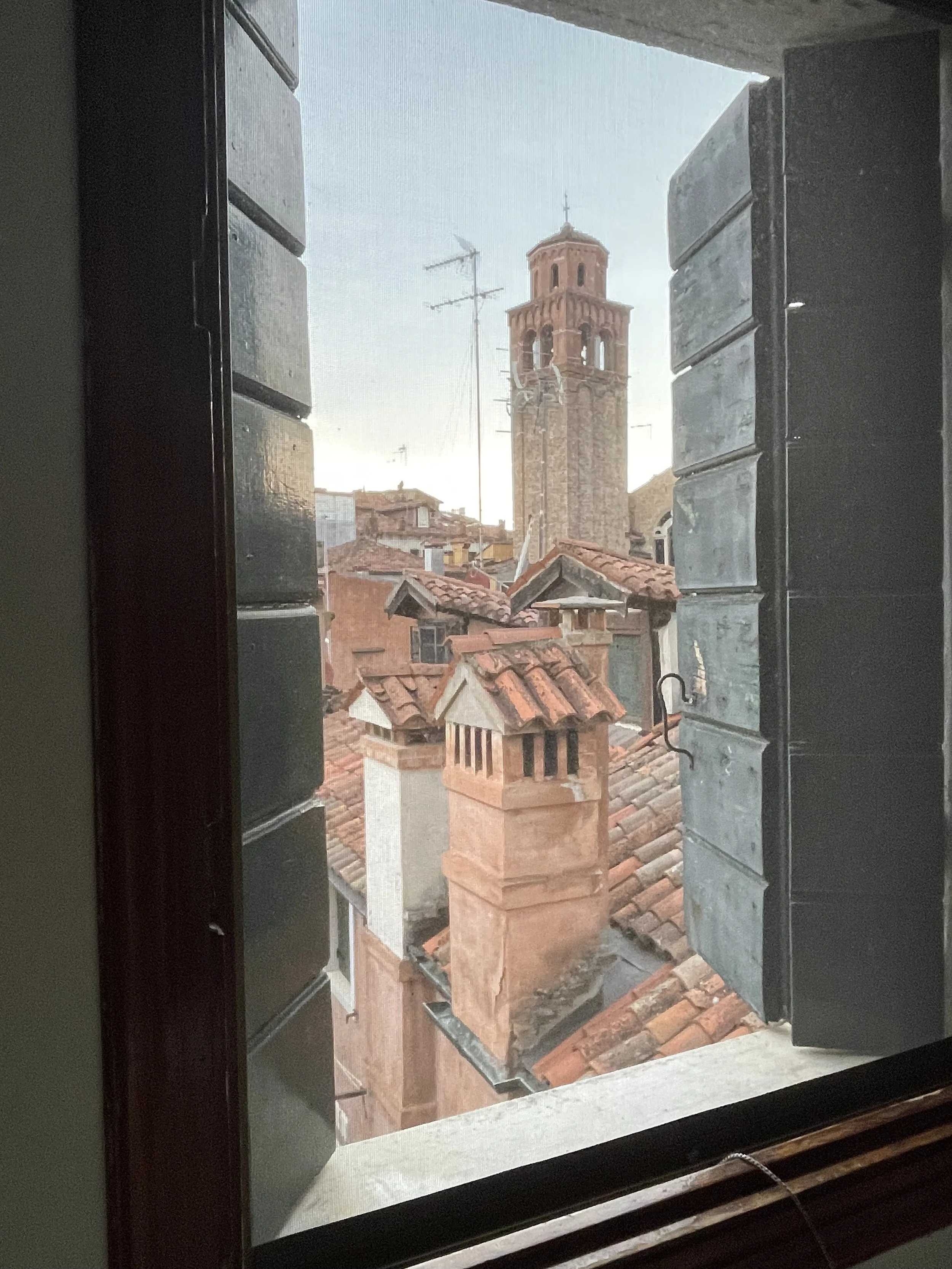
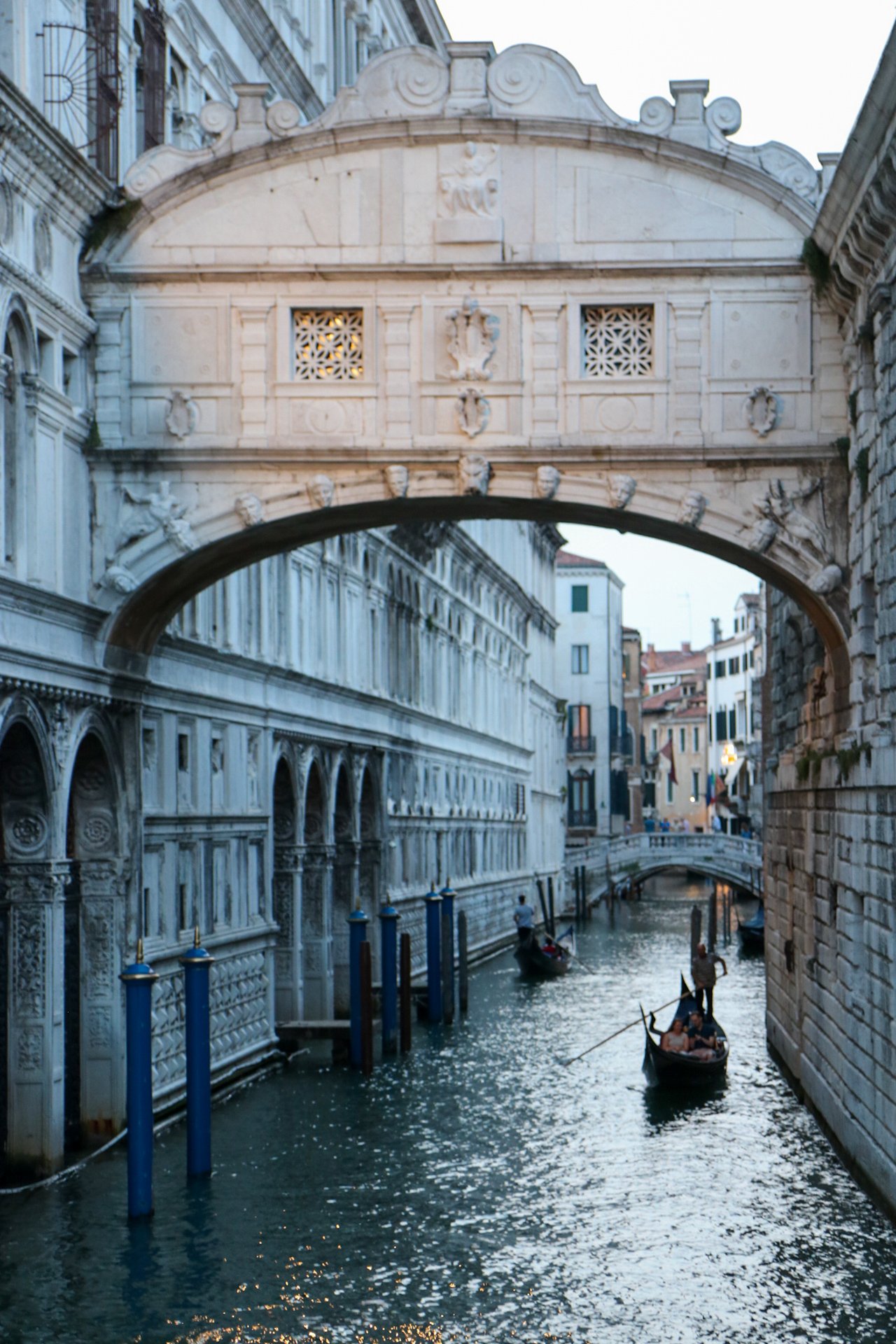
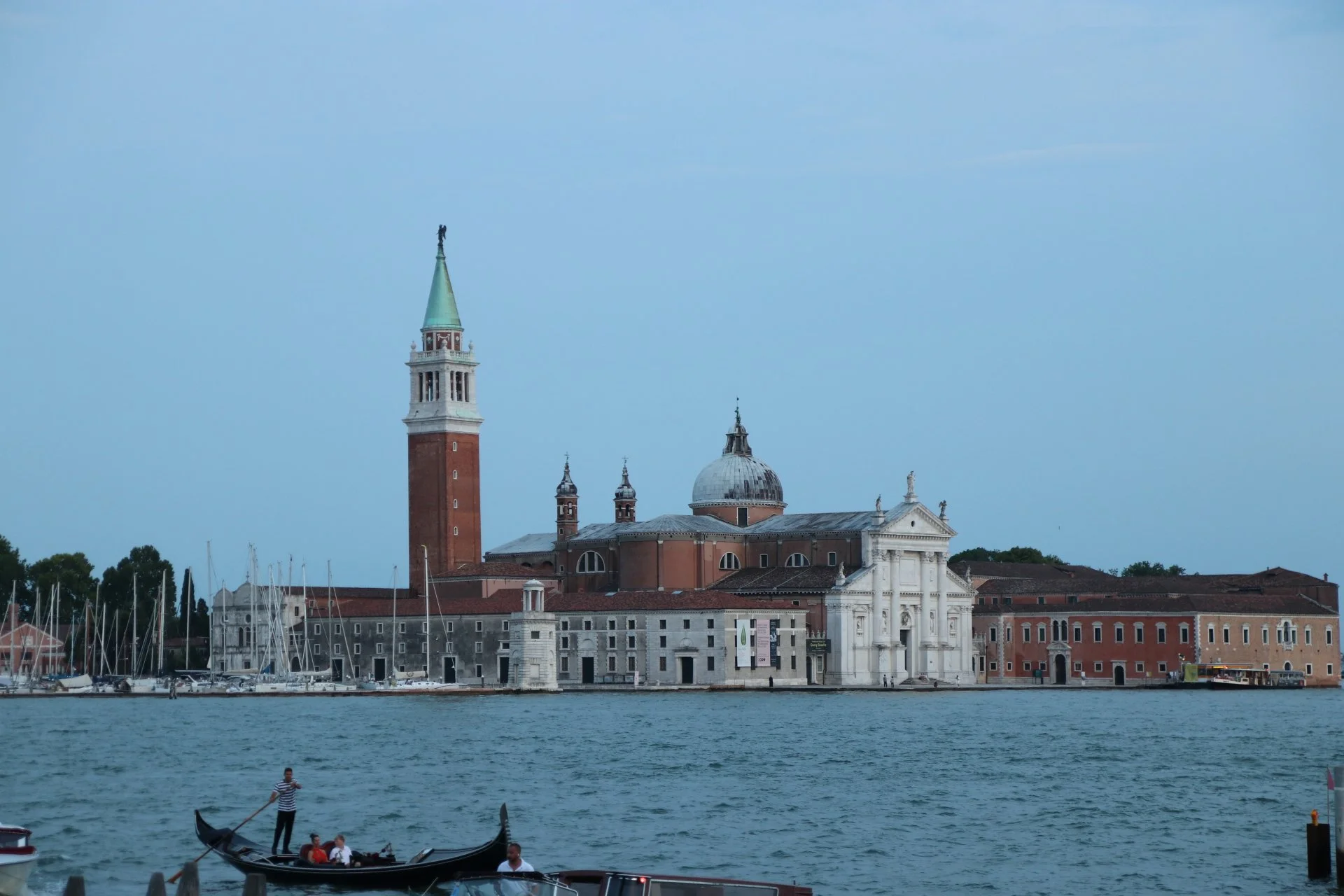
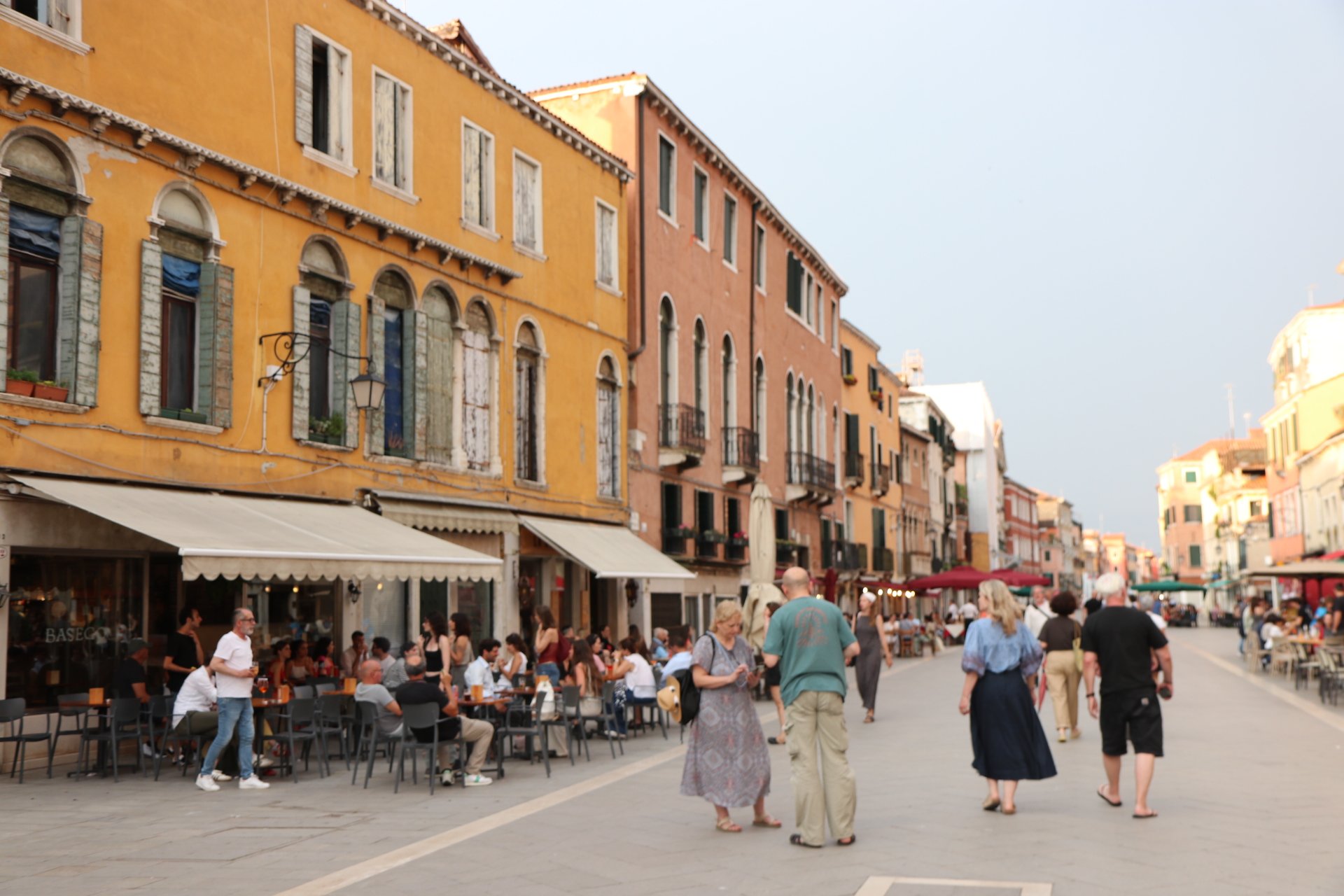
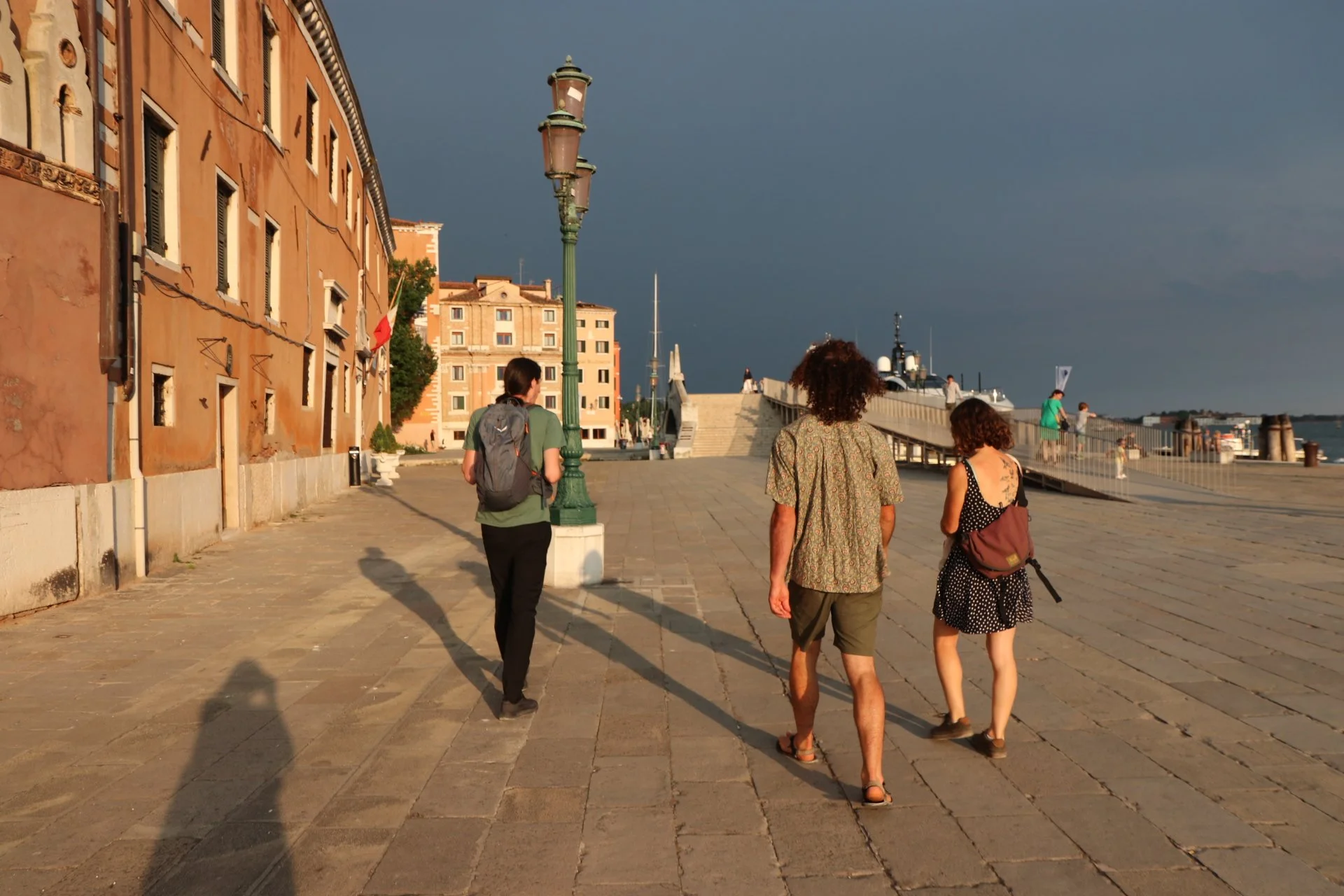
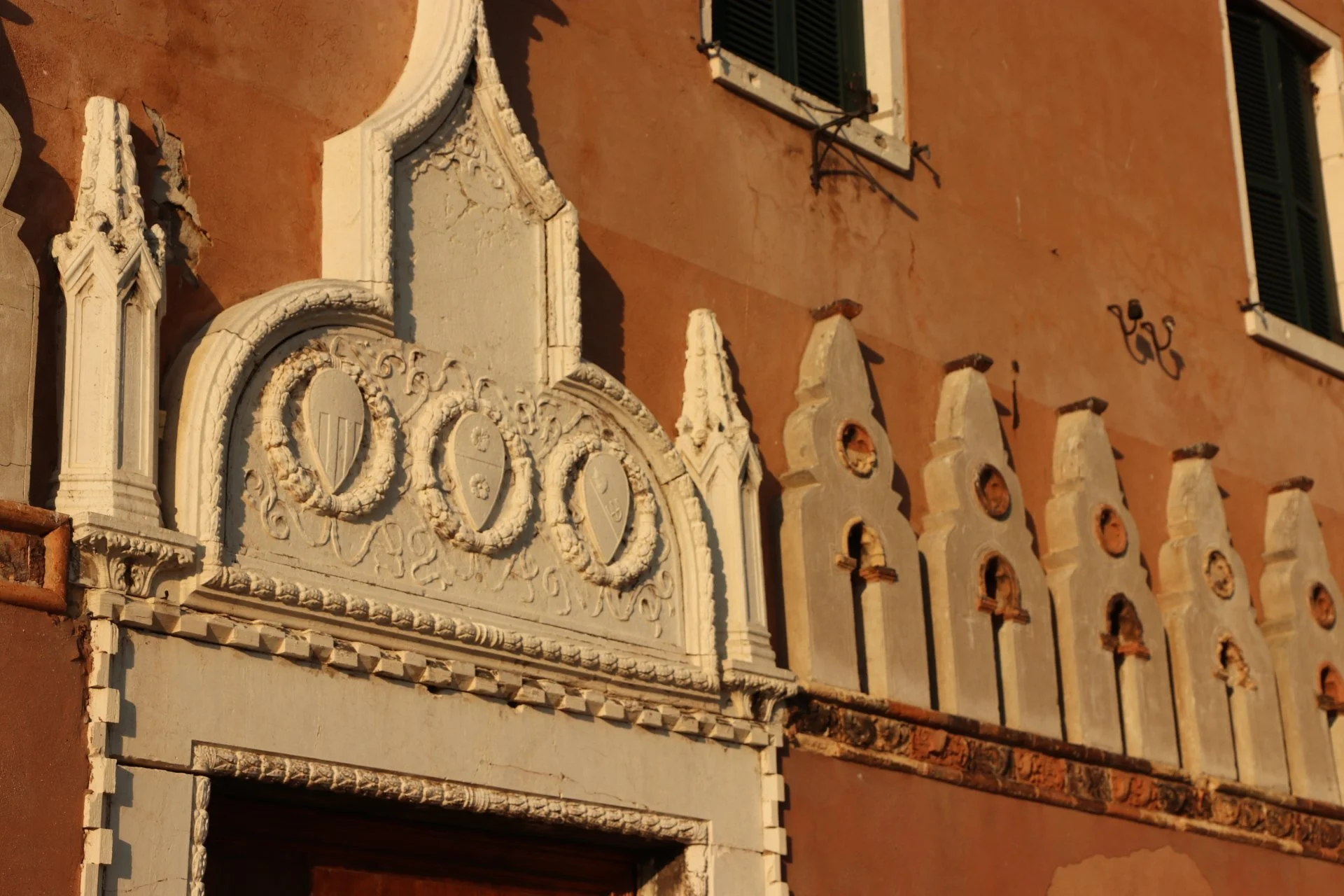
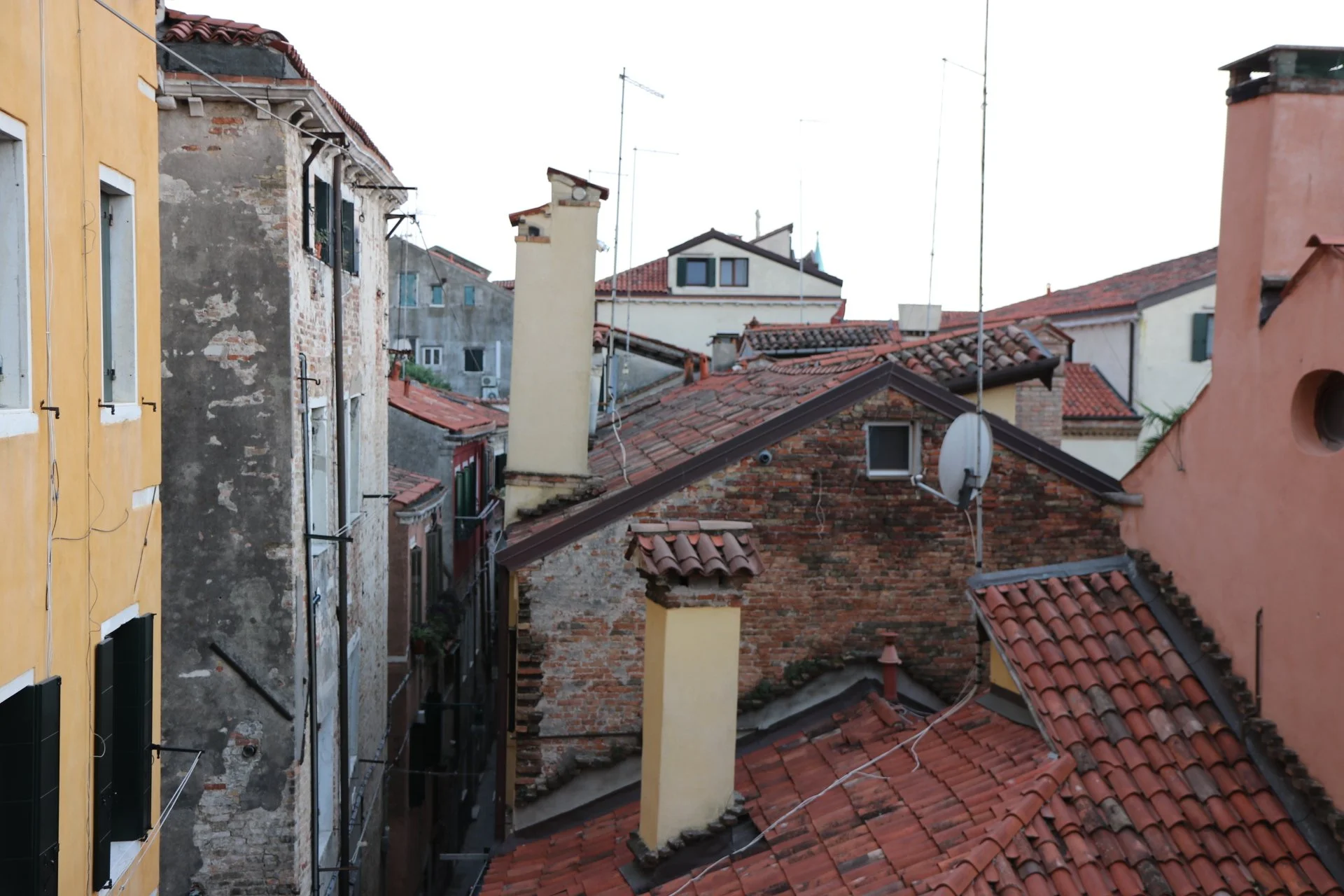
Some scenic Venice photos from these two days: